
Reduced-Sodium Soy Sauce Buyer's Guide
By Joybuy Product Recommendation OfficerUpdated July 28, 2026
The desire to reduce salt intake without sacrificing the full umami flavour of Asian cuisine leads many to reduced-sodium soy sauce. However, the market is crowded, and not every product that promises a healthier choice actually delivers. Before you make a decision, it's crucial to understand the common pitfalls that can lead to a disappointing purchase.
- The "Relatively Less Salt" Trap: The term "reduced-sodium" is not standardised. A sauce might be advertised as "30% less sodium," but if the original version had an extremely high salt content, the reduced version could still be very salty. Without looking at the nutrition label, the term itself means very little.
- Compensation with Unwanted Additives: To make up for the loss of flavour from less salt, some manufacturers add more sugar, flavour enhancers (like monosodium glutamate/MSG), or other artificial flavourings. This often defeats the purpose of conscious and natural consumption.
- Misleading Labels like "Light" or "Healthy": Terms like "light soy sauce" or "healthy soy sauce" are marketing buzzwords with no legally defined basis. A truly informed decision is based on verifiable facts, not vague promises.
What to Look for When Buying: The Key Metrics
To find a soy sauce that meets your standards for both flavour and a health-conscious lifestyle, you should check three core parameters.
The Absolute Salt Content (g per 100 ml)
This is the most important metric. Instead of relying on percentage reduction claims, compare the value for salt per 100 ml on the nutrition facts table.
- Conventional soy sauces often contain between 14 g and 18 g of salt per 100 ml.
- Reduced-sodium varieties typically fall within the range of 8 g to 12 g per 100 ml.
- Especially low-sodium soy sauces can even have values below 8 g per 100 ml.
This objective figure allows for a direct and fair comparison between different brands and products.
Ingredient List and Brewing Method
The quality of a soy sauce depends heavily on its ingredients and production. A naturally brewed product that has been fermented for several months develops complex and rich umami flavours naturally. Look for a short and clean ingredient list consisting primarily of water, soybeans, wheat, and salt. A long list of chemical-sounding names or the explicit mention of flavour enhancers can be a sign that the taste was not achieved through the brewing process alone.
Intended Use and Flavour Profile
Not every reduced-sodium soy sauce is an all-rounder. Some are specifically designed for certain dishes:
- All-Purpose Soy Sauces: Ideal for seasoning, marinating, and as a dipping sauce. Brands like Kikkoman offer reliable options here.
- Specialty Sauces for Fish and Seafood: These often contain additions like lemon or mushroom extracts (e.g., Matsutake) to enhance the delicate taste of fish and neutralise any unwanted odours.
- Sauces with Extra Umami: Products enriched with mushrooms like Matsutake or Porcini (Boletus Edulis) provide an additional depth of flavour that naturally compensates for the reduced salt content.
Key Recommendations for You
Here are some recommendations tailored to specific needs and cooking habits.
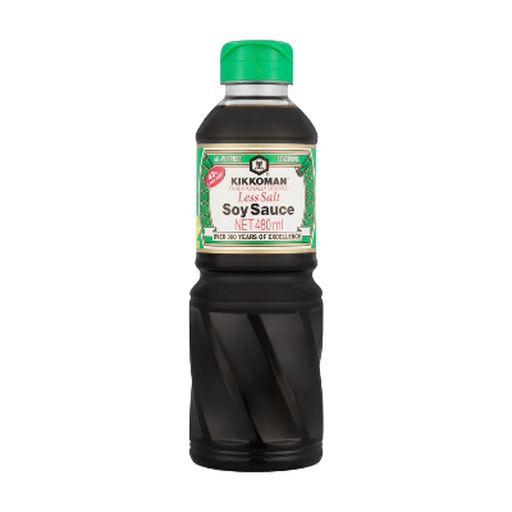
KIKKOMAN Reduced Sodium Soy Sauce 16.2oz PET Bottle
Why This Fits Their Persona: A versatile and reliable choice for daily use. The well-known Kikkoman flavour is preserved, making it ideal for marinades, stir-fries, or as a table condiment without an overpowering saltiness.
The product relies on the brand's traditional brewing process to maintain flavour, rather than compensating with artificial additives. The salt content is clearly declared and comparatively low at 5.8 g/100 ml.
Retains the characteristic umami flavour. Versatile for a wide range of dishes.
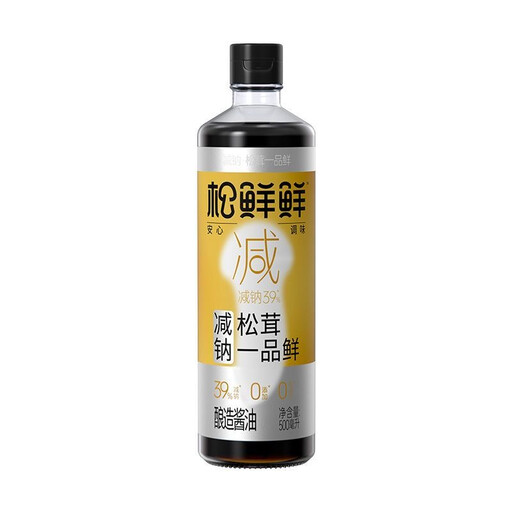
Songxianxian Low Sodium Matsutake Premium Brewed Soy Sauce 500ml
Why This Fits Their Persona: For cooks who not only want to reduce salt but also seek a special, natural aroma. The infusion with Boletus Edulis (Porcini mushroom) gives dishes a unique, earthy umami note that goes beyond conventional soy sauces.
Instead of relying on artificial enhancers, the flavour is naturally deepened with a high-quality ingredient (Porcini mushroom). The ingredient list is transparent and focused on natural flavours.
Extremely low salt content of 1.2 g/100 ml. Unique flavour profile from Porcini infusion. No added sugars.
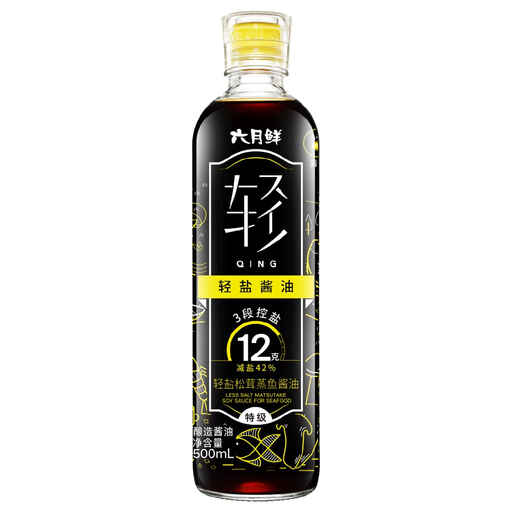
LIU YUE XIAN LESS SALT MATSUTAKE SOY SAUCE FOR SEAFOOD 500ML
Why This Fits Their Persona: Specially developed for preparing fish and seafood. The combination of Matsutake mushroom and lemon juice enhances the natural flavour of seafood while neutralising fishy notes.
This product is a clear example of a function-driven sauce. Instead of vague promises, it offers a targeted solution for a specific culinary task, thus avoiding the trap of nondescript "light" sauces.
Six-month fermentation for depth of flavour. Contains real lemon juice and Matsutake extract. Ideal for steamed fish and blanching.
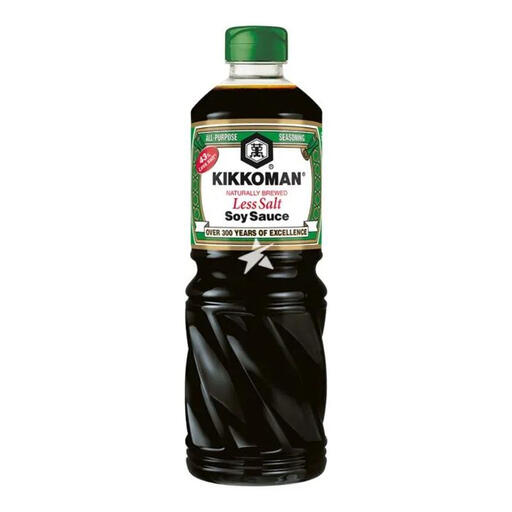
KIKKOMAN Soy Sauce Less Salt 6x1 L (Bulk)
Why This Fits Their Persona: For restaurants, catering services, or large families who regularly use a reduced-sodium soy sauce. The bulk pack of 6 x 1-litre bottles provides a practical supply of a trusted quality product.
This offer focuses on practical utility and volume without making exaggerated health claims. It delivers a consistent, well-known quality in an economical format.
Bulk pack for professional use or high consumption. Offers the familiar, balanced taste of Kikkoman with reduced salt content (11.0 g/100 ml).
Looking for more options?
We have compiled a complete, real-time updated list of products that fully meet these strict selection criteria and UK regulations.
How much salt is in reduced-sodium soy sauce?
The salt content varies widely. While conventional soy sauces often have 14 g to 18 g of salt per 100 ml, reduced-sodium versions typically have between 8 g and 12 g per 100 ml. Some particularly low-sodium products can even be below 8 g/100 ml. It is crucial to always check the nutrition information on the label to compare the absolute salt content.
Does soy sauce with less salt taste different?
Yes, a difference is often noticeable. Salt is a powerful flavour carrier. High-quality, reduced-sodium soy sauces compensate for this with a longer, natural brewing process that releases deeper umami notes. Some manufacturers also add natural flavourings like mushroom extracts to ensure a rich taste profile without excessive salt. The flavour is often milder and less sharp than the conventional version.
How do I store opened reduced-sodium soy sauce?
Once opened, reduced-sodium soy sauce should always be stored tightly sealed in the refrigerator. Salt acts as a natural preservative. Since reduced-sodium sauces contain less of it, they are more susceptible to spoilage. The cool, dark environment of the refrigerator helps to preserve the freshness, aroma, and colour of the sauce for several months. Pay attention to the specific storage instructions from the manufacturer on the packaging.