
Reduced-Sodium Soy Sauce: A Buyer’s Guide to Choosing Wisely
The search for a reduced-sodium soy sauce can be more complicated than it first appears. Health-conscious consumers want to lower their salt intake without sacrificing the deep, rich umami flavor essential to many Asian dishes. However, the market is flooded with products whose labels promise more than they deliver. As your Joybuy Product Recommendation Officer, I'll help you identify the common pitfalls and make an informed choice.
The 2 Most Common Traps When Buying Low-Sodium Soy Sauce
Before you make a decision, you should be aware of two common marketing tactics that often lead to an unsatisfying purchase.
- The Percentage Trap: A label advertising "30% Less Salt" sounds appealing. However, this figure is relative. If a conventional soy sauce has an extremely high salt content of, for example, 18g per 100ml, the reduced version still contains 12.6g—a value that remains high for a low-sodium diet. What matters is not the percentage reduction, but the absolute salt content on the nutrition facts label.
- The Flavor Compromise: To compensate for the loss of flavor from less salt, some manufacturers add sugar, corn syrup, or a range of flavor enhancers. The result is often a sauce that tastes unpleasantly sweet or artificial, lacking the complex depth of a genuine Asian seasoning sauce.
What Really Matters: 2 Crucial Selection Criteria
To ensure you get a quality product that both tastes great and meets your health requirements, you should check two key parameters.
1. The Absolute Salt Content per 100ml
Ignore relative claims and focus on the nutrition facts label. A traditional Japanese soy sauce can contain between 14g and 18g of salt per 100ml. A good lower-salt soy sauce should be significantly below that, ideally under 10g per 100ml. Products that fall below this value offer a noticeable reduction without requiring you to consume large amounts.
2. The Brewing Process and Ingredients List
The quality of a soy sauce depends heavily on its production method.
- Naturally Brewed (Shoyu): This traditional process involves fermenting soybeans, wheat, water, and salt for several months. This slow process naturally develops a deep, complex umami sauce aroma. Look for terms like "naturally brewed" or "traditionally brewed."
- Chemically Produced: This method involves rapidly breaking down soy protein using acid hydrolysis. This process is cheaper but often requires the addition of colorings, syrups, and flavor enhancers to mimic the taste of real soy sauce.
A short ingredients list—consisting of water, soybeans, wheat, and salt—is often an indicator of a pure, high-quality product.
Picks for Every User Profile
Here are some recommendations tailored to different needs and use cases.
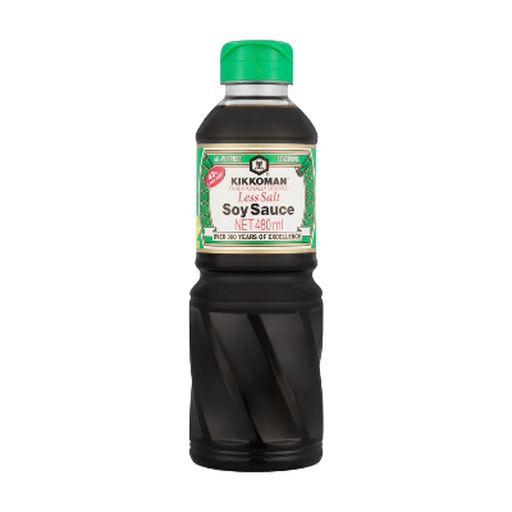
KIKKOMAN Reduced Sodium Soy Sauce 16.2oz PET Bottle
Why This Fits Their Persona: A reliable choice for everyday cooking that strikes a balance between health-consciousness and the full flavor of a traditionally brewed sauce. The well-known Kikkoman soy sauce is versatile and straightforward.
Instead of just advertising a percentage reduction, it offers a transparent, moderate salt content (5.8g per 100ml, according to the nutrition label) without losing its characteristic umami flavor.
Traditionally brewed using a time-tested method; versatile for marinades, dips, and stir-fry dishes.
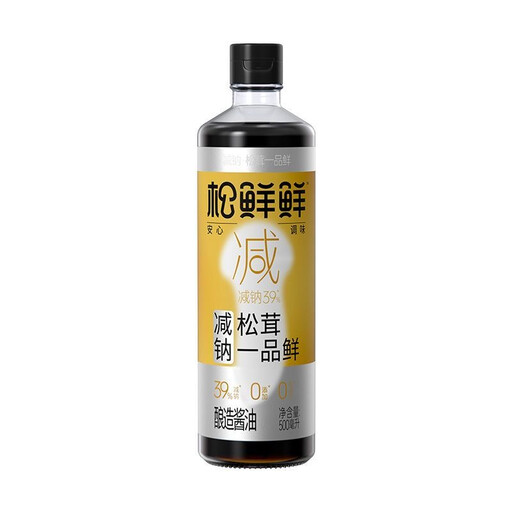
Songxianxian Low Sodium Matsutake Premium Brewed Soy Sauce 500ml
Why This Fits Their Persona: For cooks seeking a unique flavor profile that goes beyond standard soy sauce. The infusion with Boletus Edulis (matsutake mushroom) adds a special, earthy umami depth.
This sauce bypasses the flavor compromise by adding complex aromatics from a high-quality ingredient (matsutake) instead of compensating for salt loss with artificial flavors.
Very low salt content (1.2g per 100ml, according to the nutrition label); unique aroma from matsutake mushrooms.
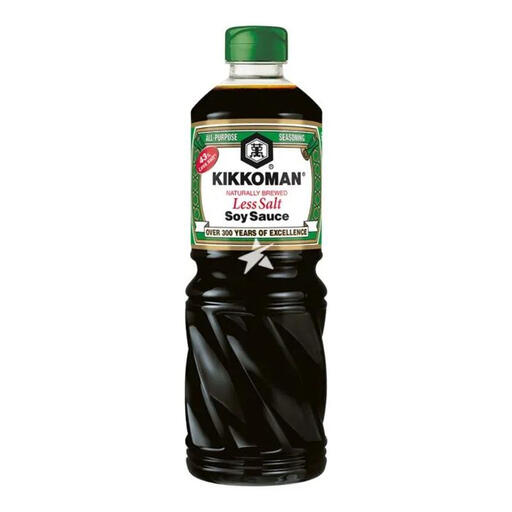
KIKKOMAN Soy Sauce Less Salt 6x1 L (Bulk)
Why This Fits Their Persona: Ideal for restaurants or large families who need a constant supply of a high-quality, reduced-sodium seasoning sauce without having to restock constantly.
Offers the proven quality and balanced flavor of Kikkoman in an economical bulk package. This lowers the cost per liter without compromising on brewing standards.
Excellent value for bulk purchases; consistent quality from an established brand.
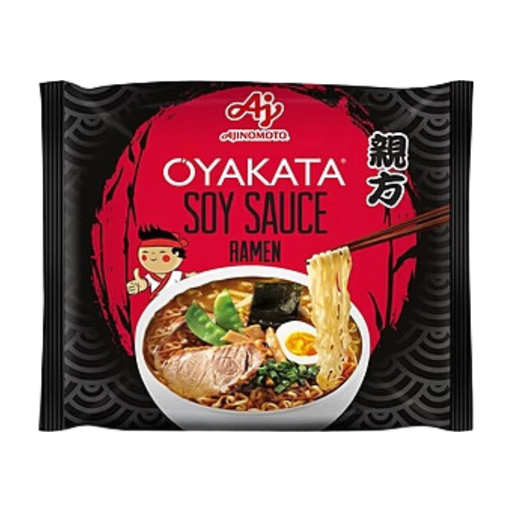
Instant Noodles Soy Sauce Ramen 83 G
Why This Fits Their Persona: Perfect for a quick yet flavorful meal. This instant noodle soy sauce delivers classic Shoyu Ramen flavor in minutes, without the need to mix different components.
Instead of buying a separate sauce, this product provides a complete, balanced meal. The salt content is tailored to the portion size (0.82g per 100ml of the prepared product), making it easier to control salt intake.
Complete meal kit for maximum convenience; authentic shoyu ramen flavor.
Looking for More Options?
We've compiled a complete, up-to-date list of products that fully meet these strict selection criteria.
Frequently Asked Questions (FAQ)
How much salt is actually in a reduced-sodium soy sauce?
The salt content can vary widely. High-quality reduced-sodium versions often range from 7g to 11g of salt per 100ml, compared to 14g to 18g in standard products. Some premium products may have even lower values. It is essential to always check the nutrition facts label to determine the exact amount.
Does the flavor change in a lower-salt soy sauce?
Yes, reducing salt affects the taste. Salt acts as a natural flavor enhancer. However, in well-made, naturally brewed soy sauces, the fundamental umami aroma is preserved. They often taste milder and less sharply salty, which can allow the finer notes of the fermentation to come through more clearly. Lower-quality products, on the other hand, often taste watery or artificial.
What is the proper way to store opened soy sauce?
Once opened, soy sauce should be tightly sealed and stored in the refrigerator. The cool, dark environment slows down oxidation processes that can affect color and flavor. This helps preserve the aroma for several months. Most manufacturers also explicitly recommend this on the packaging.