
Low-Sodium Soy Sauce Buyer's Guide
Soy sauce is a cornerstone of Asian cuisine, but the high salt content of traditional products is a growing concern for many health-conscious households in the UK and beyond. The market is responding with an expanding selection of low-sodium varieties. However, not every label promising "less salt" delivers on its claim. As your Joybuy Product Recommendation Officer, I'm here to help you separate the wheat from the chaff and make an informed decision.
Many shoppers fall into recurring traps that lead to disappointment and wasted money. Here are the most common pitfalls you should be aware of:
- The "Reduced-Salt" Trap: The term "reduced-salt" is not standardised and is often misleading. A sauce might be advertised as "30% less salt," but if the original product was extremely salty, the "reduced" version can still have a high sodium content. The absolute salt content per 100ml is what matters, not the relative comparison.
- Compensation with Additives: To make up for the flavour lost from using less salt, some manufacturers add a range of flavour enhancers like monosodium glutamate (MSG, E621) or yeast extract. Anyone looking for a soy sauce without flavour enhancers must scrutinise the ingredients list.
- Misleading Brewing Method Claims: A high-quality, naturally brewed soy sauce matures for months, developing its deep, complex flavour. This contrasts with chemically produced sauces, which are quicker and cheaper to make but often have a flat, aggressively salty taste.
What Really Matters When Making Your Choice: The Key Parameters
To avoid a bad purchase, focus on objective, verifiable criteria. These three parameters are crucial for quality and suitability.
1. The Absolute Salt Content (in g per 100ml)
Ignore percentage-based marketing claims and look directly at the nutritional information table. A conventional light soy sauce can contain 16–18g of salt per 100ml. A good low-sodium soy sauce should be significantly below that.
- Good Benchmark: Under 12g / 100ml
- Excellent Benchmark: Under 10g / 100ml
Products in this range qualify as a true low-sodium seasoning sauce and allow for a more conscious diet without sacrificing the signature umami flavour.
2. The Ingredients List: Less is More
A high-quality, naturally brewed soy sauce requires only a few simple ingredients. A short list is often a sign of a pure product.
- Core Ingredients: Water, soybeans, wheat, salt.
- Look For: A "non-GMO" label for the soybeans.
- Avoid: A long list of E-numbers, artificial flavours, colourings (e.g., caramel colour), and preservatives. If you prefer a soy sauce without flavour enhancers, ensure that terms like monosodium glutamate (E621), disodium inosinate (E631), or yeast extract are not listed.
3. Brewing Method and Quality Indicators
The traditional brewing process is the key to a rich flavour. Premium sauce manufacturers often provide clues about their quality.
- Natural Fermentation: Look for terms like "naturally brewed" or information on the fermentation period (e.g., "aged for 6 months").
- Amino Acid Nitrogen: Some high-quality brands, like Qianhe soy sauce, specify their amino acid nitrogen content (e.g., ≥1.0g/100ml). This is a technical indicator for the concentration of umami flavour created during fermentation. A higher value indicates superior quality and depth of flavour.
Top Sauce Selections
Instead of making a one-size-fits-all recommendation, we've selected products for different user profiles. This will help you find the sauce that truly fits your cooking habits and standards.
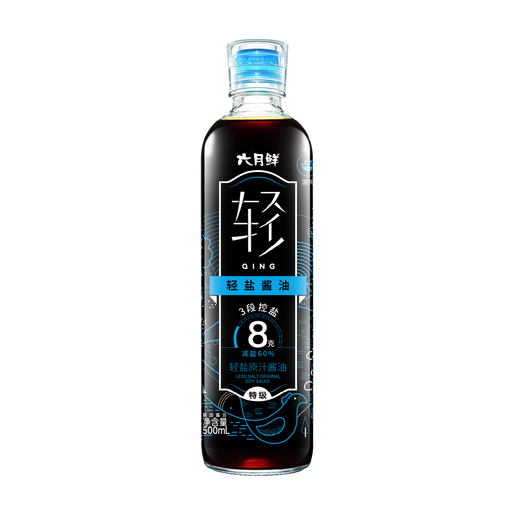
LiuYueXian LESS SALT ORIGINAL SOY SAUCE 500ML
Why This Fits Their Persona: Ideal for those who seek the pure, unadulterated taste of a high-quality soy sauce with minimal salt. Perfect for delicate dishes, as a dip for sushi, or for dressings where the quality of the sauce is paramount.
With just 8.0g of salt per 100ml, it is one of the lowest-sodium options available. The ingredients list is stripped down to the essentials and is completely free of flavour enhancers. The six-month natural fermentation process ensures depth.
Exceptionally low salt content; very short and pure ingredients list; verifiably naturally brewed for 6 months.
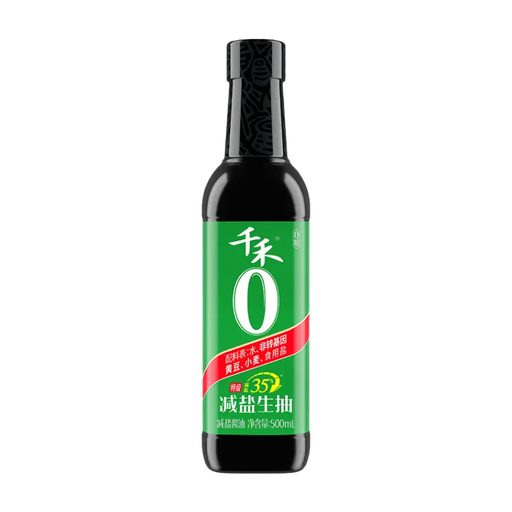
Qianhe 35% Reduced Salt Light Soy Sauce 500ml
Why This Fits Their Persona: An excellent all-rounder for families who cook frequently and need a healthy, reliable option without compromising on authentic taste. Versatile for stir-fries, marinades, and as a table condiment.
According to the manufacturer, this sauce is explicitly free from MSG, artificial colours, and preservatives. It uses non-GMO soybeans and, with 11.5g of salt/100ml, strikes a good balance between flavour and salt reduction.
High amino acid nitrogen content (≥1.0g/100ml) as an objective quality mark; free from artificial additives; uses non-GMO soybeans.
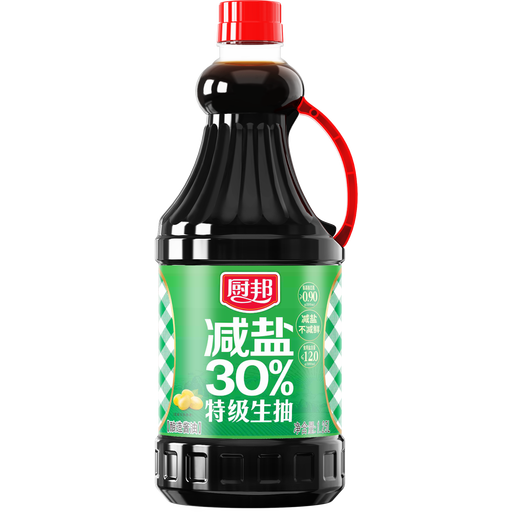
ChuBang 30% Salt Reduced Premium Light Soy Sauce 1.25L
Why This Fits Their Persona: Ideal for those who need large quantities for marinades, braises, and daily stir-fries, and are looking for a cost-effective, large-format solution.
This product is transparent about its ingredients. While it does contain flavour enhancers to support the taste at a salt content of 14.0g/100ml, the large 1.25L bottle offers excellent value for heavy use.
Large format (1.25L) for frequent use; versatile for cooking and marinating; an established brand for everyday cooking.
Looking for More Options?
If you want to explore a wider selection of seasonings for authentic Chinese cuisine, we've curated a collection just for you.
Frequently Asked Questions (FAQ)
How can I identify a high-quality, low-sodium soy sauce?
Focus on three key points: 1. The absolute salt content per 100ml on the nutrition label (ideally under 12g). 2. A short ingredients list without artificial flavour enhancers or preservatives. 3. A reference to a "naturally brewed" process, ideally with the aging time specified.
Is a soy sauce without flavour enhancers less flavourful?
Not necessarily. A naturally brewed soy sauce develops a deep, complex umami flavour through months of fermentation that requires no artificial enhancement. The taste is often more nuanced and less one-dimensional than sauces that rely on additives like MSG to create flavour.
How should I store low-sodium soy sauce to maintain its quality?
Keep the unopened bottle in a cool, dark place. After opening, the bottle should be tightly sealed and stored in the refrigerator. This protects the volatile aromas and slows down oxidation, which is especially important for preserving freshness in products without preservatives.