
Mini Projector Buyer's Guide: Avoiding a Bad Purchase
A spontaneous movie night in the garden, projecting your favorite series onto the bedroom ceiling, or a large-format gaming session—a mini projector promises flexible entertainment anywhere. But the market is flooded with options whose technical specs often confuse more than they clarify. Many buyers invest in a device that fails to meet their expectations because they fall for common marketing traps.
As your Joybuy Product Recommendation Officer, I'm here to help you spot these pitfalls. We'll focus on the objective criteria that truly matter, so you can make an informed decision and find a device that you'll enjoy for years to come.
The Most Common Traps When Buying a Mini Projector
Before we look at recommended models, it's crucial to understand the three most common reasons for a bad purchase:
- The Lumen Trap: Many manufacturers advertise with extremely high lumen numbers (e.g., 8000 lumens). However, this figure is often non-standardized and misleading. The only reliable value is brightness measured in ANSI lumens. A device with "8000 lumens" can, in practice, be dimmer than a model with 300 ANSI lumens.
- The Resolution Misunderstanding: Pay close attention to the difference between "supported resolution" and "native resolution." A projector that "supports" 4K projector signals might only project the image at a very low native resolution (e.g., 480p). The result is a blurry, pixelated picture. What matters is the native resolution—the actual physical pixel count of the projector.
- Smart Features with a Catch: An integrated operating system (Android projector) sounds convenient but can lead to frustration. Outdated Android versions are slow and insecure. Furthermore, copy protection mechanisms (HDCP) often prevent streaming apps like Netflix or Prime Video from playing directly through the built-in software or via screen mirroring from a smartphone.
What Really Matters: The 3 Key Features
To find the right portable projector, you should focus on three core technical features. These are the primary determinants of image quality and user-friendliness.
1. Native Resolution: The Foundation for a Sharp Image
Native resolution indicates how many pixels the projector can actually display. Don't be fooled by claims like "4K supported."
- Native 720p (1280 x 720 pixels): This is the minimum standard for an acceptable home cinema projector experience. This resolution is sufficient for occasional movie nights in darkened rooms.
- Native 1080p (1920 x 1080 pixels): Delivers a visibly sharper and more detailed image. This resolution is recommended for anyone who wants to regularly enjoy movies, series, or games in high quality.
2. Brightness in ANSI Lumens: The Benchmark for Visible Quality
Brightness, measured in ANSI lumens, is the standardized and comparable value that indicates how bright the image actually is. The required brightness depends on the environment:
- Up to 300 ANSI lumens: Suitable for completely dark rooms, like a bedroom at night.
- 300–700 ANSI lumens: Versatile enough for dimly lit living rooms or for an outdoor projector after sunset.
- Over 700 ANSI lumens: Provides a clear and vibrant image even with some ambient light.
3. Modern Connectivity: Wi-Fi, Bluetooth, and Ports
A modern projector with Wi-Fi and Bluetooth ensures a seamless experience.
- Wi-Fi:WiFi 6 (802.11ax) offers a more stable and faster connection than older standards, which is especially important when streaming high-resolution content.
- Bluetooth:Bluetooth 5.0 or higher enables a reliable connection to external speakers or headphones without noticeable lag.
- Ports: An HDMI port is essential for connecting to laptops, game consoles (PS5, Switch), or TV sticks. A USB port allows for media playback from a flash drive.
Fine Small Projector Examples
Here are some models that represent a smart choice for different user profiles, based on objective criteria.
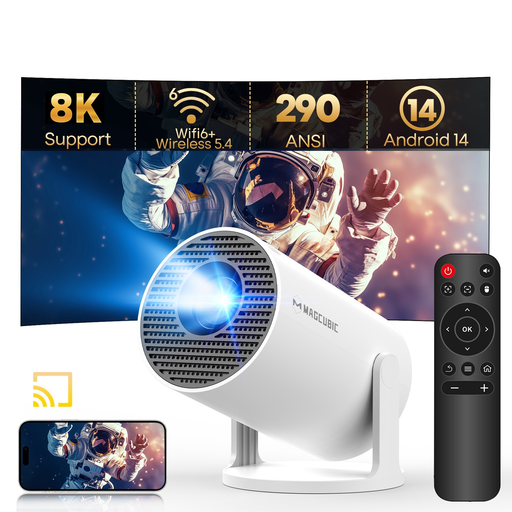
Magcubic Smart Projector HY300Pro
Why This Fits Their Persona: Ideal for the occasional movie night in the bedroom or kids' room. The device is extremely compact, quick to set up thanks to automatic keystone correction, and offers an out-of-the-box experience with its integrated Android system, no extra devices needed.
The product clearly states a native 720p resolution and a brightness of 290 ANSI lumens. These honest specs are suitable for dark rooms and avoid the trap of misleading fantasy numbers.
The 180° rotating body allows for effortless projection onto the ceiling. Its inclusion of WiFi 6 and Android 14 is advanced for this price point.
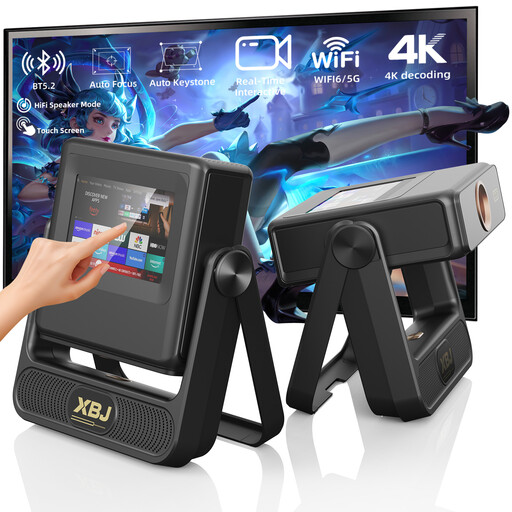
XBJ Outdoor Projector A5Pro
Why This Fits Their Persona: For users who want higher image quality and brightness for use in different rooms or in the garden at dusk. The fully automatic image setup makes switching locations effortless.
This model offers a true native 1080p resolution and a high brightness of 900 ANSI lumens. This allows it to deliver a clear image even in environments that aren't completely dark, solving the problem of many entry-level devices being too dim.
The combination of autofocus and automatic keystone correction eliminates the need for manual adjustments. The integrated touch display offers an alternative control method to the remote.
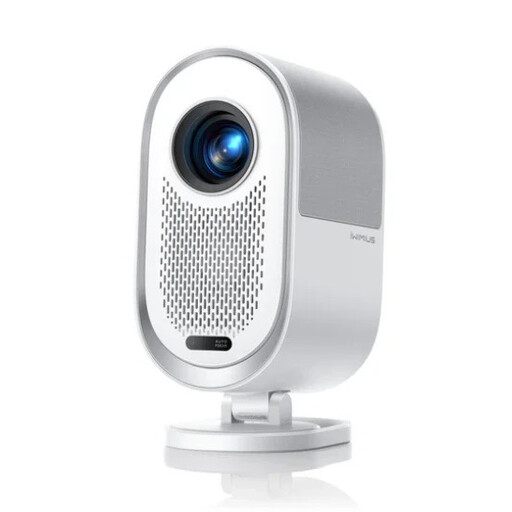
iWimius K11 Home Theater Projector
Why This Fits Their Persona: For users who value high image and sound quality and want to seamlessly integrate the projector into an existing sound system. The design is engineered for durability and high-quality audio playback.
The device addresses the problem of dust accumulation with a fully sealed optical engine, which prevents image artifacts. It intentionally omits integrated apps, opting for the more reliable solution of a TV stick, thus bypassing the unstable software trap.
The HDMI ARC port allows for a direct connection to a soundbar or AV receiver for high-quality Dolby Audio sound. The native 1080p resolution and 800 ANSI lumens ensure excellent image quality.
Looking for more options?
We have compiled a complete real-time list of products that fully meet these strict selection criteria and safety regulations. For the optimal experience, the right projection surface is also crucial.
Frequently Asked Questions (FAQ)
How many ANSI lumens are sufficient for a mini projector?
It depends on the location. For a bedroom that can be completely darkened, 200-300 ANSI lumens are sufficient. For a living room with some ambient light or for outdoor use after dark, at least 500 ANSI lumens are recommended to get a vibrant and clearly visible image.
Can I use Netflix directly on an Android projector?
This is one of the most common pitfalls. Many budget-friendly Android projectors do not have the necessary DRM certification (Widevine L1) to play protected content from apps like Netflix, Prime Video, or Disney+ in HD. Playback is often blocked or only possible in low quality. The most reliable solution is to use an external, certified device like an Amazon Fire TV Stick, Google Chromecast, or Apple TV, connected to the projector via HDMI.
Do I absolutely need a projector screen?
A smooth, white wall can serve as a projection surface. However, a dedicated projector with screen combination offers significant advantages. A screen has an optimized surface texture that reflects light more evenly, resulting in higher contrast, more vibrant colors, and better black levels. Especially for an outdoor projector, a tensioned screen helps to smooth out any unevenness of the projection surface and achieve a more professional result.