
Mini Projector Buyer's Guide: Common Mistakes to Avoid
A spontaneous movie night in the garden, a large-screen gaming session, or a presentation without a complicated setup—a mini projector promises flexible entertainment anywhere. But the market is flooded with devices making bold claims that often disappoint in practice. Misleading brightness specs and useless "smart" features can quickly lead to buyer's remorse.
As your Joybuy Product Recommendation Officer, I'm here to help you separate the wheat from the chaff. In this guide, I'll show you which technical specs truly matter and how to sidestep common marketing traps to find a portable projector that genuinely meets your needs.
The 3 Most Common Traps When Buying a Mini Projector
Many buyers focus on the wrong features and are later disappointed by their device's performance. Pay close attention to these three points to avoid falling into the same trap:
- Misleading Brightness Specs: Manufacturers often advertise high "lumen" figures that are not standardised. A projector with "9000 lumens" can, in reality, be dimmer than a device with 400 ANSI lumens. This practice results in an image that is barely visible in even low ambient light.
- "Smart" Systems Without a Licence: A smart projector with a built-in operating system sounds convenient. However, many budget models use outdated or unlicensed versions of Android. The result: essential apps like Netflix or Prime Video either don't work at all, stream only in poor resolution, or stop working after an update. A projector with a Netflix licence is the safe bet here.
- Inadequate Automatic Image Correction: "Auto keystone correction" is supposed to automatically straighten a skewed image when projecting from an angle. On basic devices, however, this often only works vertically. As soon as the projector isn't placed perfectly centred in front of the screen, the image remains distorted and blurry at the edges.
What Really Matters: The Key Features of a Mini Projector
To avoid a bad purchase, you should focus on objective and verifiable technical data. These three parameters are crucial for performance and usability.
Understanding Brightness: ANSI Lumens as the Only Standard
The only reliable metric for a projector's brightness is ANSI lumens. This value is measured according to a standardised procedure and is therefore comparable across different models.
- Up to 300 ANSI Lumens: Sufficient for completely dark rooms. Ideal for the bedroom or occasional movie nights.
- 300 to 600 ANSI Lumens: Well-suited for rooms with low ambient light, such as in the evening with dimmed lighting. This brightness level is a good all-rounder for a home cinema.
- Over 600 ANSI Lumens: Delivers a clear and easily visible image even in daylight or in rooms that are not fully darkened.
Image Sharpness: Native Resolution, Not "Supported" Formats
Don't be fooled by claims like "4K supported." This only means the projector can process a 4K signal—the actual image is displayed at the much lower native resolution.
For a sharp and detailed picture, only the native resolution matters.
- 720p (1280x720 Pixels): An acceptable entry-point for occasional use and smaller screen sizes.
- 1080p (1920x1080 Pixels): A Full HD projector with a native 1080p resolution offers a visibly sharper and clearer image. This is the recommended standard for a quality home cinema experience.
Connectivity and Smart Features
A modern mini projector with Wi-Fi and Bluetooth offers maximum flexibility. Look for current standards to ensure a stable and fast connection.
- Wi-Fi:WiFi 6 provides a faster, more stable connection, which is especially important when streaming high-resolution content from a projector for your phone or laptop.
- Bluetooth:Bluetooth 5.0 or higher enables a lag-free connection to external speakers or headphones.
- Operating System: A system like Google TV or a current Android TV with official licences for streaming services guarantees seamless access to your favourite content.
- Battery: A mini projector with a battery makes you completely independent of power outlets and is the ideal choice for use as an outdoor projector in the garden or while camping.
Our Picks: The Right Mini Projectors for Different Needs
Based on the criteria above, we have compiled a selection of devices suitable for different user profiles.
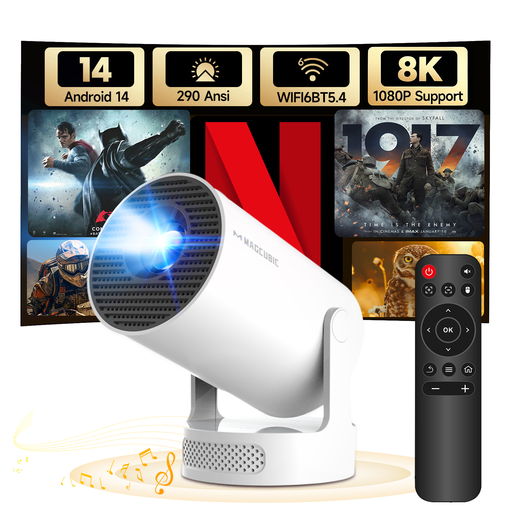
MAGCUBIC HY300Pro+ Mini Projector
Why This Fits Their Persona: Ideal for spontaneous movie nights in the bedroom or for users who want to enter the world of projectors without a major investment. The rotating stand is especially practical for projecting onto the ceiling.
The brightness is clearly stated as 290 ANSI lumens, which is realistic for darkened rooms. The current Android 14 system provides access to apps without relying on outdated, unsupported software.
Integrated Android 14 and WiFi 6 for direct streaming; 180° rotating stand for flexible ceiling projection.
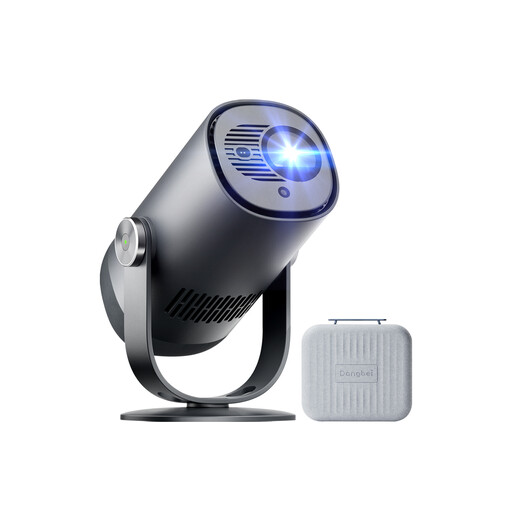
Dangbei Freedo Portable Projector 1080P
Why This Fits Their Persona: Perfect for users seeking a high-quality, portable solution for indoors and out, without worrying about app compatibility or extra devices. A true all-rounder for on-the-go entertainment.
This model features Google TV and an officially licensed Netflix app, guaranteeing smooth, high-resolution streaming. The native 1080p resolution ensures a truly sharp image.
Officially licensed Netflix and Google TV; built-in battery for up to 2.5 hours of wireless operation (per manufacturer specs).
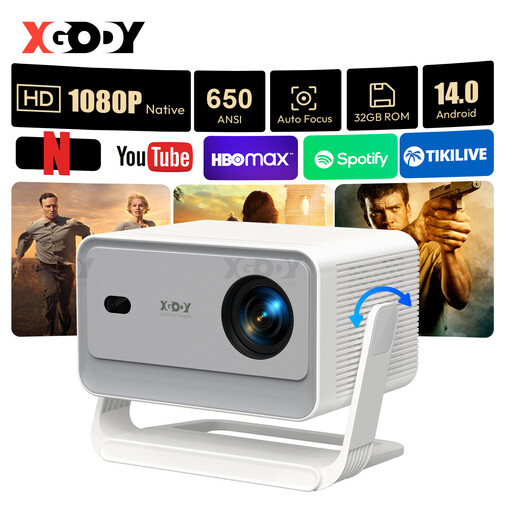
XGODY Gimbal A6 Pro Portable Projector
Why This Fits Their Persona: For anyone who values image quality, brightness, and an effortless setup. The high ANSI lumen rating and advanced auto-correction are ideal for a serious home cinema or a responsive gaming setup.
With 650 ANSI lumens, it offers high brightness for use in rooms with ambient light. The advanced, fully automatic image correction solves the problem of distorted images from angled placement far more effectively than basic systems.
High brightness of 650 ANSI lumens and advanced, fully automatic image correction (focus, keystone, obstacle avoidance) for a setup that takes seconds.
Looking for More Options?
We have compiled a complete, real-time list of products that fully satisfy these strict selection criteria and UK safety regulations.
Frequently Asked Questions (FAQ)
How many ANSI lumens does a mini projector need?
For a good experience in a darkened room, 200-300 ANSI lumens is a great starting point. If you plan to use the projector in rooms with some ambient light or during the early evening, you should consider a model with at least 450-500 ANSI lumens. For a clear picture in daylight, models with over 600 ANSI lumens are required.
Can I watch Netflix on any smart projector?
No. Many budget projectors do not have an official licence from Netflix. This means the app may not work at all, might only stream in low SD quality, or could be blocked after a software update. Look for devices with certified operating systems like Google TV or those that explicitly mention a "licensed Netflix app."
What does native resolution mean for a projector?
The native resolution indicates the actual physical pixel count of the projector's chip and determines the maximum sharpness of the image. A spec like "4K supported" only means the projector can process the signal, not display it in 4K quality. A 1080p projector with a native resolution of 1920x1080 pixels is the recommended choice for a clear picture.