
Carpenter Pencil Buyer's Guide for Woodworking
A precise line is the foundation of all quality craftsmanship. However, not every pencil can withstand the harsh conditions of a construction site or workshop. An unsuitable carpenter's pencil leads to inaccurate markings, constant interruptions, and wasted material. Before making a purchase, it's crucial to understand the common pitfalls often hidden behind appealing advertisements.
Many professional tradespeople and ambitious DIYers choose the wrong tool because they fall for common product flaws:
- The Roll-Away Trap: A round pencil is useless on a sloped work surface or scaffolding. It rolls away, falls, and in the worst-case scenario, is lost or breaks. This seemingly minor detail can significantly disrupt your workflow.
- The Breakage Trap: Inexpensively produced pencils often have a lead that isn't securely bonded to the wood casing. A single drop onto a concrete floor can shatter the lead internally in multiple places, rendering the pencil useless the next time you sharpen it.
- The Wear-Down Trap: A lead that is too soft will wear down in seconds on rough materials like concrete, brick, or OSB boards. The line quickly becomes too thick and imprecise, requiring constant resharpening and drastically shortening the pencil's lifespan.
A reliable craftsman's pencil is not a luxury but a necessity for efficient and precise work.
What Really Matters in a Carpenter's Pencil
To avoid a poor purchase, you should check three core technical parameters. These define the functionality and longevity of a quality marking pencil for professional use.
1. The Shape: Oval or Hexagonal for Maximum Stability
The characteristic shape of a carpenter's pencil is its most important feature. An oval pencil or a model with a flat-hexagonal cross-section cannot roll off inclined surfaces. This design also offers a wider surface area for your fingers, ensuring a secure grip even while wearing work gloves. When marking along a guide rail or square, the flat side provides stable guidance and prevents tilting.
2. Lead Hardness Grade: Robustness for Any Surface
The hardness grade determines how a pencil for wood, stone, or metal performs. The scale ranges from soft (B) to hard (H).
- Hard Pencil (H-Grade): These leads contain more clay and less graphite. They are more resistant to abrasion and stay sharp longer on rough surfaces like concrete, dry wood, or fiberboard. A hard pencil is the standard choice for a job site pencil, as it produces fine, durable lines.
- Medium Hardness (HB): A good compromise for joiners and carpenters working with various types of wood. The mark is darker and more visible than an H-grade lead but still sufficiently abrasion-resistant.
- Soft Hardness (B-Grade): These leads are less common in construction. They produce a very dark, rich line but wear down quickly and can smudge on smooth surfaces.
3. Construction: Bonding of Lead and Wood
Break resistance is a critical quality indicator. In high-quality pencils, such as a STAEDTLER carpenter's pencil, the lead is securely bonded to the wood casing along its entire length. This process, often called the Secural process or super-bonding, prevents the lead from breaking internally, even if the pencil is dropped. Furthermore, the quality of the wood is important to ensure the pencil can be sharpened cleanly with a knife or sharpener without splintering.
Products for every shopper
Instead of making a blanket recommendation, we have selected products for specific requirement profiles.
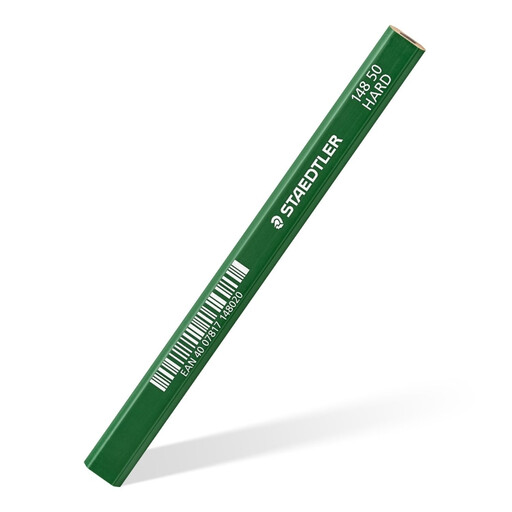
STAEDTLER Carpenter Flat Hexagonal Graphite Pencil
Why This Fits Their Persona: Ideal for daily, intensive use on the construction site or in carpentry, where reliability and robustness are paramount.
The flat, oval shape prevents it from rolling away. The hard lead (H grade) is extremely resilient on rough surfaces, and its high break resistance minimises waste from drops.
Made from FSC-certified wood from sustainably managed forests. It is supplied unsharpened, allowing the user to shape the point to their specific needs.
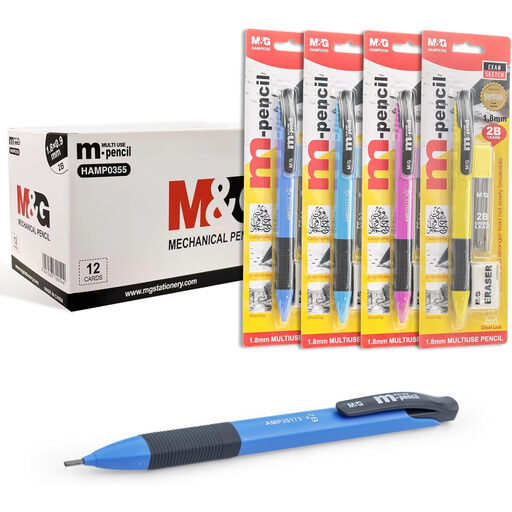
M&G Mechanical Pencil Set, 1.8 mm Lead Holder
Why This Fits Their Persona: Suitable for furniture making, model building, or fine woodworking where a consistently thin and precise line is required without sharpening.
Completely bypasses the wear-down trap, as the lead is advanced with the push of a button, keeping the line width constant. No sharpening, no wood splinters.
The 1.8 mm thick lead is more robust than that of conventional mechanical pencils. The set includes 12 lead refill tubes and erasers, offering excellent value for money.
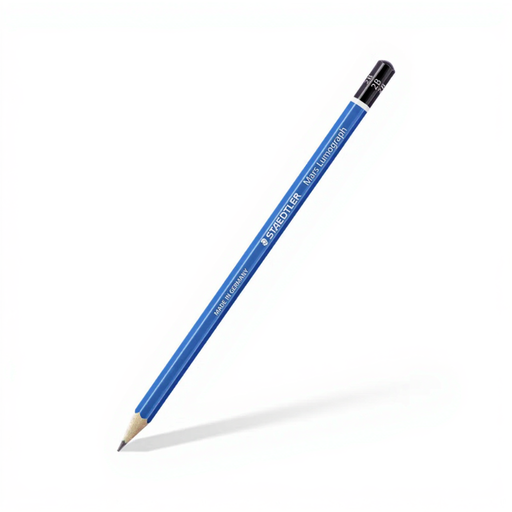
STAEDTLER Mars Lumograph 2B Graphite Pencil
Why This Fits Their Persona: For architects, planners, and craftspeople who need to sketch on paper and make highly visible, dark marks on smoother, light-coloured wood surfaces.
Although it is round, this pencil counters the breakage trap with a specially bonded lead that ensures high break resistance, making it more robust than standard pencils.
The 2B lead offers an excellent balance of dark laydown for good visibility and sufficient hardness. Ideal for sketches and markings on less abrasive materials.
Looking for More Options?
We have compiled a complete, up-to-date list of products that fully meet these strict selection criteria and German safety regulations.
Frequently Asked Questions (FAQ)
1. How do you sharpen a carpenter's pencil correctly?
A carpenter's pencil is traditionally sharpened not with a standard round sharpener, but with a sharp utility knife. This allows the craftsperson to shape the tip individually: a wide, flat chisel point for broad marks or a fine, needle-like point for precise markings. There are also special sharpeners designed for oval pencils that ensure a consistent shape.
2. Which hardness grade is suitable for a carpenter's pencil?
The choice of hardness grade depends on the material. As a rule of thumb:
- Hard Surfaces (concrete, stone, hardwood): A hard pencil (H or 2H) is the right choice here. It wears down slowly and leaves a clear, fine line.
- General Woodworking (softwood, construction timber): A medium grade (HB) is a versatile all-rounder that produces a clearly visible mark.
- Dark or Damp Surfaces: A softer lead (B or 2B) can be advantageous here, as it deposits more graphite, making the mark more visible.
3. Why is a carpenter's pencil oval?
The oval or flat-hexagonal shape is purely functional. The main reason is that the oval pencil cannot roll off inclined surfaces like roofs, ladders, or uneven workbenches. This prevents constant interruptions and the loss of the tool on a job site. Additionally, the wide shape provides a better grip, especially when wearing work gloves.