
Choosing STAEDTLER Pencils: A Practical Guide to Writing, Drawing and Technical Work
Whether you are an artist, illustrator, hobby artist, architect, student or school pupil, STAEDTLER pencils differ not only in colour and shape, but above all in hardness, lead composition and intended use. If you buy based solely on packaging or marketing claims, you may end up with a pencil that is too soft, too light or difficult to erase for your particular application.
This guide explains what matters when choosing graphite pencils, drawing pencils and pencils for drawing and sketching, and which models suit different types of user.
Common Mistakes When Buying STAEDTLER Pencils
1. Using one grade for every task
An HB pencil is versatile, but it is not automatically suitable for every job. For fine construction lines, a 2H pencil or 3H pencil may be more appropriate. For dark shading, artists need softer leads such as 3B, 4B, 5B, 6B, 8B, 9B or 11B.
Anyone trying to shade with a pencil that is too hard will often apply more pressure. This can leave grooves in the paper. A pencil that is too soft, on the other hand, may smudge when used for technical drawings.
2. Confusing “break-resistant” with unbreakable
According to the product information, many STAEDTLER models feature a lead that is firmly bonded to the wood, giving them increased break resistance. This reduces the risk of breakage during normal writing, drawing and sharpening. Nevertheless, particularly soft leads can break if subjected to sideways pressure or dropped.
Break-resistant pencils should therefore still be used with a sharp sharpener and without excessive pressure.
3. Treating graphite, charcoal and watercolour pencils as the same
A classic graphite pencil produces grey to dark lines with the characteristic sheen of graphite. A charcoal pencil, by contrast, contains a more carbon-rich lead and is suitable for deeper, matt black tones. A watercolour pencil can be blended with water and is designed for water-soluble sketches or mixed-media techniques.
The choice of lead type therefore affects your choice of paper, erasability, surface finish and subsequent treatment.
The Most Important Buying Parameters
Understanding pencil grades
The designations follow a general scale:
- H stands for “Hard”: a harder lead producing light, precise lines.
- B stands for “Black”: a softer lead producing darker lines with greater shading potential.
- HB sits in the middle range and is suitable for writing, schoolwork and general sketches.
- F falls between HB and H, offering a relatively fine, controllable line.
According to the product information, STAEDTLER Tradition is available in grades including 6B, 5B, 4B, 3B, 2B, B, HB, F, H, 2H, 3H and 4H. Depending on the model, the Mars Lumograph range extends to very soft grades such as 8B, 9B and 11B, as well as hard variants such as 5H and 8H.
For technical drawings and architectural preliminary sketches, H, 2H, 3H, 5H or 8H are often worth considering. For portraits, freehand sketches and shading, 3B to 9B offer greater tonal range.
Lead diameter and drawing characteristics
A larger lead diameter supports broad strokes and expressive areas of shading. On some Mars Lumograph models, the diameter is approximately 2.0 to 3.6 millimetres, depending on the grade. The 11B version, for example, is specified as having a lead of approximately 3.6 millimetres.
A slim, well-sharpened lead is sufficient for fine details. For large areas of shadow, a softer, thicker lead can save time. Paper texture also plays a part: rough paper absorbs more material, while smooth paper supports controlled lines and clean technical details.
Wood, certifications and construction
The product information states that the wood used in various STAEDTLER models comes from PEFC- or FSC-certified sources. These labels relate to the origin of the wood and the responsible management of forests. They do not automatically indicate anything about the drawing style or lifespan of an individual pencil.
The following features are also more important for everyday use:
- neatly bonded lead,
- hexagonal barrel to prevent rolling away,
- even sharpening,
- suitable hardness grade,
- dry storage,
- a sharpener suitable for standard diameters.
Our Selection by User Profile
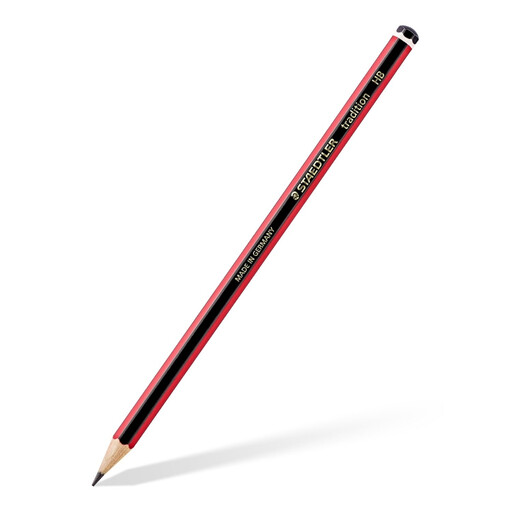
Tradition Graphite Pencil HB Grade HB
Why this product suits this profile: The HB grade covers writing, schoolwork, simple sketches and notes. The hexagonal barrel supports controlled handling.
The medium hardness grade helps beginners avoid accidentally choosing a very soft or very hard lead for everyday tasks.
HB graphite, a hexagonal barrel and, according to the product information, a break-resistant lead for writing, drawing and schoolwork.
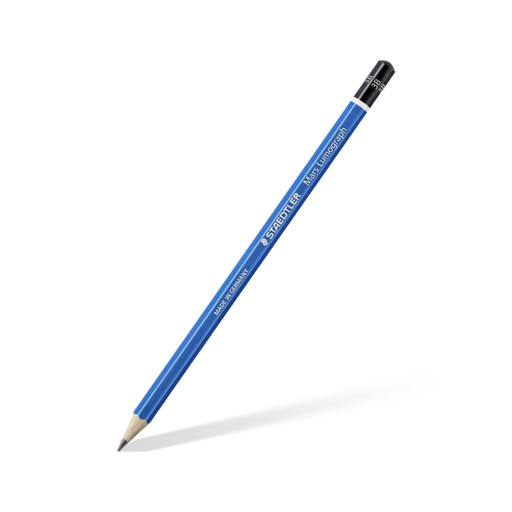
STAEDTLER Mars Lumograph 3B Graphite Pencil
Why this product suits this profile: The 3B grade combines darker lines with controllable shading, making it suitable for illustrations, portraits and more demanding sketches.
The selected medium-soft grade is dark enough for many drawings without having to jump straight to a 9B or 11B lead that can be difficult to control.
Special lead formulation, an approximately 2.5-millimetre lead diameter and, according to the product information, increased break resistance.
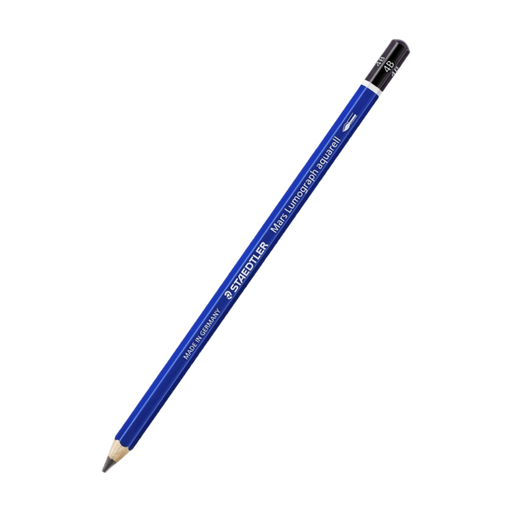
STAEDTLER Mars Lumograph Aquarelle 4B Water-Soluble Black Pencil
Why this product suits this profile: The water-soluble 4B pencil is designed for users who want to combine drawing, hatching and watercolour techniques.
Its water-soluble properties clearly distinguish it from a classic graphite pencil. This makes it easy to choose deliberately for mixed-media techniques.
Water-soluble 4B lead, an approximately 3.6-millimetre lead diameter and, according to the product description, high break resistance.
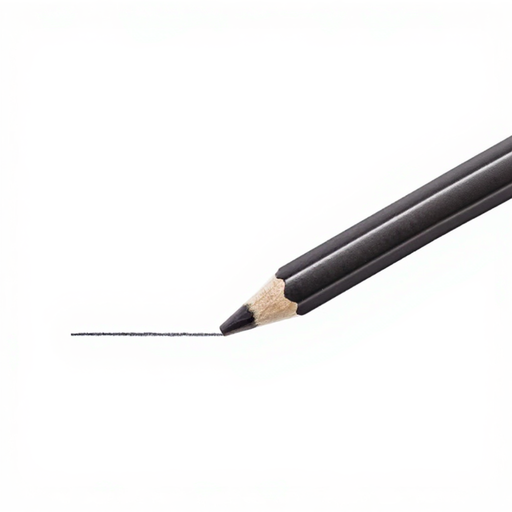
STAEDTLER Mars Lumograph Black Pencil 4B
Why this product suits this profile: The Black range is designed for dark, matt tones, making it suitable for expressive drawings, portraits and strong shadows.
If you are looking for a matt, carbon-rich line, you do not need to accidentally choose a shinier standard graphite pencil with the same hardness grade.
Carbon-rich 4B lead with a matt surface and, according to the product information, a break-resistant lead formulation.
Which Variant Is Right for Each Application?
- Writing and schoolwork: HB or F offer a balanced line. The STAEDTLER Tradition HB is an obvious choice for this purpose.
- Technical drawing: H, 2H, 3H, 5H or 8H produce light, finely controllable lines. According to the product information, the Mars Lumograph 3H is intended for work on paper and film.
- Freehand sketching: 2B to 4B offer greater darkness and a broader range of hatching.
- Strong shading: 5B to 11B are soft and dark; they require careful handling and regular sharpening.
- Charcoal drawings: According to the product description, the Mars Lumograph Charcoal M uses a carbon-rich mixture containing vegetable charcoal.
- Water-soluble techniques: A watercolour pencil such as the Mars Lumograph Aquarelle 4B version is designed to be combined with water.
If you cover several applications, you can choose a small set of HB, 2H, 3B and 6B pencils instead of relying on a single compromise pencil. For professional workflows, F or 3H, along with a very soft 8B to 11B pencil, may also be worth considering.
Looking for more options?
We have put together a complete, regularly updated list of products that fully meet these strict selection criteria and the safety regulations applicable in the EU.
Frequently Asked Questions About STAEDTLER Pencils
Which STAEDTLER pencil is suitable for everyday use?
For notes, schoolwork and general sketches, an HB pencil is usually a practical starting point. If you need a finer, lighter line, you can switch to F or H. B grades are better suited to darker sketches.
What is the difference between Mars Lumograph and Tradition?
The product information lists both ranges for writing, drawing and sketching. Tradition models cover a broad selection of classic hardness grades and are suitable for everyday use, schoolwork and general drawing. Mars Lumograph also includes variants with special properties, including very soft grades, the Black range, watercolour pencils and charcoal pencils.
How should I store pencils correctly?
Pencils should be stored in a dry place at as consistent a room temperature as possible. Soft leads such as 8B, 9B or 11B benefit from a case or pencil protector to prevent sideways pressure on the tip. A sharp sharpener and occasional cleaning help prevent wood splinters or graphite residue from interfering with sharpening.