
Choosing the right pencils: grades, uses and quality compared
Whether you need them for school, the office, technical drawing or creative projects, pencils can vary considerably in hardness, colour payoff, break resistance and feel. A budget set may be a good choice if you need lots of pencils. For precise sketches or daily drawing, other qualities matter more.
The product name alone doesn’t tell you much, though. Claims such as ‘break-resistant’, ‘sustainable’ or ‘for professionals’ should always be checked against specific product details.
Common mistakes when buying pencils
1. A large colour set is automatically right for every purpose
Many colouring pencils or coloured pencils in a large pack offer plenty of choice. But that doesn’t necessarily mean the leads are suitable for every type of paper or technique. A standard coloured pencil is fine for simple colouring activities. For layered illustrations, however, the lead, pigmentation and binder can all make a difference.
2. ‘Break-resistant’ doesn’t mean unbreakable
A pencil’s lifespan depends on more than just the lead. The bond between the lead and the wood, the quality of the sharpener and the pressure you apply when writing all affect how well it performs. A lead that is firmly bonded to the wood can be less likely to break when sharpening, but it won’t withstand strong sideways pressure.
3. Hardness is confused with darkness
With graphite pencils, H stands for a harder, usually lighter lead, while B stands for a softer, darker lead. HB sits between the two and is often a good choice for everyday use, school and the office. So an 8H pencil isn’t ‘better’ than a 9B pencil; it’s designed for a different purpose.
The key things to consider
Choose the right grade for the task
The standard scale ranges from hard grades such as 8H, 3H or 2H to soft grades such as 6B, 8B or 9B.
- HB and F: writing, notes, school, the office and general sketching
- H to 3H: fine lines, technical drawing, architecture and preliminary sketches
- 4H to 8H: very light, precise lines on suitable paper or drafting film
- B to 3B: hatching, sketches and mid-tones
- 4B to 9B: dark areas, expressive drawings and shading
A very hard drawing pencil can roughen the paper if you press too firmly. A soft lead produces darker marks, but wears down faster and is more likely to smudge.
Wood, lead bonding and shape
For wooden pencils, details about the lead bonding and the type of wood used are more helpful than general marketing claims. A hexagonal shape stops the pencil rolling away and gives you a steady grip for longer writing sessions. Triangular pencils can feel comfortable for children learning to hold a pencil with control.
Certifications such as FSC or PEFC relate to the wood’s origin or the responsible management of the forests it comes from. They aren’t a general assessment of the lead’s quality, but they do provide useful information about where the material comes from.
Wooden pencil or mechanical pencil?
Mechanical pencils offer a consistent line width because there’s no wooden casing to sharpen. A model with a 0.5 mm lead is suitable for notes, fine sketches and some technical work. For broad hatching or expressive drawing, wooden pencils with soft leads are usually more versatile.
Before you buy, check the lead diameter, replacement leads and eraser. Mechanical pencils with a 1.8 mm lead produce broader, more robust marks, while 0.5 mm leads are better suited to fine lines.
Our picks for different users
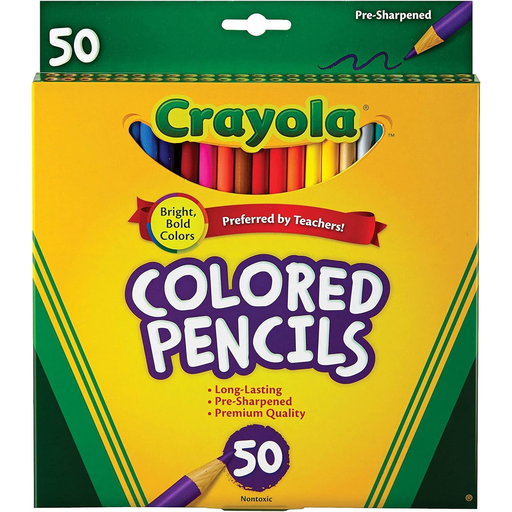
Crayola 50 Color Coloring Sticks
Why this product suits this profile: This set contains 50 pre-sharpened coloured pencils, making it a convenient choice for children, families and creative hobbyists who want to get started without putting a set together themselves.
The number of colours and the contents are clearly stated. The pencils arrive pre-sharpened, so you don’t need to buy anything else before you can start using them.
50 colours, HB coloured leads, pre-sharpened pencils and wood from sustainably managed forests, according to the product details.
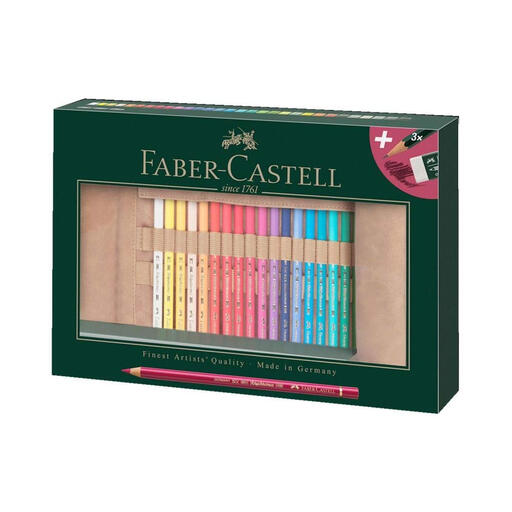
Faber-Castell Colour Pencil Polychromos 30ct Pen. Roll
Why this product suits this profile: Illustrators, artists and dedicated hobbyists get a coordinated colour palette, a way to carry it around and extra graphite pencils.
The product details specify the number of colours, lead grade and extra pencils included. This makes it easier to compare the set with buying coloured pencils individually.
30 Polychromos coloured pencils, three CASTELL-9000 graphite pencils in HB, 2B and 8B, plus an eraser in a pencil case.
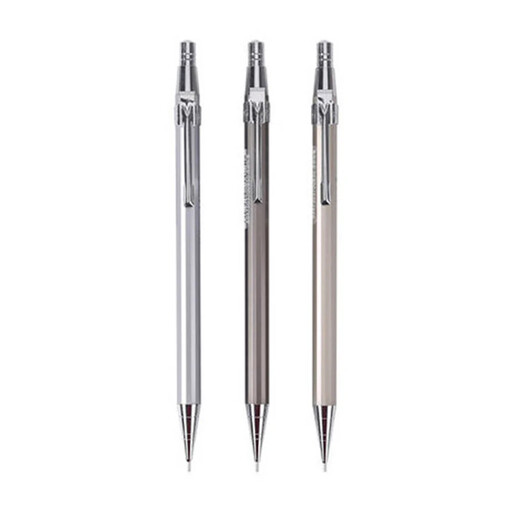
M&G Metal Mechanical Pencil, 0.5 mm, pack of 3
Why this product suits this profile: Students, office workers, architects and technical draughtsmen benefit from the consistent lead diameter for fine notes and lines.
The 0.5 mm diameter is clearly stated. The refillable design means you don’t have to replace the whole pencil when the lead runs out.
Metal barrel, push-button mechanism, 0.5 mm lead and three pencils in black, white and gold.
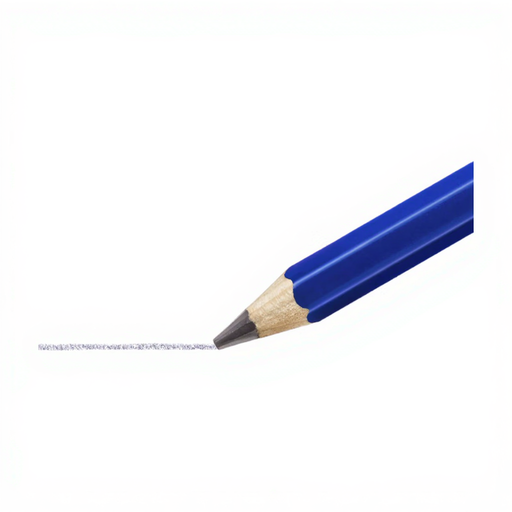
STAEDTLER Mars Lumograph 8H Graphite Pencil
Why this product suits this profile: The 8H grade is designed for very fine, light lines, such as those used in technical sketches, architecture or detailed plans.
The specific grade helps you avoid the common mistake of choosing a B pencil that’s too dark for light construction lines. According to the product details, the lead is designed to resist breakage.
8H graphite lead, approximately 2.0 mm lead diameter and PEFC-certified wood, according to the product description.
Looking for more options?
We’ve put together a complete, regularly updated list of products that meet these strict selection criteria and the safety regulations in force in the EU.
Care and useful accessories
A suitable sharpener can make a real difference to how long your pencils last. For soft sketching pencils, the blade should be sharp so it doesn’t put unnecessary strain on the lead. Mechanical pencils need replacement leads with the same diameter. Choose an eraser to suit the paper surface; a hard eraser isn’t always the best option for delicate drawing paper.
Keep pencils dry and protect them from pressure wherever possible. Very soft grades such as 8B or 9B can snap at the tip, so carry them in a case or pencil pouch.
Pencil FAQs
Which pencil is best for school and the office?
For everyday notes, worksheets and simple drawings, HB is a well-balanced choice. A set of several HB pencils is handy if you need to sharpen them regularly or keep spares. An integrated eraser can be useful for making corrections.
What’s the difference between 2H, 3H and 8H?
All three grades are on the harder end of the scale. 2H produces a relatively fine, light line, 3H is harder still and 8H is particularly light. A higher H grade can work well for technical drawing and light guidelines. Avoid pressing too hard, so you don’t damage the paper surface.
How long do pencils last?
How long a pencil lasts depends on its grade, lead thickness, sharpener and the pressure you apply. Soft pencils wear down faster when used for shading, while hard graphite pencils can keep a fine point for longer. With mechanical pencils, you don’t use up the whole pencil; it’s mainly the replacement lead that gets used.