
Choosing STAEDTLER Pencils: Hardness Grades, Lead Thicknesses and Suitable Models
STAEDTLER pencils are available for a wide range of tasks: from everyday writing at school to technical drawings and artistic shading. However, the brand name alone doesn't tell you whether a model suits your needs. What really matters are hardness grade, lead thickness, material choice and pack size.
If you only focus on a supposedly extra-durable design or a flashy product description, you might end up buying something that doesn't match your intended use. The following criteria will help students, artists, architects, engineers and office workers make an informed comparison of STAEDTLER graphite pencils.
Common Pitfalls When Buying STAEDTLER Pencils
1. Confusing Hardness Grade with Line Darkness
A pencil marked H has a harder lead core and typically produces a lighter, more precise line. B stands for a softer, darker core. HB sits in between and is often suitable for general writing, sketching and school use.
A 7H pencil isn't automatically right for every technical drawing, while a 7B model can quickly become too dark or hard to control for fine outlines. Even "H and H pencils" aren't necessarily identical: depending on the range, the material, shape and core thickness can vary.
2. "Break-Resistant" Doesn't Mean Indestructible
Many STAEDTLER pencils have the lead core firmly bonded to the wood. According to STAEDTLER's product information, this construction is designed to improve break resistance during writing, sharpening and under pressure. However, drops, a blunt sharpener or damp wood can still cause damage.
The description break-resistant pencils should therefore be understood as a reference to a design feature, not a guarantee against any damage.
3. Sustainability Is Described Using Different Standards
When it comes to sustainable pencils, it's worth looking at the specific certification. PEFC-certified wood indicates wood from certified, sustainably managed sources. With the Noris Upcycled Wood, STAEDTLER's product information refers to reclaimed wood from certified forestry.
However, a certification doesn't automatically apply to every component of the product or to the entire packaging. If ecological criteria are important to you, you should consider the wood source, lacquer, packaging and refillability separately.
The Key Buying Criteria at a Glance
Choose the Right Hardness Grade for Your Application
- H to 7H: For light, fine lines, technical preliminary drawings, architecture and construction. Very hard leads can indent the paper under heavy pressure.
- F and HB: A balanced choice for writing, school, office, light sketches and general technical tasks.
- B to 7B: For darker lines, hatching and soft transitions. The higher the B number, the softer the core usually is.
- S for charcoal or drawing pencils: For dark, expressive areas with a different surface effect to classic graphite.
The Mars Lumograph range covers many of these areas. For technical drawing pencils, H and 5H models may be suitable, while artist pencils like 5B or 7B are more focused on tonal values and shading.
Check Lead Thickness for Mechanical Pencils
For mechanical pencil leads, diameter and hardness grade are both crucial:
- 0.3 mm: For fine technical lines and detailed notes. A thin lead can break more easily under heavy pressure.
- 0.7 mm: A versatile compromise for school, office, sketches and technical drawings.
- 0.9 mm: Suitable for bolder lines, larger notes and users who apply more pressure when writing.
STAEDTLER Mars Micro Carbon leads are available in the thicknesses mentioned. According to STAEDTLER's product information, certain versions are designed to be flexible or offer increased break resistance. However, the diameter must match the mechanical pencil you're using.
Consider Wood Shape, Grip and Pack Size
A hexagonal barrel often prevents the pencil from rolling off a slanted drawing board and provides a defined grip position. For individual projects, a pack of a few pencils is sufficient. For school classes, offices or heavy users, a bulk pack like the Noris pencils in a pack of 72 can be more economical.
When calculating costs, you shouldn't just look at the unit price, but also consider usage, replacement needs and the availability of suitable sharpeners or mechanical pencil leads.
Our Selection by User Profile
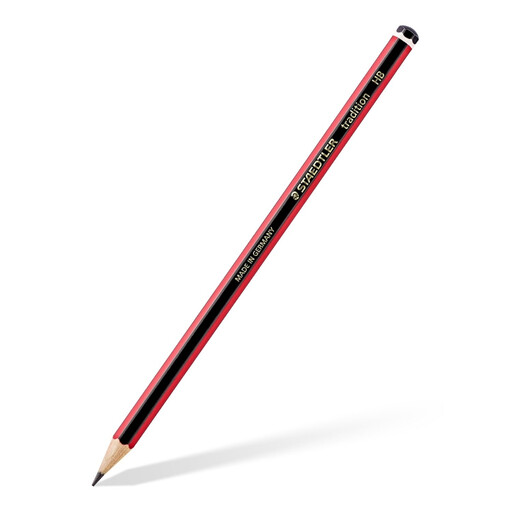
Tradition Graphite Pencil HB Grade HB
Why this product suits the profile: The HB hardness grade covers typical writing, school and sketching tasks without requiring a selection of many specialist hardnesses.
The clearly stated HB grade reduces the risk of choosing a pencil that's too soft or too hard for everyday tasks.
Hexagonal barrel, HB lead and, according to product information, a break-resistant lead core.
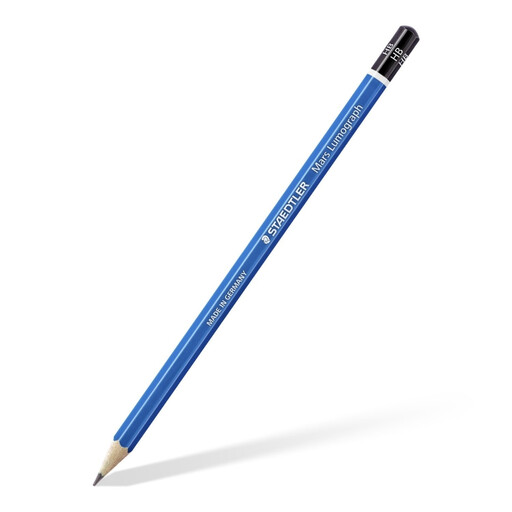
STAEDTLER Mars Lumograph HB Graphite Pencil
Why this product suits the profile: This model combines a balanced HB hardness grade with a hexagonal barrel designed for precise writing and drawing tasks.
The product information specifies PEFC-certified wood and a firmly bonded lead core, rather than just making general claims about durability.
HB grade, PEFC-certified wood according to product information, and suitability for linear drawing as well as sketching.
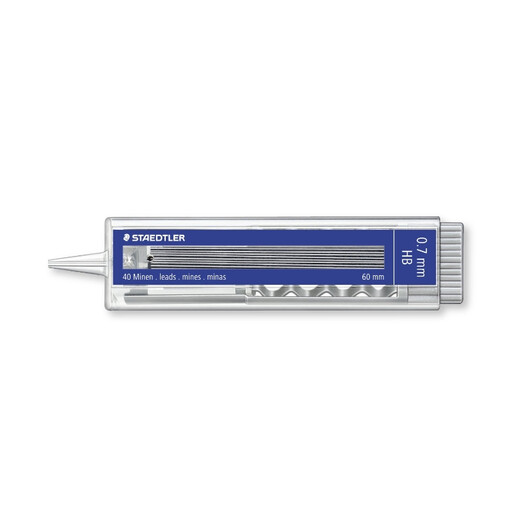
STAEDTLER Mars Micro Carbon – 40 Graphite Leads 0.7 mm HB
Why this product suits the profile: The 0.7 mm mechanical pencil leads are suitable for regular writing, technical notes and drawings on paper or card.
The diameter is clearly stated, preventing you from accidentally buying incompatible leads for your mechanical pencil.
40 graphite leads, 0.7 mm diameter and HB hardness; designed for increased break resistance according to product information.
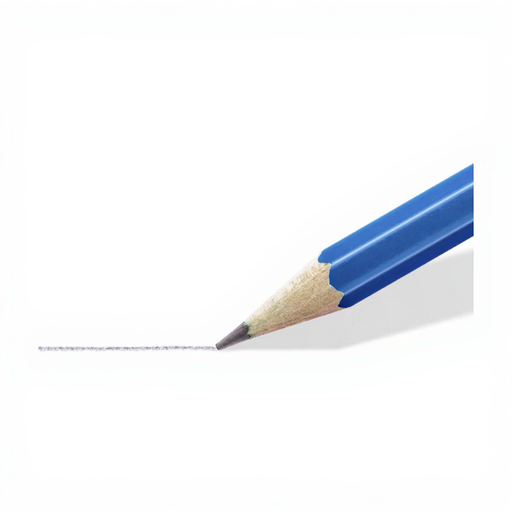
STAEDTLER Mars Lumograph 7B Graphite Pencil
Why this product suits the profile: The soft 7B grade is designed for dark shading, broad strokes and high-contrast drawings.
The clearly stated 7B hardness grade makes it transparent that this pencil is intended for dark areas, not fine technical lines.
Soft 7B core, graphite and carbon formulation according to product information, and a hexagonal wooden barrel.
Looking for more options?
We've put together a complete, regularly updated list of products that fully meet these strict selection criteria and the safety regulations in force in the EU.
Care and Use for a Longer Lifespan
A dry storage place protects the wood and lead core from unnecessary stress. For soft artist pencils, the sharpener should have a sharp blade; for particularly soft cores, a sanding block can offer more control. Mechanical pencil leads should only be refilled in the correct thickness.
For technical drawings, it's also advisable to use paper that matches the hardness grade. Very hard leads require less pressure, while soft leads can smudge more easily on smooth surfaces.
Frequently Asked Questions About STAEDTLER Pencils
Which STAEDTLER pencil is suitable for everyday use?
For school, office and general writing, HB is often a practical starting point. If you need a slightly finer and lighter line, you could consider F or H. The specific choice depends on your writing pressure and the paper you're using.
Which mechanical pencil leads fit my mechanical pencil?
The diameter must match. A mechanical pencil for 0.7 mm requires 0.7 mm leads; 0.3 mm and 0.9 mm are not interchangeable. Additionally, the hardness grade, such as HB, H or B, should suit the desired writing appearance.
Are STAEDTLER pencils suitable for technical drawings?
Models with H, 2H or 5H hardness grades tend to produce light, fine lines and can be suitable for preliminary drawings and technical applications. For darker outlines or lettering, HB or F is often used. The choice should be based on the drawing standard, paper and desired erasability.