
Pencil Buyer's Guide: Selecting Drawing, School, and Craft Tools
Choosing a pencil seems like a simple task. But anyone who has struggled with a lead that constantly breaks, smudges, or leaves a line that's barely visible knows that the details are crucial. False assumptions and overlooked product features often lead to a purchase that brings more frustration than utility. Before you decide on a graphite pencil, you should understand the most common pitfalls to make an informed choice.
Two common problems during selection are:
- Choosing the wrong lead grade: Many users default to HB without realising it may be unsuitable for their specific application—be it a fine technical drawing or an expressive sketch. The result is either lines that are too faint or smeared artwork.
- Misleading "break-resistant" claims: The term "break-resistant" is not standardised. Inexpensive pencils often use low-quality leads that break under slight pressure despite such promises, because the bonding between the lead and the wood casing is inadequate.
The Decisive Criteria: What to Look for When Buying Pencils
To find the right pencil, an understanding of its fundamental parameters is essential. These features determine the pencil's performance, durability, and ideal use case.
Understanding the Lead Grade System (H, B, HB)
The hardness grade of a pencil is the most important criterion and is indicated by a combination of letters and numbers. The scale is based on the mixture ratio of graphite (for blackness) and clay (for hardness).
- H (Hard): These pencils contain more clay, are harder, and produce lighter, more precise lines. The scale ranges from H to 10H. The higher the number, the harder and lighter the mark. Artist pencils and pencils for technical drawing in the H range are ideal for preliminary sketches and fine details, as they smudge less.
- B (Black): These pencils have a higher graphite content, are softer, and produce darker, richer lines. The scale ranges from B to 12B. The higher the number, the softer and blacker the stroke. They are excellent for drawing, sketching, and shading.
- HB: This is the standard grade, offering a balanced mix for everyday use like writing and taking notes.
- F (Firm): A slightly harder grade than HB, suitable for fine writing and offering good point retention.
Lead Quality and Break Resistance
A product advertised as a break-resistant pencil should feature a continuous and strong bond between the lead and its wood casing. Manufacturers like Staedtler use special processes where the lead is securely bonded to the wood along its entire length. This significantly increases its resistance to drops and the heavy pressure of sharpening. A high-quality lead is also characterised by a smooth, scratch-free laydown.
Wood and Shape: The Foundation for Durability and Comfort
The quality of the wood affects how well a pencil can be sharpened. Soft yet stable wood like cedar, often sourced from PEFC- or FSC-certified, sustainably managed forests, sharpens cleanly and without splintering.
The shape of the pencil is also relevant:
- Hexagonal: The standard for most writing and drawing pencils. The shape provides a good grip and prevents it from rolling on smooth surfaces.
- Oval/Flat: Characteristic of a carpenter's pencil. This shape fits well in the hand and cannot roll away on inclined surfaces like roofs or workbenches.
Selected by application need
Instead of making a one-size-fits-all recommendation, we have selected products tailored to clearly defined user profiles and their specific requirements.
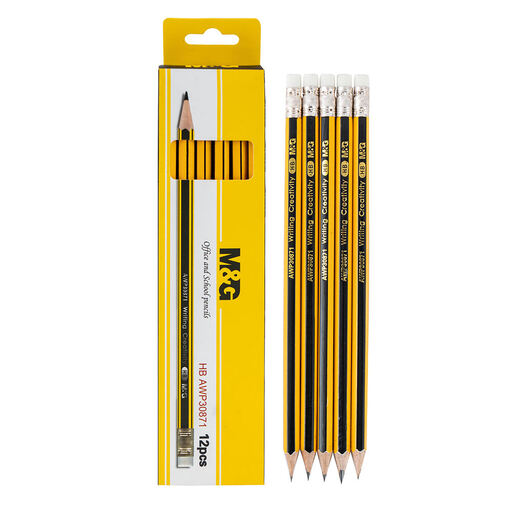
M&G HB Pencils, 12 Pack Pre-Sharpened
Why This Fits Their Persona: This pencil set is an economical and practical solution for students and general office needs. With 12 pre-sharpened pencils and integrated erasers, you're well-equipped for daily writing tasks.
The universal HB grade avoids the trap of buying a pencil that's too specialised. It offers the ideal compromise between hardness and blackness for clear, legible writing without smudging.
Excellent value in a 12-pack. The hexagonal barrel ensures a non-slip grip, and the attached eraser allows for quick corrections.
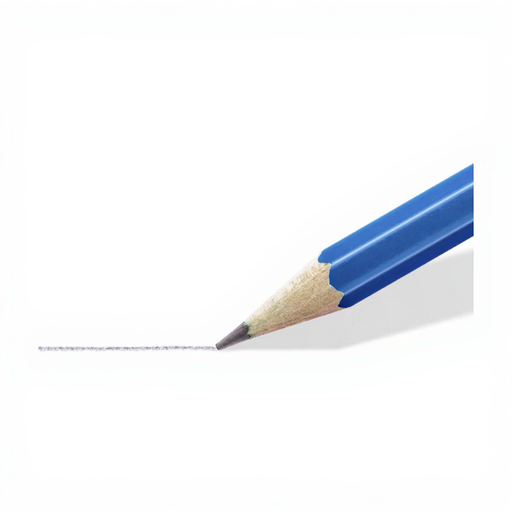
STAEDTLER Mars Lumograph 7B Graphite Pencil
Why This Fits Their Persona: For artists seeking a drawing pencil with maximum expressive power. The extra-soft 7B grade produces deep, rich blacks, making it ideal for shading, portraits, and high-contrast work.
This pencil bypasses the pitfall of an unsuitable lead grade. According to Staedtler, the special, carbon-enriched lead formulation provides a matte, jet-black laydown that reduces the sheen common with standard graphite pencils.
Despite its soft lead, the pencil offers high break resistance thanks to its special bonding. The wood is sourced from PEFC-certified, sustainably managed forests.
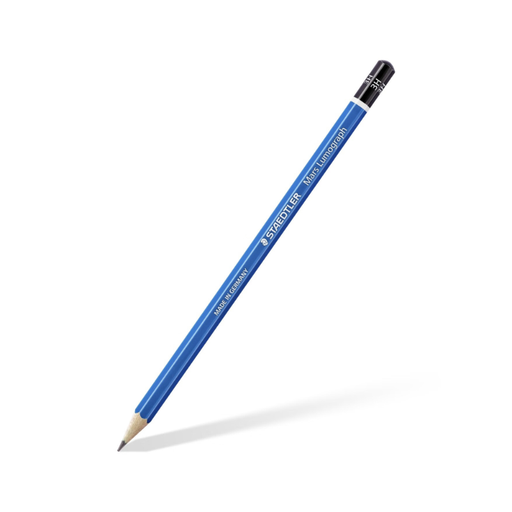
STAEDTLER Mars Lumograph 3H Graphite Pencil
Why This Fits Their Persona: Ideal for architects, engineers, and designers. The hard 3H grade produces extremely fine, clean, and light lines that are essential for technical drawings, blueprints, and detailed preliminary sketches.
This pencil prevents the smudging and hard-to-erase indentations that softer leads leave on technical paper. The hard lead also maintains its sharp point for significantly longer.
High break resistance and clean, easily reproducible lines. According to the manufacturer, it is suitable for use on paper and matte drafting film.
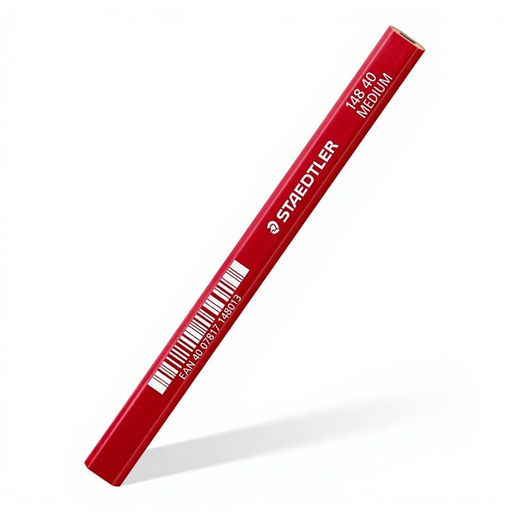
STAEDTLER Carpenter's Pencil, Medium Hardness
Why This Fits Their Persona: A specialised carpenter's pencil for tradespeople. The robust lead is suitable for marking on rough surfaces like wood, concrete, or stone, where a normal pencil would fail.
A standard round pencil is impractical on a construction site. This pencil's flat, oval shape prevents it from rolling off workbenches or sloped roofs, solving a key problem in a tradesperson's daily work.
Durable, break-resistant lead for rough materials. The shape provides a secure grip, and the manufacturer states the wood comes from FSC-certified, sustainably managed forests.
Looking for More Options?
We've compiled a complete, up-to-date list of products that fully meet these strict selection criteria.
Frequently Asked Questions About Pencils
Which lead grade is best for writing?
For everyday writing at school, in the office, or at home, the HB grade is the most common choice. It offers a good balance between wear resistance and readability. Those who press hard or prefer cleaner writing without smudging (especially left-handers) might also consider an F or H pencil.
How do I prevent my artist pencil's lead from breaking when sharpening?
With very soft artist pencils (e.g., 6B or softer), a conventional sharpener can break the lead. Use a high-quality sharpener with a sharp blade. Alternatively, many artists prefer to sharpen with a craft knife or scalpel to shape the point individually and expose the lead. The tip can then be refined on a sandpaper block.
What does the FSC or PEFC certification on a pencil mean?
These seals (Forest Stewardship Council and Programme for the Endorsement of Forest Certification, respectively) guarantee that the wood used for the pencil comes from forests that are sustainably managed according to strict ecological, social, and economic standards. Purchasing such products supports responsible forestry.