
Buying mackerel: compare products properly and find the right fillets
Anyone looking to buy mackerel will find a wide range of options online: tinned mackerel, mackerel fillets in tomato sauce, mackerel in chilli sauce, smoked mackerel, fish in oil and frozen mackerel. The differences are not limited to taste. Drained weight, ingredient list, cold chain, pack size and allergen information all determine whether a product is right for your household.
Common pitfalls when buying mackerel
1. Drained weight is confused with total contents
For tinned fish, the stated net quantity refers to the entire contents of the pack. Some of this may consist of oil or sauce. When comparing two tins, the drained weight is therefore more meaningful than the number of grams shown on the front. For example, the Hawesta MSC Smoked Mackerel Fillets contain 190 g in total, of which 133 g is drained weight.
2. Sauce, oil and salt alter the nutritional profile
Mackerel is naturally a fatty fish that is rich in protein. However, adding oil, sugar, salt or a heavily seasoned sauce changes the nutritional table. If you buy mackerel in oil, check the energy content per 100 g and the amount of fat. For mackerel fillets in tomato sauce or chilli sauce, it is also worth checking the sugar and salt content.
3. “Sustainable” does not automatically mean verifiable certification
If you are specifically looking for MSC mackerel, look for a recognised certification mark and the corresponding product labelling. General wording such as “sustainably caught” is no substitute for clear, verifiable information on the packaging. The Hawesta product explicitly states its MSC certification in the product information. The details on the packaging delivered to you remain decisive.
Parameters to check before buying
Ingredients and fish content
A high fish content can indicate a more pronounced fish flavour and less sauce or oil. Ingredients are listed in descending order by weight. According to the product information, 60% of the 155 g Geisha mackerel in tomato sauce is mackerel. This makes it easier to assess the product against alternatives with a lower fish content.
For seasoned varieties, you should also check for potential allergens. Mackerel contains fish. Depending on the recipe, the product may also contain soya, mustard, milk or wheat. People with allergies should check the current labelling on the packaging.
Nutritional values per 100 g
Comparing products per 100 g makes it easier to choose between different pack sizes. As a guide, the product information gives the following examples:
- Hawesta smoked mackerel fillets in rapeseed oil: 15 g protein and 32 g fat per 100 g
- Geisha mackerel in tomato sauce, 155 g: 15.32 g protein and 10 g fat per 100 g
- Mooijer frozen mackerel: 18.6 g protein and 13.9 g fat per 100 g
- Appel mackerel fillets in sunflower oil: 16 g protein and 30 g fat per 100 g
These values are specific to each product and should not be applied universally to all mackerel. If your diet focuses on high-protein fish, compare the protein, fat, salt and serving size.
Storage and consumption after opening
Unopened tins can generally be stored in a cool, dry place away from direct sunlight. Do not use a tin that is damaged, swollen or leaking. After opening, transfer the contents to a suitable non-metallic container and refrigerate. The specific use-by period is stated on the packaging; several of the products listed here specify two to a few days.
Frozen mackerel has different storage requirements: the product must be stored at a temperature of at least -18 °C. Mooijer mackerel should be refrigerated after defrosting, prepared within 24 hours and not refrozen. A core temperature of at least 70 °C is specified for preparation.
Our selection by shopping profile
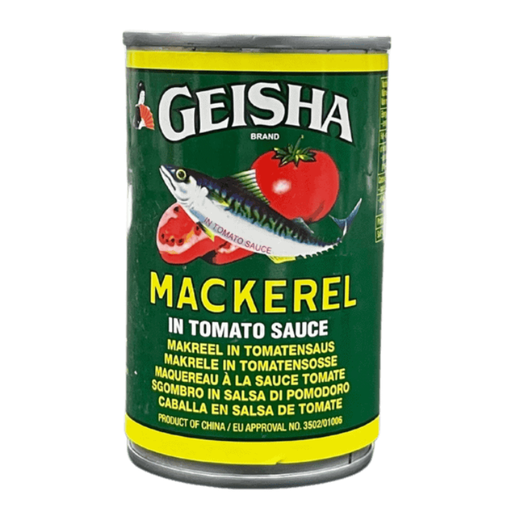
Geisha Mackerel in Tomato Sauce 155g
Why this product suits this profile: The 155 g tin is a manageable portion that can be enjoyed straight away, with rice, bread or salad, or added to wraps.
The fish content and nutritional values are stated, so the sauce cannot be mistaken for the actual quantity of fish.
According to the product information, it provides 15.32 g of protein per 100 g and is ready to eat without any prior preparation.
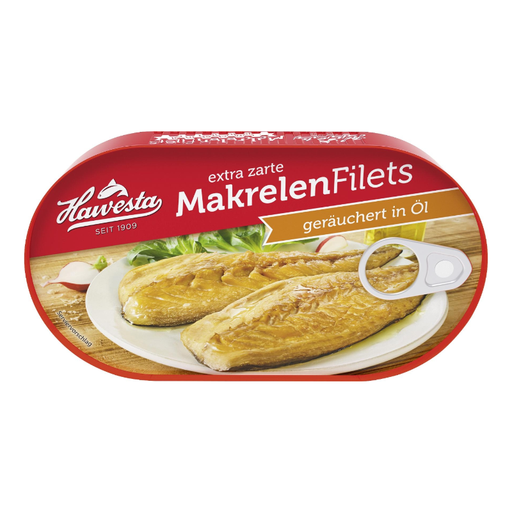
Hawesta MSC Smoked Mackerel Fillets in Pure Vegetable Oil 190g
Why this product suits this profile: Smoked mackerel in rapeseed oil is ideal for bread, salads and cold meals. The product information states that it contains MSC-certified wild-caught fish and beechwood smoke.
The total quantity and drained weight are stated separately. The MSC label is also mentioned in the product details.
According to the product information, it contains 70% mackerel fillets, 24% rapeseed oil and 15 g of protein per 100 g.
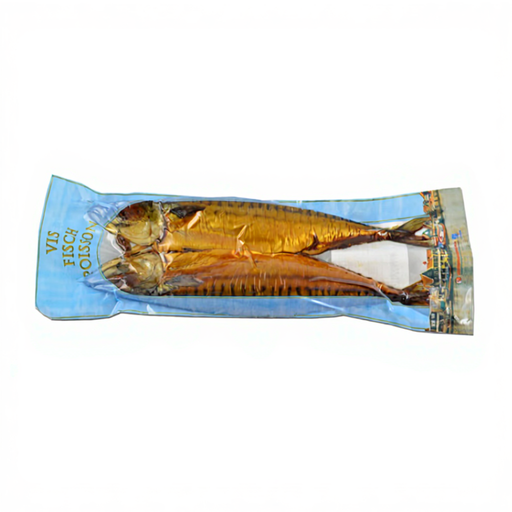
Mooijer Mackerel 300/400 G (2 ST IVP)
Why this product suits this profile: Two individually vacuum-packed frozen fish are suitable for grilling, frying in a pan or smoking yourself.
The IVP packaging keeps the two fish separate. Clear instructions on defrosting, refrigeration and not refreezing make planning easier.
Two fish weighing approximately 300 to 400 g each, with 18.6 g of protein per 100 g according to the product information.
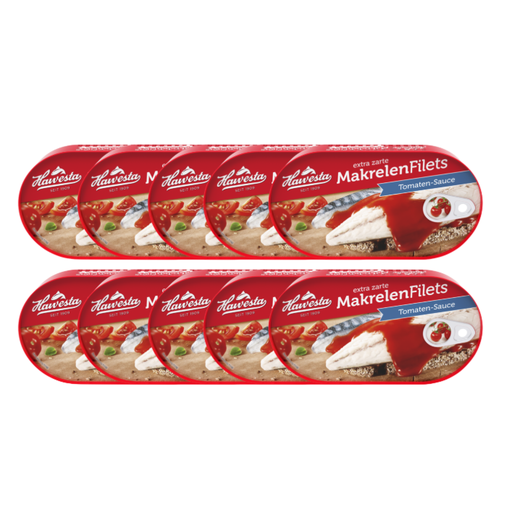
Hawesta MSC Mackerel Fillets in Tomato Sauce 10x200g
Why this product suits this profile: The ten-pack is designed for households that want to keep mackerel fillets in tomato sauce on hand for bread, rice dishes or quick evening meals.
The pack size is clearly stated. Ingredients, allergens and nutritional values make it possible to compare the product with individual portions.
Ten tins of 200 g each; the product information states that they provide 13 g of protein per 100 g.
Looking for more options?
We have put together a complete, regularly updated list of products that fully meet these strict selection criteria and the safety regulations applicable in the EU.
Frequently asked questions about buying mackerel
Is tinned mackerel ready to eat straight away?
Many tinned products, such as mackerel in oil, tomato sauce or chilli sauce, are ready to eat according to the product information. The tin should be undamaged before opening. Once opened, refrigerate the contents and consume them promptly.
How long does opened mackerel keep?
This depends on the product. A period of two to a few days in the fridge is often specified. The specific instructions on the packaging take precedence. Transfer leftovers to a clean, non-metallic container and seal it securely.
What is important when buying mackerel fillets in a multipack?
The key factors are the price per 100 g, the number of individual portions, the drained weight and the storage period. A multipack is particularly worthwhile if your household will use the tins within the stated minimum shelf life and regularly enjoys the flavour variety you have chosen.