
Buying Frozen Fish: A Guide to Choosing Fillets, Fish Fingers and Quick Meals
For many households in Germany, frozen fish is a convenient way to prepare a hot meal quickly. However, when buying frozen fish, the price on the pack is not the only consideration. The type of fish, net quantity, ingredients, portion sizes and preparation time all affect whether a product is genuinely suitable for your everyday needs.
Common pitfalls when buying frozen fish
1. Confusing pack weight with fish content
A 500 or 1,000-gram pack does not always contain fish exclusively. With breaded products, the coating and oil are included in the total weight. According to the product details, for example, the 300-gram Iglo MSC Fish Sticks consist of 65% Alaska pollock fillet. The 450-gram FRoSTA MSC Fish Sticks also contain 65% Alaska pollock fillet.
With glazed or processed fillets, water and humectants can affect the composition. When comparing frozen fish fillets, it is therefore worth checking:
- Fish content as a percentage
- Ingredients list
- Net quantity
- Number and weight of portions
- Nutritional values per 100 grams
2. “Boneless” does not automatically mean you can skip all checks
Manufacturers describe some products as virtually boneless or boneless. Nevertheless, an occasional bone may still be present in fillets and fish fingers. The Nordic Seafood Cod Fillets 4 x 100 g product details recommend checking the fish before eating, particularly when serving children and older people. Product information for some breaded fish dishes also warns that bones may be present.
If you are cooking for children, give the fish a quick check after cooking. Descriptions such as “skinless” or “boneless” are useful selection criteria, but they do not replace a visual and tactile check.
3. Confusing a short cooking time with less preparation
Fish fingers can be placed straight from the freezer into a frying pan or oven. Depending on the product, unseasoned fillets may first need to be partially defrosted, rinsed and patted dry. A seasoned fish dish is convenient, but often needs around 40 to 45 minutes in the oven.
It is therefore worth checking whether a product:
- Is cooked from frozen
- Needs to be defrosted in the fridge beforehand
- Is suitable for a frying pan, oven, steamer or microwave
- Requires a core temperature to be reached or to be cooked through completely
The most important criteria when buying frozen fish
Type of fish and flavour
Cod fillet and plaice fillet have a mild flavour and work well with simple side dishes, sauces or herbs. Alaska pollock is often used for fish fingers and breaded fillets. Pangasius fillet and tilapia fillet are mild and versatile, while sea bass fillet with skin can be a good choice for pan-frying.
The type of fish also affects the texture. Thick portions of cod remain firm when cooked correctly, whereas thinner fillets cook more quickly and may fall apart more easily.
Portion sizes and packaging
Individually wrapped or individually frozen pieces make it easier to take out exactly what you need. This is particularly useful for single-person households and working consumers who do not want to use the entire pack at once. The Nordic Seafood Cod Fillets consist of four individually wrapped 100-gram portions. According to the product description, the Küstengold MSC North Sea Schellings Fillets are individually quick-frozen and weigh 225 grams in total.
Larger packs, such as 1-kilogram bags, can offer an attractive price per kilo. However, check whether the pieces can be removed individually and whether the actual net weight differs from the weight stated on the pack.
Labels and origin
MSC-certified fish comes from an appropriately certified wild fishery. The MSC label relates to the certified supply chain and fishery. It does not automatically cover every other aspect of the product, such as the coating or nutritional value.
ASC-certified fish comes from certified responsible aquaculture. According to the product details, NordicSeafood Pangasius Fillet Skinless Boneless 500 g is labelled as ASC-certified and comes from aquaculture in Vietnam.
The catch area, country of production and level of preparation may also be relevant. You can find these details on the product page or packaging. They should not be confused with general marketing claims.
Our selection for different types of buyers
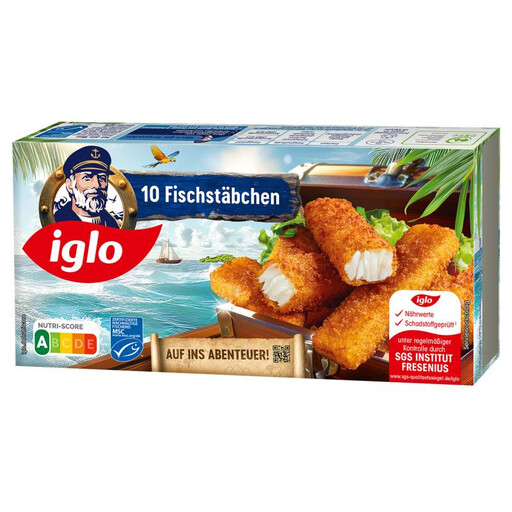
Iglo 10 MSC Fish Sticks 300 g
Why this product suits this profile: Ten portion-sized fish fingers can be cooked straight from the freezer. This makes them a good fit for families and households that need a predictable quantity for a quick meal.
The fish content is stated as 65%, making it easier to understand how much of the product is fish and how much is coating. The MSC labelling also provides specific information about its sourcing.
10 pieces, 13 g of protein per 100 g and cooking from frozen.
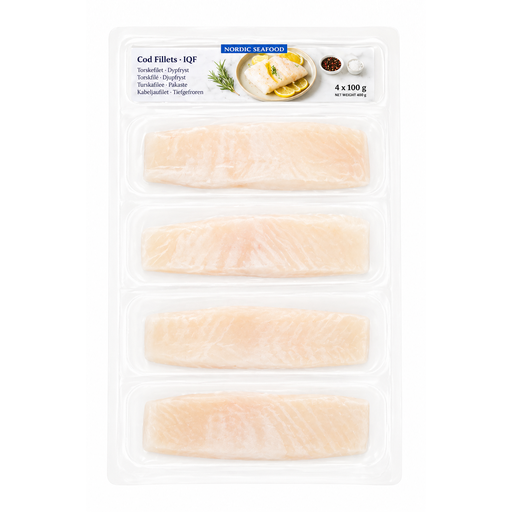
Nordic Seafood Cod Fillets 4 x 100g
Why this product suits this profile: Four individually wrapped portions of cod make it easier to plan your freezer supplies and can be prepared in a frying pan, steamer or oven.
The product details specify the type of fish, catch area and portion size. Although the product is described as “skinless and boneless”, checking the fish before eating is still recommended.
100-gram portions, 17.6 g of protein and 0.6 g of fat per 100 g according to the product details.
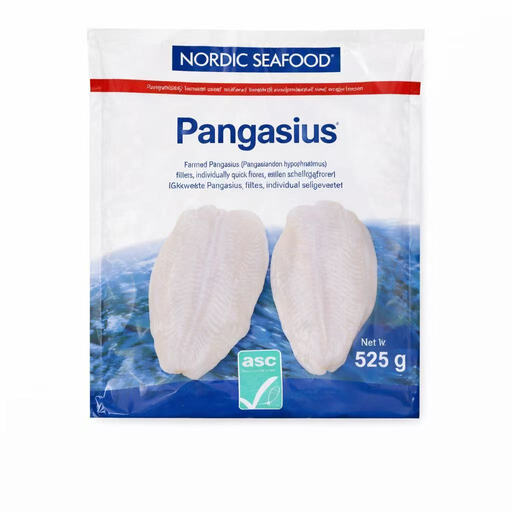
NordicSeafood Pangasius Fillet Skinless Boneless 500g
Why this product suits this profile: The 500-gram pack is suitable for several meals. The mild pangasius fillet can be fried, steamed or cooked in the oven.
The ASC certification is clearly stated. At the same time, the ingredients list shows that the product contains water, salt and humectants in addition to pangasius.
A skinless fillet described as boneless, with a 500 g pack size; according to the product details, it contains 11 g of protein per 100 g.
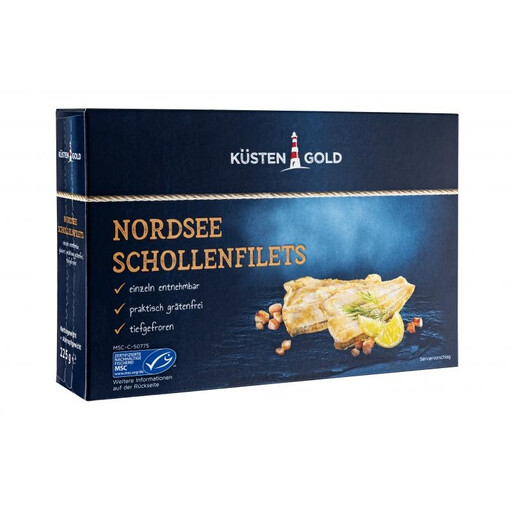
Küstengold MSC North Sea Schellings Fillets 225 g
Why this product suits this profile: The individually quick-frozen plaice fillets can be portioned and prepared in a frying pan or oven. They are well suited to smaller households and straightforward fish dishes.
The pack specifies the type of fish, catch area and MSC labelling. The preparation instructions clearly distinguish between partially defrosting, patting dry and cooking thoroughly.
225 g pack size, 16 g of protein per 100 g and, according to the description, fillets with very few bones.
Looking for more options?
We have put together a complete, regularly updated list of products that fully meet these strict selection criteria and the safety regulations applicable in the EU.
Plan preparation and storage properly
Frozen products should be stored at -18 °C or colder until you are ready to use them. According to the product details, defrosted food must not be refrozen. Fillets are safest when defrosted in the fridge, unless the packaging specifies that they can be cooked directly from frozen.
When handling raw fish, clean hands, worktops and kitchen utensils are essential. Cook the product thoroughly and follow the preparation instructions on the relevant packaging. Breaded products such as fish fingers often do not need to be defrosted, whereas cod or plaice fillets may need to be partially defrosted as part of the recommended preparation.
Frequently asked questions about buying frozen fish
How long does frozen fish keep?
The specific best-before date is shown on the packaging. Unopened products should remain frozen at all times. If the packaging is damaged, there are heavy ice crystals or there are visible signs that the product has defrosted, it is particularly important to check the food carefully.
Is frozen fish just as versatile as fresh fish?
Yes. The ways you can use it depend mainly on the type and format of the fish. Fillets are suitable for a frying pan, oven or steamer. Fish fingers are portioned and can usually be cooked directly from frozen. Seasoned fish dishes require less preparation, but contain additional ingredients such as coating, sauce or cheese.
What should families look out for when buying online?
Check the delivery conditions for frozen goods, pack size, allergens and cooking method. Fish fingers and seasoned fillets may contain potential allergens such as wheat, milk or egg. For children, you should also check every piece before serving, despite any claims that the product contains few or no bones.