
Buying Tinned Fish in Tomato Sauce: A Guide to Choosing for Taste, Storage and Price
Tinned fish in tomato sauce is a practical choice for many UK households. It can be served without lengthy preparation, does not need to be refrigerated while unopened, and pairs well with bread, rice, pasta or salad. However, tinned fish products can vary considerably in terms of fish species, sauce, portion size, ingredients and salt content.
If you only look at the price per tin, you can easily overlook important details. The following criteria will help you choose a product that suits your needs.
Common pitfalls when buying fish in tomato sauce
1. The price per tin says little about the actual contents
A tin with a lower unit price may contain a smaller proportion of fish or a lower net quantity. That is why you should compare the price per 100 g and check the fish content as a percentage. Among the products in this selection, for example, the fish content ranges from 50 to 60 per cent.
A multipack is not automatically better value either. A pack containing 10 tins of 200 g offers a different total quantity from 12 tins of 110 g. For a meaningful comparison, consider the total net quantity.
2. “Tomato sauce” does not automatically describe the taste
Mackerel fillets in tomato sauce may come with a sauce that is fairly savoury, sweet or acidic. Herring fillets in tomato sauce are also available in versions containing cream, mozzarella, curry or herbs. Pay attention to:
- Tomato purée or tomato paste content
- Sugar and acidity regulators
- Cream, milk ingredients or mozzarella
- Seasonings such as curry, mustard, garlic or chilli
- Thickeners and modified starch
If you prefer a simple sauce, compare the ingredients list with those of flavoured varieties. A more strongly seasoned sauce, on the other hand, may be more practical for Mediterranean-style or spicy dishes.
3. Do not confuse sustainability and organic claims
MSC-certified fish indicates that the relevant fishery has been certified. The MSC label is not the same as an organic certification. For organic herring fillets, the organic claim refers to the appropriately labelled agricultural ingredients; the fish itself does not come from organic aquaculture when it is wild-caught.
You should therefore check the specific label, certification details and product description. For example, the Appel “Organic Tomato Cream” version states that 33 per cent of the agricultural ingredients come from certified organic farming.
Parameters to check before buying
Fish species and texture
- Mackerel: often stronger in flavour, with firm fillets.
- Herring: usually tender and easy to pair with creamy or savoury sauces.
- Sardines: often available in smaller tins and suitable for bread, rice or salads.
- Tuna: tends to have a flaky texture, making it practical for sandwiches, pasta and salads.
The term “fillets” may indicate more clearly portioned pieces. With sardines or anchovies, check which fish species is actually listed in the ingredients.
Net quantity and pack size
For individual meals, 155-g or 200-g tins are a manageable size. A tinned fish multipack is better suited to households that eat it regularly or want to build up a supply. Also consider how much space you have in your cupboard and the best-before date.
Once opened, the contents should generally be transferred to a suitable non-metallic container and refrigerated. The exact time in which they should be eaten depends on the packaging information and may vary from product to product.
Nutritional information and allergens
Compare the information per 100 g, not just per tin. Energy, fat, sugar, protein and salt are particularly relevant. The sauce can have a significant effect on the sugar and salt content.
Fish must be declared as an allergen. Depending on the recipe, products may also contain milk, wheat, mustard or celery. If you have known allergies, always refer to the complete ingredients and allergen list on the relevant product packaging.
Product selection for different types of shopper
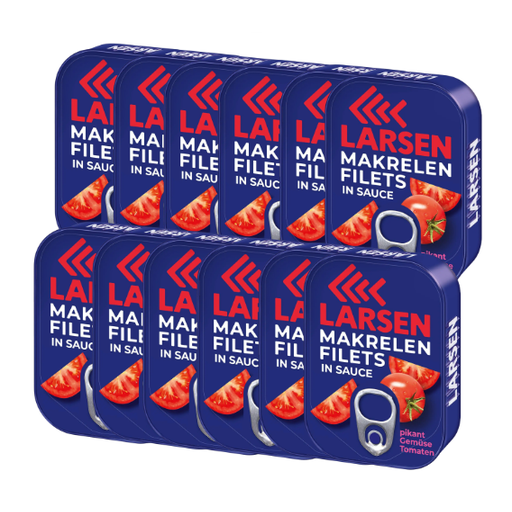
Larsen Mackerel Fillets in Tomato Sauce 12x110g
Why this product suits this profile: The multipack contains 12 individual portions, making it suitable for shoppers who regularly eat tinned fish and prefer to keep the amount per meal manageable.
The pack clearly states that it contains 12 tins of 110 g each. This makes it easy to assess the portion size before buying.
Mackerel fillets, 12 individual tins and, according to the product information, 15 g of protein and 0.78 g of salt per 100 g.
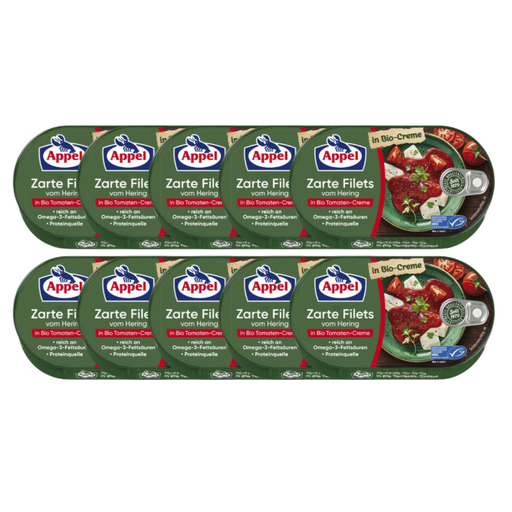
Appel MSC Tender Herring Fillets in Organic Tomato Cream 10x200g
Why this product suits this profile: The combination of MSC herring, 200-g tins and labelled organic ingredients appeals to shoppers who compare certifications and recipe details carefully.
The product information specifies both MSC certification and the inspection body responsible for the organic ingredients. This makes the claims easier to assess accurately.
60% herring, 12.1 g of protein and 1.15 g of salt per 100 g according to the product data; 10 tins of 200 g each.
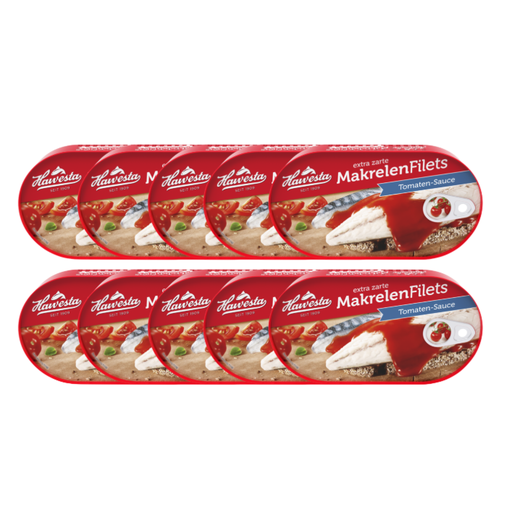
Hawesta MSC Mackerel Fillets in Tomato Sauce 10x200g
Why this product suits this profile: The pack of 10 200-g tins is designed for households that regularly use tinned fish as a quick meal or to build up a supply.
The product data states the fish content of 60% and a net quantity of 200 g per tin.
MSC-labelled mackerel fillets, 13 g of protein and 0.80 g of salt per 100 g according to the product information.
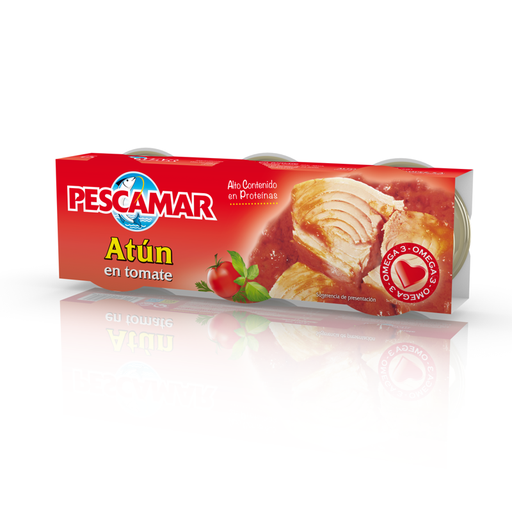
Pescamar Tuna in Tomato Sauce 3x80g Turkish
Why this product suits this profile: Three small tins are ideal for office lunches, sandwiches, salads or individual portions, without having to open a large tin.
The 3 × 80-g format makes the portion size clear and limits the amount of leftovers that need to be stored in the fridge.
Tuna in tomato sauce, ready to eat and, according to the product description, containing 18 g of protein per 100 g.
Looking for more options?
We have put together a complete, regularly updated list of products that fully meet these strict selection criteria and the safety regulations applicable in the EU.
Frequently asked questions about tinned fish in tomato sauce
How long does tinned fish keep?
Unopened tins can be stored until the printed best-before date if kept in a cool, dry place protected from direct sunlight. Damaged, bulging or heavily rusted tins should not be used. Once opened, follow the manufacturer's instructions; leftovers should be refrigerated in a non-metallic container.
Which fish species is best for which meal?
Mackerel has firmer fillets, making it suitable for bread and warm side dishes. Herring pairs well with creamy or savoury sauces. Sardines are practical for toast, rice and salads. Tuna combines well with pasta, sandwiches and salads thanks to its flaky texture.
Are MSC-certified tinned fish products automatically organic?
No. MSC and organic labels indicate different properties. MSC refers to a certified fishery. An organic label applies to the ingredients identified as organic and to the relevant organic production requirements. Always check the exact product labelling and ingredients list.