
Buying Tinned Fish: A Guide to Choosing Tuna, Herring and Mackerel
Tinned fish is a practical store-cupboard staple for many UK households. It can be used without much preparation in salads, sandwiches, pasta or a quick meal. However, claims such as “sustainable”, “high in protein” or “with Omega-3” reveal little about the actual contents of the tin. The key factors are fish content, drained weight, preparation method and ingredients list.
Common pitfalls when buying tinned fish
1. Confusing stated weight with the actual amount of fish
A tin weighing 185 or 200 grams does not always contain the same amount of fish. Liquid, sauce or oil are included in the net weight, while the drained weight shows how much content remains after draining. For price comparisons, you should therefore look at the fish content or drained weight wherever possible.
Example: Followfood MSC Tuna Fillets in Natural Brine contain 185 grams of total contents and have a stated drained weight of 130 grams. Hawesta MSC Smoked Mackerel Fillets in Pure Vegetable Oil have a net weight of 190 grams and a drained weight of 133 grams.
2. Overlooking sauce and oil when checking nutritional values
Fish in oil can provide considerably more energy and fat than fish in water or natural brine. Fish in tomato sauce or creamy sauce may also contain sugar, starch, salt and milk ingredients, depending on the recipe. If you are looking for tuna for salads or a protein-rich meal, check the nutritional values per 100 grams as well as the ingredients list.
3. Judging sustainability by the packaging text alone
A statement such as “more sustainable fish” should ideally be supported by a recognised certification such as MSC or ASC. MSC applies to certified wild fisheries, while ASC is used mainly for farmed fish. The certification does not replace checking the species, fishing area and product details. For the MSC tinned fish mentioned here, this information is provided on the relevant product pages or packaging.
Parameters to check before buying
Fish species and intended use
- Tinned tuna is ideal for pasta, sandwiches, wraps and salads. Varieties in water or brine are usually lighter than products in oil.
- Herring fillets go well with bread, potatoes and cold platters. In tomato, pepper or cream sauce, they are ready to serve.
- Mackerel fillets have a stronger flavour. Smoked fish in oil can be enjoyed as a snack, on bread or in a salad.
- Fish fillets in sauce often need no additional seasoning, but may contain ingredients such as sugar, mustard, milk or wheat, depending on the variety.
Ingredients, allergens and salt content
Fish and fish products are allergens that must be declared. Depending on the recipe, other allergens may also be present, including mustard, celery, milk or gluten. For example, Hawesta MSC Herring Fillets in Tomato Cream Sauce list fish, mustard, celery and milk. According to the product details, Appel MSC Tender Herring Fillets in Tomato Mozzarella Cream contain fish, milk and wheat, among other ingredients.
Salt content is particularly relevant for marinated products and fish in strongly seasoned sauces. The values vary considerably: Followfood MSC Tuna Fillets in Natural Brine contain 0.62 grams of salt per 100 grams, while Appel Marinated Fried Herring Fillets in Spicy Broth are listed as containing 1.24 grams per 100 grams.
Packaging, storage and portion sizes
Unopened tinned fish can normally be stored at room temperature in a cool, dry place. Once opened, leftovers should be transferred to a suitable non-metallic container, refrigerated and consumed within the period stated on the packaging. For the products mentioned, this period ranges from 24 hours to a few days, depending on the variety.
For single-person households or occasional meals, packs weighing 100 to 200 grams are often easier to portion. Families and regular users may wish to consider multipacks such as Larsen Mackerel Fillets in Honey Mustard Sauce, with 12 units of 110 grams each. Make sure the shelf life, storage space and actual consumption levels are compatible.
Our selection for different types of buyer
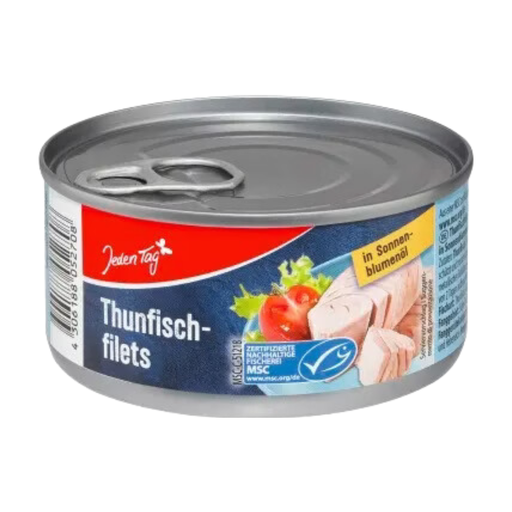
Jeden Tag MSC Tuna Fillets in Sunflower Oil 195g
Why this product suits this profile: The 195-gram tin provides a straightforward base for salads, sandwiches and pasta. The ingredients list is limited to tuna, sunflower oil and salt.
The stated net weight of 195 grams, along with 25 grams of protein and 1.0 gram of salt per 100 grams, makes comparisons easier.
MSC-certified tuna, three stated main ingredients and flexible portioning.
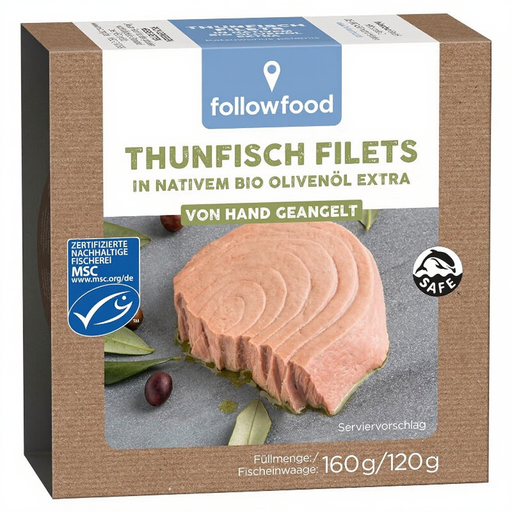
Followfood MSC Tuna Fillets in Organic Extra Virgin Olive Oil 160g
Why this product suits this profile: The product details specify skipjack tuna, certified extra virgin olive oil and MSC certification. The drained weight is approximately 120 grams.
The fish content, amount of oil and drained weight are stated, making the difference between the total fill quantity and the amount of fish actually available clear.
25 grams of protein per 100 grams and a short ingredients list with MSC certification.
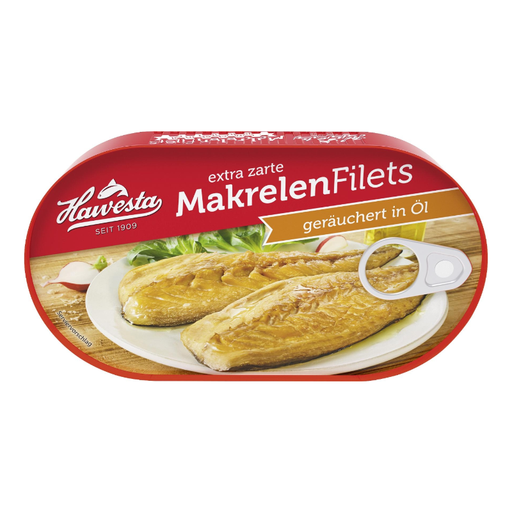
Hawesta MSC Smoked Mackerel Fillets in Pure Vegetable Oil 190g
Why this product suits this profile: Smoked fish with 70 per cent mackerel fillets, rapeseed oil and beechwood smoke can be enjoyed straight away on bread, in a salad or as a snack.
The tin states both the net and drained weights. At 348 kcal and 32 grams of fat per 100 grams, its higher-energy oil-based recipe is easy to assess.
MSC certification, 15 grams of protein per 100 grams and clearly stated beechwood smoking.
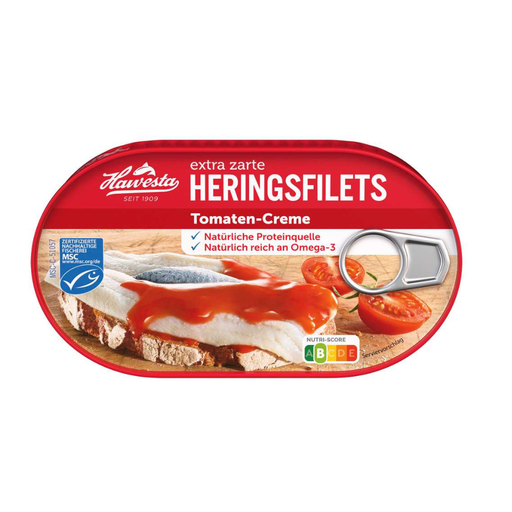
Hawesta MSC Herring Fillets in Tomato Cream Sauce 200g
Why this product suits this profile: These ready-to-serve herring fillets in tomato cream sauce can be served with bread or toast, or as part of a hot meal.
According to the product details, the fish content is 60 per cent. Allergens such as fish, mustard, celery and milk are clearly stated.
200-gram portion, MSC certification and 10 grams of protein per 100 grams.
FAQ about tinned fish
How long does tinned fish keep?
The best-before date is printed on the packaging. Unopened tins should be stored in a cool, dry place away from direct heat. Once opened, leftovers should be placed in a sealed non-metallic container and kept in the fridge. The exact storage period depends on the label; 24 hours to a few days is often stated.
Are MSC-certified tins automatically lower or higher in nutrients?
The MSC certification describes the product’s origin in a certified wild fishery, not its nutritional value. Protein, fat and salt content depend on the fish species, recipe and liquid in which the fish is packed. For a meaningful comparison, check the information per 100 grams and the drained weight.
Which is better for a lighter meal: fish in oil or fish in brine?
Fish in brine or its natural juices often contains less fat than fish in oil. However, the exact composition varies from product to product. If you want to reduce fat and energy intake, compare the nutrition table. If you prefer a particular flavour or softer texture, fish in rapeseed, sunflower or olive oil may be the better choice.