
Small Saucepan: A Buying Guide for Milk, Sauces and Small Portions
A small saucepan is practical when you only want to prepare one portion of soup, sauce, milk or baby food. For single people, couples and households with limited storage space, a mini saucepan can also replace several larger cooking vessels. However, models vary considerably in terms of capacity, material, hob compatibility and cleaning.
Before buying, you should look beyond descriptions such as “milk pan” or “saucepan”. The technical specifications and intended use are what really matter.
Common Buying Traps with Small Saucepans
1. Diameter and capacity are confused
A saucepan with a diameter of 14 or 16 cm can hold very different amounts depending on its height. For individual sauces, 0.25 to 1 litre is often sufficient. If you regularly prepare pasta, soup or a larger portion of vegetables or other side dishes, you will generally need a capacity of 1.3 to 1.7 litres.
So be sure to check:
- usable capacity rather than just the external diameter
- internal height and base area
- sufficient space below the rim to prevent milk or other liquids from boiling over easily
- the size of the smallest cooking zone on your hob
2. “Suitable for induction” is not a given with every model
A small saucepan for induction requires a magnetic base. With aluminium pans, an additional stainless steel induction disc is often integrated for this purpose. If this information is not provided, check hob compatibility before buying.
The base diameter also matters: if the base is significantly smaller than the induction zone, detection may be limited depending on the hob. Models that explicitly state they are suitable for induction, gas, ceramic and electric hobs offer greater flexibility if you move home or use different cooking appliances.
3. Coatings are used incorrectly
A coated saucepan is often easy to clean, but it requires appropriate use. Metal turners, excessive heat and heating the pan while empty can damage the surface. With ceramic-coated models, low to medium temperatures and wooden, silicone or plastic utensils are advisable.
An stainless steel saucepan, on the other hand, is uncoated and can often withstand utensils more robustly. However, milk, starch or sauces may stick more readily if the pan becomes too hot or is not stirred sufficiently.
The Most Important Selection Criteria
Material: Stainless Steel, Aluminium or Cast Iron
18/10 stainless steel, also known as 304 stainless steel, is frequently used for durable cookware. Stainless steel is rust-resistant and easy to care for. A encapsulated or specially constructed base can improve heat distribution. For example, the WMF mini set uses Cromargan 18/10 stainless steel and a TransTherm all-hob base.
Aluminium is comparatively lightweight and responds quickly to temperature changes. A coating can reduce sticking. With aluminium, however, check whether an induction disc is present and what cleaning method the manufacturer recommends.
Enameled cast iron retains heat for longer and is comparatively heavy. This can be useful for keeping small quantities warm, but it also extends the cooling time. Hot cast-iron pans should not come into direct contact with cold water.
Coated or Uncoated Surface
A coating is particularly useful for milk, delicate sauces and easy cleaning. However, it is a wear part. Do not use abrasive sponges, and follow the instructions regarding dishwasher use.
An uncoated stainless steel saucepan is suitable if you prefer an easy-care, heat-resistant surface without a non-stick coating. Cooking results depend more heavily on temperature control and stirring.
Lid, Handle and Pouring
A lid is useful when liquid needs to be heated slowly or a sauce cooked briefly. A glass lid lets you keep an eye on the contents, while a metal lid is generally less delicate. Look for:
- heat-resistant handles and lid knobs
- a secure grip on small, lightweight saucepans
- a drip-reducing pouring rim
- oven and dishwasher suitability, if required
- stackable designs when storage space is limited
Our Selection for Different Households
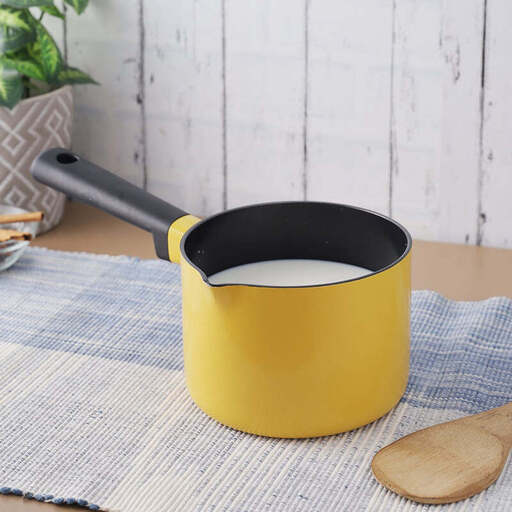
LocknLock Decor IH Induction Milk Pan 14 cm
Why this product suits this profile: The 14 cm milk pan is designed for milk, sauces and small quantities of food. Its ceramic coating and Bakelite handle are designed for straightforward everyday use.
Its suitability for induction, gas, electric and ceramic hobs is clearly stated. Guidance on using low to medium heat and suitable kitchen utensils helps prevent typical coating damage.
Ceramic interior and exterior coating, compatibility with four stated hob types and a Bakelite handle.
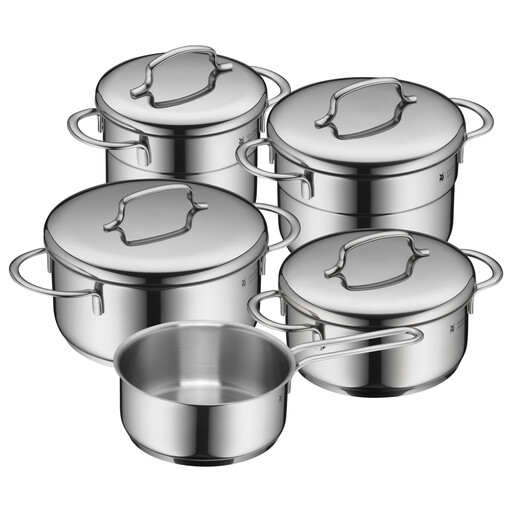
WMF Cromargan Stainless Steel Mini Pot Set, 5-Piece
Why this product suits this profile: The set covers several small sizes, including 1.0 and 1.3-litre saucepans as well as 0.9 and 1.5-litre frying pans. It is an appealing choice for households that prepare a variety of small portions and want to stack their cookware neatly to save space.
The individual capacities and diameters are specified. According to the product details, the TransTherm all-hob base is suitable for induction, gas, electric and ceramic hobs; the lids and pans are dishwasher- and oven-safe.
Uncoated Cromargan 18/10 stainless steel, several sizes and a stackable design.
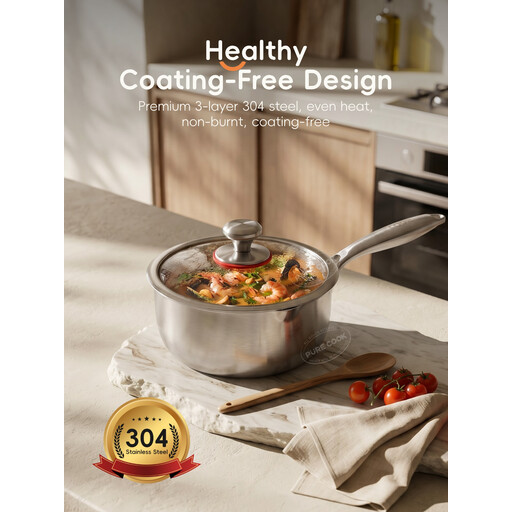
PURECOOK Milk Pan Series, 304 Stainless Steel, 18 cm
Why this product suits this profile: The 18 cm saucepan with glass lid is designed for milk, sauces, individual meals and preparing baby food. Its larger capacity makes it suitable for more than just a small cup of liquid.
The material, lid and intended hob types are clearly specified. The care instructions recommend hand washing with mild detergent and warn against abrasive cleaners and sudden temperature changes.
304 stainless steel, a glass lid and a heat-resistant handle for a range of small cooking tasks.
Looking for more options?
We have put together a complete, regularly updated list of products that fully meet these strict selection criteria and the safety regulations applicable in the EU.
Small Saucepan for Induction: Practical Tips
Place the saucepan in the centre of the cooking zone and start at a moderate temperature. With milk and sauces, regular stirring is advisable, as residue can quickly form on the base. Before buying, also check whether the handle extends beyond the edge of the cooking surface and whether a lid is included.
For baby food, clean the saucepan thoroughly after every use. Allow cast-iron and coated models to cool before washing them. With stainless steel, soft sponges and mild cleaning products can help protect the surface.
Small Saucepan FAQ
What size is suitable for a small saucepan?
For milk, butter or a single sauce, 0.25 to 1 litre is often sufficient. A saucepan with a capacity of 1.3 to 1.7 litres is more versatile and is also suitable for small soups, side dishes, pasta or several portions of baby food.
Is every small saucepan suitable for induction?
No. The base must be magnetic or have a suitable induction disc. Look for clearly stated hob compatibility and check the base diameter. With an aluminium saucepan, induction compatibility is not automatic.
How long does a small saucepan last?
Its service life depends on the material, construction, temperature and care. A stainless steel saucepan is uncoated and comparatively straightforward to maintain with gentle cleaning. Coated models should not be overheated while empty and should only be used with suitable kitchen utensils. Cast iron can remain usable for many years with proper care, but it requires more attention when cooling and drying.