
Buying a Milk Pan: What to Look for in Material, Size and Hob Compatibility
A milk pan is more practical for many households than a large saucepan: you can warm small quantities of milk, serve sauces directly at the table, and use this compact cookware for porridge, pasta or vegetables. For single people, small families and parents preparing baby food, a small saucepan with a handle is therefore remarkably versatile.
However, some details on product pages can be misleading. A small handled saucepan is not automatically suitable for every hob, a non-stick coating is not necessarily easy to care for, and a glass lid is not always heat-resistant enough for every application. The following selection from the Joybuy Product Recommendation Officer highlights the features that really matter in a British household.
Common Buying Pitfalls When Choosing a Milk Pan
1. “Suitable for all hob types” without the right base
The term “suitable for all hobs” should be supported by specific details. For an induction hob, the milk pan needs a magnetic base, such as a stainless-steel induction disc or a suitable composite base. For gas, ceramic and electric hobs, other features, such as a flat base and the correct base size, are important.
You should therefore look for compatibility explicitly stated for induction, gas, ceramic and electric hobs. A pan designed only for gas and electric hobs will not work reliably on induction.
2. Non-stick coating as a blanket quality promise
A non-stick pan can make cleaning easier. However, the coating will only remain intact for longer if you use low to medium heat and avoid metal utensils. Empty pans should not be heated to a high temperature. Even cookware with a ceramic coating requires gentle cleaning with a soft sponge and mild washing-up liquid.
If you often prepare milk, porridge or sauces, you should also check whether the manufacturer provides specific care instructions. A coating is no substitute for proper temperature control.
3. Capacity that is too small or impractical
The diameter alone says little about the usable capacity. A narrow milk pan with a high rim can be practical when pouring, while a wide, small saucepan makes stirring easier. For individual portions, around 1 to 1.7 litres is often sufficient. For pasta, soup or steaming, 2.8 litres or more may be useful.
Allow a little extra room so that milk and other liquids do not immediately rise over the rim when they come to the boil. The actual fill level should always remain below the pan’s maximum height.
The Most Important Buying Criteria at a Glance
Material: stainless steel, aluminium or coating?
304 stainless steel is a commonly used material for food contact. It is robust and resistant to many everyday cooking processes. Stainless steel can discolour if overheated; this does not automatically indicate a material defect. Using medium heat and cleaning the pan according to the manufacturer’s instructions can help preserve the surface.
Aluminium conducts heat quickly and makes for lightweight pans. It is often combined with a ceramic or non-stick coating. In these cases, protecting the surface from scratches and using the correct cleaning method are especially important. For coated models, use wooden, silicone or plastic utensils.
Capacity and shape
Compact models with a diameter of around 14 to 16 cm are ideal for milk, small sauces or a portion of porridge. A saucepan or small handled saucepan with a capacity of 1.7 litres may be sufficient for single people and small households. If you also want to prepare pasta, soup or vegetables, a taller model with a larger capacity is a better choice.
A pouring spout or straight rim can make transferring food easier. A drip guard is useful for liquid dishes, but it does not replace careful pouring or the use of an oven glove.
Lid, handle and additional inserts
A pan with a glass lid lets you keep an eye on the food without constantly removing the lid. Handles made from Bakelite or covered with silicone can make the pan easier to handle, although they may still become warm during prolonged cooking. Use an oven glove if necessary, and keep children away from hot cookware during and after cooking.
A steamer insert expands the pan’s uses to include vegetables, dumplings and gentle steaming. A pasta pot with a frying or sieve insert, on the other hand, is larger and heavier than a dedicated milk pan. These additional functions are worthwhile if you will use them regularly.
Our Selection for Different Households
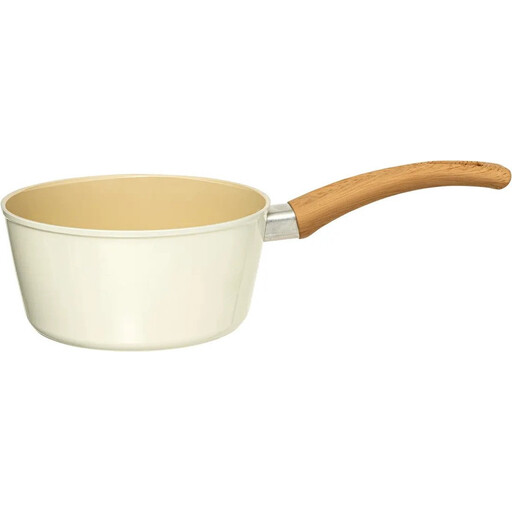
5five Harmony Forged Sauce Pan - 16 cm, Beige
Why this product suits this profile: With a 1.7-litre usable capacity, this 16 cm sauce pan is suitable for milk, sauces and smaller portions. It is specified as suitable for gas, induction, ceramic and electric hobs.
Hob compatibility and capacity are specified in detail, rather than being described only in general terms as versatile.
Recycled aluminium, Bakelite handle and stainless-steel induction disc; according to the product details, it is dishwasher-safe.
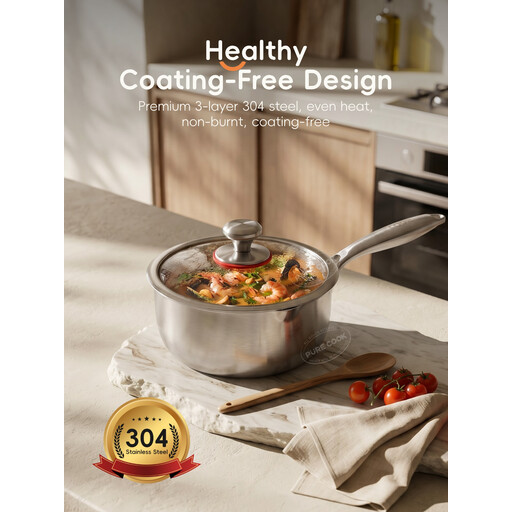
PURECOOK Milk Pan Series | 304 Stainless Steel | 18 cm
Why this product suits this profile: According to the product details, this 18 cm milk pan is made from 304 stainless steel and comes with a glass lid. It is a good choice for households that prefer uncoated cookware.
The material composition, glass lid and suitability for gas, induction and electric ceramic hobs are all clearly listed.
304 stainless steel, heat-resistant glass lid and straight pouring rim; according to the product details, it is dishwasher-safe.
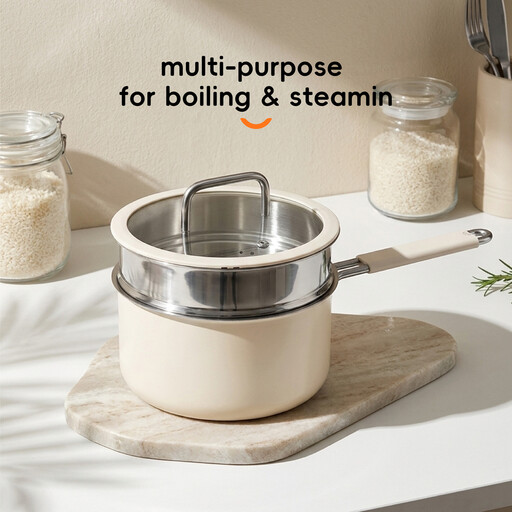
PURECOOK 316 Stainless Steel Triply-Bottom Milk & Sauce Pot with Steamer Insert
Why this product suits this profile: This 16 cm pan combines a 316 stainless-steel interior with a glass lid and steamer insert for milk, porridge, sauces and steamed vegetables.
The steamer insert is explicitly included in the contents. This means you can verify the additional function before buying.
316 stainless steel inside, glass lid and compatibility with gas, induction, ceramic and halogen hobs; hand washing is recommended to protect the coating.
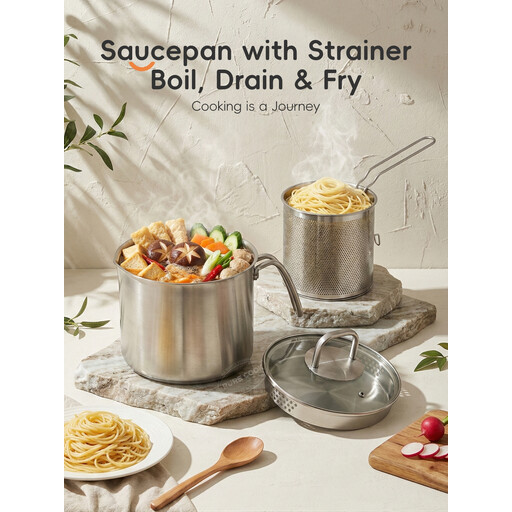
PURECOOK 304 Stainless Steel 3.0-QT Deep Milk Pan with Fry Basket
Why this product suits this profile: With a capacity of 2.8 litres and a frying basket, this deep pan is designed for households that want to prepare milk, pasta, soup and other small meals in one pan.
The capacity, material, hob types and contents are listed separately. This prevents a small pan from being confused with a larger pasta pot.
304 stainless steel, three-layer composite base, pouring spout and frying basket; according to the product details, it is suitable for gas, induction and ceramic hobs.
Looking for more options?
We have put together a complete, regularly updated list of products that fully meet these strict selection criteria and the safety regulations applicable in the EU.
Care and Safe Everyday Use
- Heat milk and delicate foods preferably over medium to low heat.
- Allow a hot pan to cool before washing it. Cold water can cause thermal shock to glass lids or coatings.
- Do not use metal turners or steel wool with non-stick or ceramic coatings.
- Before each use, check that the handle, lid knob and, where applicable, steamer insert are securely attached.
- Baby food also requires the usual hygiene precautions: clean the pan, lid and accessories thoroughly, and handle food in line with recommendations for preparation and storage. A milk pan is not a substitute for individual nutritional or medical advice.
Frequently Asked Questions About Milk Pans
What size is suitable for warming milk?
For individual portions, models with a diameter of around 14 to 16 cm and a capacity of approximately 1 to 1.7 litres are generally easy to handle. If you also want to cook pasta, soup or several portions of porridge, a taller model with a capacity of around 2.8 litres is more practical.
Can a milk pan be used on an induction hob?
That depends on the base. The product description must explicitly list induction as a suitable hob type. A magnetic stainless-steel base or composite base is typical for this purpose. You should also check that the base sits flat on the cooking zone.
How long does a coated milk pan last?
There is no single answer. Its lifespan depends on how it is used, the temperature, the utensils and the cleaning method. Low to medium heat, avoiding heating the pan when empty, and hand washing with a soft sponge can help protect the coating. Once it is visibly damaged or begins to peel, the cookware should no longer be used.