
Small induction saucepan: how to choose one for milk, sauces and small portions
A small induction saucepan is ideal for single people, couples and small households when you only need to make one portion of soup, sauce, pasta or baby food. A compact milk pan can also be more practical than a large saucepan for heating milk or cooking side dishes.
However, misleading product claims and unclear specifications can easily lead to the wrong purchase. It’s not just the colour and diameter that matter: hob compatibility, usable capacity, material, lid and care instructions are all key considerations.
Common pitfalls when buying small induction pans
1. A metal base doesn’t automatically mean it’s suitable for induction
Induction only works if the base of the pan is magnetically compatible. Aluminium pans therefore often need an additional induction disc. The 5five Aluminium Saucepan is one example: its body is made from aluminium, while an induction disc made of stainless steel makes it suitable for induction. Before buying, check that the product details explicitly say “suitable for induction”.
2. The stated diameter tells you little about the actual capacity
Depending on its height, base shape and rim, a pan with a diameter of 14 or 16 cm can hold different amounts. Around 1 to 1.7 litres is often enough for a one- or two-person household. A 2-litre pan gives you more capacity, but takes up more space and may be oversized for very small portions.
3. Non-stick coating is easy to care for, but not indestructible
A non-stick pan makes it easier to remove milk, sauces or porridge. Even so, avoid metal utensils, scouring pads and heating the pan for too long while empty. Product details for ceramic coatings often recommend low to medium heat and hand washing. If you regularly cook at high temperatures or use metal utensils, a stainless steel pan may give you more flexibility.
What to check before you buy
Capacity and shape
For a pan for 1 to 2 people, these guidelines are useful:
- Around 1 litre: milk, sauces, small soups or single portions.
- 1.3 to 1.7 litres: porridge, side dishes, small amounts of pasta and several portions of sauce.
- Around 2 to 2.5 litres: more versatile for soups, pasta, baby food and steaming inserts.
A tall, narrow saucepan is handy for pouring and heating. A wider sauce pan gives ingredients more room across the base. A pan with a lid retains heat and helps prevent splashes; with a glass lid, you can keep an eye on the cooking without taking it off.
Material and heat distribution
Aluminium heats up relatively quickly and is often paired with a coating or an induction disc. Stainless steel doesn’t affect the taste of food and is less prone to mechanical damage, but it can discolour or cause food to stick if the heat is too high. A multi-layer or encapsulated base is designed to distribute heat more evenly from the hob.
Enamelled cast iron is heavier and takes longer to heat up, but it retains heat well. For quick tasks such as heating milk, a lightweight aluminium or stainless steel pan is often easier to handle.
Hob types, cleaning and accessories
If you don’t only use induction, check that the pan is suitable for gas, electric and ceramic hobs. Some models are dishwasher-safe, but hand washing is recommended for coated surfaces and wooden components.
Before you buy, also check:
- Is a lid included?
- Is the handle easy to hold while cooking, or does the product information state that it gets hot?
- Is the pan oven-safe, and up to what temperature?
- Does it have a pouring rim or measuring scale?
- Are a steamer insert, glass lid or other accessories included?
- What cleaning method does the manufacturer recommend?
Our picks for different needs
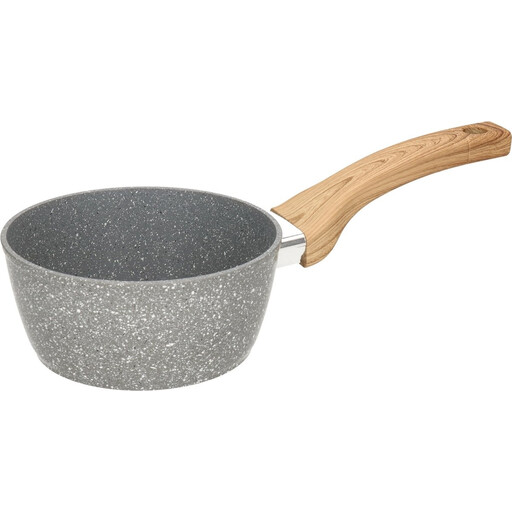
5five Aluminium Saucepan - 16 cm, Grey
Why it suits this type of buyer: With a usable capacity of 1.7 litres and a diameter of 16 cm, this pan is a good fit for small households looking for a versatile option that works on several types of hob.
Its suitability for induction is specified as being enabled by a stainless steel induction disc. This means the aluminium body alone isn’t responsible for compatibility with the hob.
Suitable for gas, induction, ceramic and electric hobs; dishwasher-safe, although hand washing is recommended.
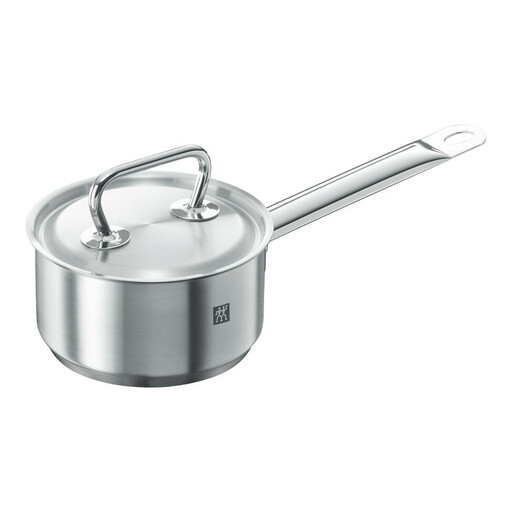
Zwilling TWIN Classic Saucepan, 14 cm
Why it suits this type of buyer: This 1-litre pan is for anyone who prefers a compact stainless steel pan for sauces, soups and small quantities.
The product details clearly state the material, capacity, lid and SIGMA Classic sandwich base. This makes it easy to check the key details before you buy.
18/10 stainless steel, measuring scale, drip-free pouring rim and suitable for all hob types, including induction.
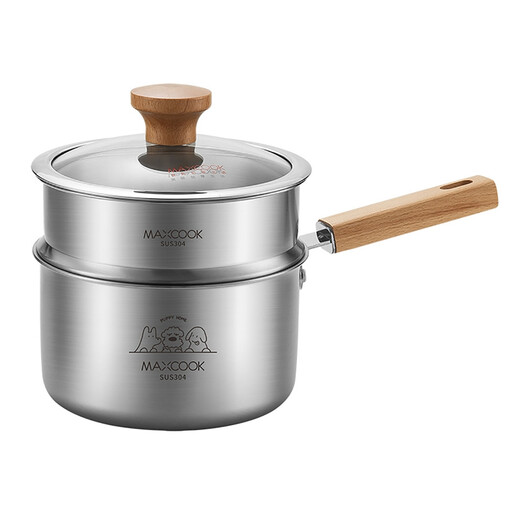
MAXCOOK Tri-ply 304 Stainless Steel Saucepan, 18 cm
Why it suits this type of buyer: This 2.5-litre pan comes with a steamer insert and is designed for cooking milk, sauces, pasta, vegetables or larger portions for a small household.
The product details list the compatible hob types and recommend hand washing. The wooden handle isn’t oven-safe and shouldn’t be cleaned in the dishwasher.
304 stainless steel, compatible with induction, gas, electric and ceramic hobs; steamer insert included and a capacity of around 2.5 litres.
Looking for more options?
We’ve put together a complete, regularly updated list of products that meet these strict selection criteria and fully comply with the safety regulations in force in the EU.
FAQs about small induction pans
What size is best for a small induction pan?
For milk, sauces and single portions, 1 to 1.5 litres is usually enough. If you also want to cook pasta, soup or baby food for several meals, you could choose a model with a capacity of 1.7 to 2.5 litres. The usable capacity should be less than the maximum capacity to prevent the contents from boiling over.
Can a small induction pan also be used on gas or ceramic hobs?
It depends on the model. Many pans in this selection are listed as suitable for induction, gas, electric and ceramic hobs. Always check the product page for the manufacturer’s specifications. Don’t assume that a pan designed for induction alone will automatically work on other types of hob.
How can you make a coated pan last longer?
Don’t heat coated pans while empty or leave them on a high setting for extended periods. Wooden or silicone utensils help protect the surface, while abrasive cleaners and metal cutlery can scratch it. Let the pan cool down after cooking before washing it with water. For stainless steel, use low to medium heat and dry the pan thoroughly after washing.