
Buyer’s Guide to Cast Aluminium Induction Pots
By the Joybuy Product Recommendation Officer, August 30, 2026
The search for the right pot for an induction hob can quickly become overwhelming. The market is filled with promises of fast heating, durability, and health safety. However, not every pot advertised as "induction-compatible" meets expectations in everyday kitchen use. Many home cooks invest in new cookware, only to find after a few months that the base has warped, the coating is failing, or the pot buzzes on the hob and its energy efficiency leaves much to be desired.
Before you make a purchasing decision, it's important to understand the most common pitfalls that lead to disappointment and unnecessary expense.
- The "Universal" Induction-Compatibility Trap: Many pots are declared "suitable for all hob types." While they may technically work on an induction hob, a thin or only partially magnetic base leads to slow, uneven heat distribution and high energy consumption. A truly good cast aluminium induction pot requires a full-surface, ferromagnetic base of sufficient thickness.
- Misleading "Toxin-Free" Claims: The term "toxin-free" is not a protected designation. Without the specific mention of "PFOA-free" or "PFAS-free", a non-stick coating can still contain undesirable chemicals. Health-conscious buyers should look for transparent information about the materials used.
- The "Heavy Equals High Quality" Misconception: Traditionally, heavy cast iron pots were the benchmark for quality. However, modern materials like cast aluminium offer comparably excellent heat retention and distribution at a significantly lower weight. A lightweight casserole pot made of cast aluminium is easier to handle and also heats up faster.
What Really Matters When Making Your Choice
To avoid a bad purchase, you should focus on three core technical features. These determine the performance, longevity, and safety of your new cookware.
1. The Construction of the Pot's Base
The base is the crucial component for performance on an induction hob. An optimal pot features a so-called sandwich base. This consists of several layers, with a ferromagnetic layer (usually stainless steel) on the outside.
- Full-Surface Magnetisation: Ensure that the base is completely magnetic, not just in spots. This guarantees maximum energy transfer and prevents loud buzzing noises.
- Base Thickness: A thicker base plate (at least 4-5 mm) is more stable, prevents warping at high temperatures, and ensures more even heat distribution. This makes it an energy-saving pot.
2. Material and Type of Non-Stick Coating
The coating is central to the cooking experience and cleaning. There are significant quality differences here.
- Ceramic Coatings: A pot with a ceramic coating is a popular choice. These coatings are often free of PTFE and PFOA/PFAS, very hard, and heat-resistant. They allow for low-fat cooking and are easy to clean.
- Reinforced PTFE Coatings: High-quality, multi-layer PTFE coatings (often reinforced with mineral particles) are also very durable and robust. The explicit "PFOA-free" label is important here, as PFOA is a chemical that was used in the production of conventional coatings.
3. The Pot Body Material: Cast Aluminium
Cast aluminium is an ideal material for modern cookware. Unlike pressed or forged aluminium, the casting process allows for more complex shapes and a stress-free material structure.
- Heat Conductivity: Aluminium conducts heat about 10 times faster than stainless steel. An aluminium pot with a lid therefore heats up extremely quickly and evenly, right up to the rim.
- Weight: Cast aluminium is significantly lighter than cast iron, which makes handling much easier, especially with a large roasting pot for all hob types.
Top Recommendations By Profile
Instead of making a blanket recommendation, we have selected products tailored to specific needs and usage scenarios.
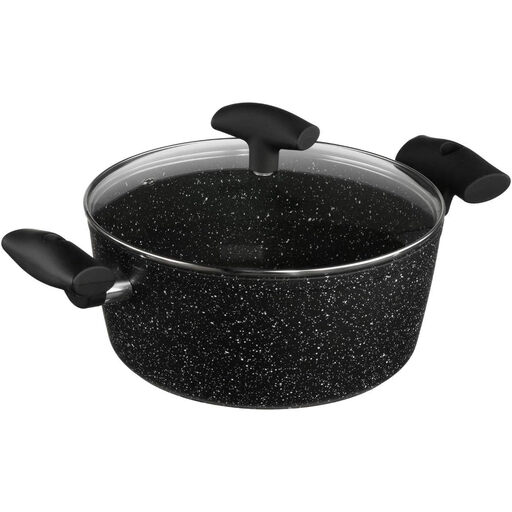
5Five 24cm Forged Aluminium Pot with Lid
Why it's a match: Ideal for anyone looking for a functional and reliable all-rounder for daily use without a large budget. With a 24 cm diameter, this pot is versatile for pasta, soups, or stews.
This model features an explicitly declared stainless steel induction base. This bypasses the trap of inefficient "universal" compatibility and ensures solid performance on induction hobs.
Durable non-stick coating for easy cleaning; ergonomic handles with soft-touch material for a secure grip.
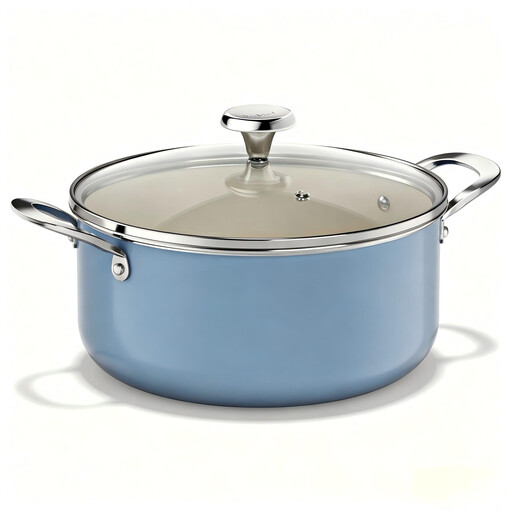
Redchef Gemstone Aluminium 24cm Stock Pot, Blue
Why it's a match: With a capacity of almost 5 litres and high oven-safe temperature, this pot is perfect for families who enjoy cooking, braising, or baking large portions. The focus is clearly on health safety and versatility.
This model directly addresses the trap of vague health promises. According to the manufacturer, the ceramic non-stick coating is explicitly free from Teflon, PFAS, PTFE, PFOA, lead, and cadmium.
Very high oven-safe temperature (up to 450°C); thick base for fast, even heating; riveted handles for lasting stability.
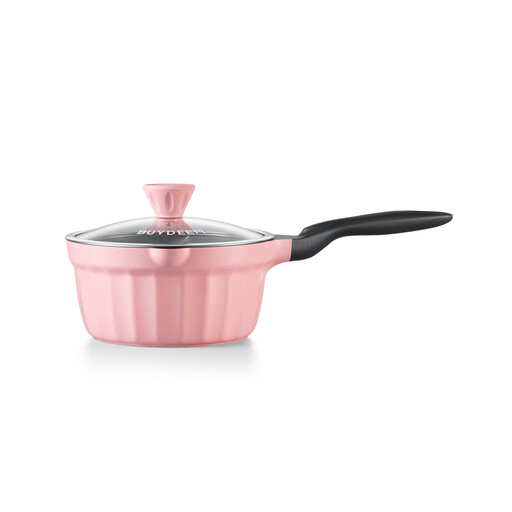
BUYDEEM Cast Aluminium Non-Stick Saucepan, 20cm, Pink
Why it's a match: For cooks who value aesthetics and high-quality materials. This saucepan for induction is perfect for sauces, small dishes, or heating milk, combining appealing design with high functionality.
This product refutes the "heavy equals high quality" prejudice. The cast aluminium body ensures fast, even heat distribution at a low weight, proving that modern, lightweight materials can deliver high performance.
Swiss ceramic coating (PFAS/PFOA-free according to manufacturer); integrated pouring spout for drip-free serving; cool-touch handle.
Looking for more options?
We have compiled a complete, up-to-date list of products that fully meet these strict selection criteria and German safety regulations.
Frequently Asked Questions (FAQ)
1. How can I tell if my old pot is truly induction-compatible?
The easiest way is the magnet test. Hold a standard magnet to the bottom of the pot. If it sticks strongly and across the entire surface, the pot is generally suitable for induction. For optimal efficiency, the base should also be completely flat. Lay a ruler across the base; there should be no gap of light visible.
2. How do I properly care for a cast aluminium pot with a ceramic coating?
To maximise the life of the coating, you should follow a few basic rules. Clean the pot by hand with a soft sponge and mild washing-up liquid. Avoid abrasive scouring agents or steel wool. Use cooking utensils made of wood, silicone, or plastic. Allow the pot to cool down after cooking before bringing it into contact with cold water to avoid thermal shock.
3. Is a lightweight cast aluminium pot as energy-efficient as a heavy cast iron pot?
On an induction hob, energy efficiency primarily depends on the quality of the ferromagnetic base, not the total weight. A high-quality cast aluminium pot with a thick, fully magnetic base can be just as efficient, or even more so, than a cast iron pot because aluminium conducts heat faster, thus reducing the heating time.