
Protein Bars Without Added Sugar: How to Choose the Right Snack for Everyday Life and Training
A protein bar without added sugar can be practical when you are out and about, at work or after training. However, the product description alone does not tell you whether a product is high in protein, low in carbohydrates or suitable for your diet. If you only look at the front of the packaging, you can easily overlook important details.
Typical purchasing habits can lead to three avoidable mistakes:
- “Without added sugar” is confused with sugar-free. Some bars naturally contain sugar or use sweeteners such as maltitol, sorbitol or sucralose. The nutritional values per serving and the ingredients list are what matter.
- The protein content is misjudged. A value of 25 g of protein per 100 g may initially sound high. In a 39-g bar, however, this amounts to only around 9.7 g of protein.
- Low-sugar products are automatically considered low-carb bars. Despite low sugar levels, carbohydrates can still be relatively high because of cereals, syrup, dextrin or starch.
Which information matters before buying
1. Protein per bar rather than only per 100 g
When comparing high-protein snacks, you should first check the serving size. A compact bar weighing 30 to 40 g may provide less protein than a 55-g bar, even if the figures per 100 g appear similar.
As a practical guide:
- Under 5 g of protein per serving: more like a classic cereal bar or confectionery snack
- Around 8 to 12 g: suitable as a small high-protein snack between meals
- 15 to 20 g: a larger portion that may suit many adults after training or when out and about
The source of the protein can also be relevant. Milk, whey, soya and collagen proteins have different properties. If you follow a vegetarian, vegan or allergen-conscious diet, you should read the ingredients list and allergen information in full.
2. Consider sugar, sweeteners and carbohydrates separately
A low-sugar protein bar does not automatically contain few carbohydrates. You should therefore check at least these three lines in the nutrition table:
- Carbohydrates
- of which sugars
- Polyols, or sugar alcohols, where listed
Maltitol, sorbitol and xylitol are often used when a product is intended to contain no added household sugar. Excessive consumption may have a laxative effect. This warning also appears on several of the products in the selection. If you are sensitive to polyols, start with a small portion and follow the information on the packaging.
3. Ingredients, allergens and palm oil
Checking the ingredients can help you avoid unsuitable purchases. Chocolate protein bars often contain milk, soya, peanuts, hazelnuts or gluten. Even if a product is advertised as a “high-protein snack”, it is not automatically suitable for every diet.
If you are looking for a palm-oil-free bar, check the ingredients list rather than relying solely on marketing claims. The composition of the products featured below has been assessed using the product data provided. Nevertheless, always check the current packaging before eating, as recipes or labelling may change.
Our selection by user profile
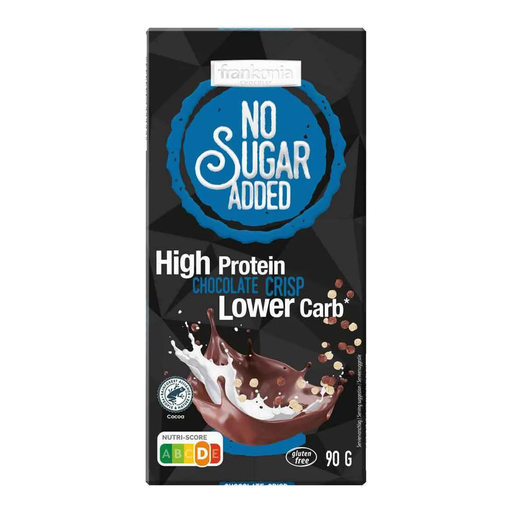
Frankonia CHOCOLAT POWER MOTION no Sugar Added - High Protein Lower Carb Chocolate Crisp 90g
Why this product suits the profile: The 90-g pack is suitable for portioning. According to the product information, it provides 30 g of protein per 100 g and uses maltitol instead of added sugar.
The product information gives the protein content both in the description and through the ingredients, which include whey and soya protein. The reference to maltitol makes the sweetener issue clear.
According to the product description, 40% cocoa in the chocolate coating and protein crispies provide a chocolate flavour and a satisfying crunch.

Barebells Protein Bar Cookies & Cream 12x55g
Why this product suits the profile: The pack of 12 is aimed at people who regularly need a consistently portioned protein bar for work, travel or training.
The protein content is stated as 20 g per 55-g bar. The product also lists 1.4 g of sugar and 17 g of carbohydrates per bar.
According to the product information, the bar is palm-oil-free and can be stored at room temperature.
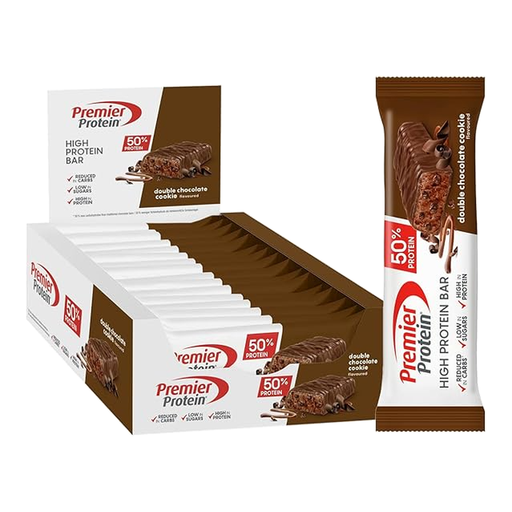
Premier Protein High Protein Bar 50% Double Chocolate Cookie 16x40g
Why this product suits the profile: The pack of 16 is aimed at athletes and frequent users who want to stock up on individual 40-g bars for training days, commutes or day trips.
The product information states 50% protein and lists maltitol and sucralose as sweeteners. This allows the marketing claim to be checked against the ingredients.
Milk, soya and collagen protein are listed in the ingredients; each bar weighs 40 g.
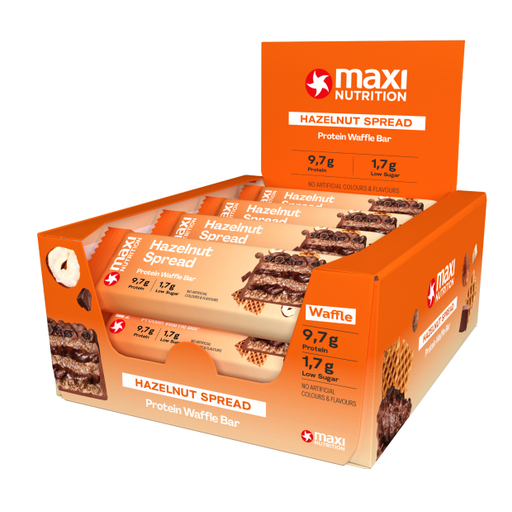
Maxi Nutrition Muesli Nut Butter Protein Wafer Bars 12x39g
Why this product suits the profile: The multipack of 12 with 39-g portions is suitable for keeping at home or taking with you every day.
The information distinguishes between 25 g of protein per 100 g and 9.7 g per 39-g bar. It also states that each serving contains 1.7 g of sugar.
The product description specifies a wafer texture, hazelnut and chocolate flavour, and maltitol as a sweetener.
Looking for more options?
We have put together a complete, regularly updated list of products that fully meet these strict selection criteria and the safety regulations applicable in the EU.
Further buying advice for everyday life and sport
A protein bar for athletes should suit how you actually intend to use it. A smaller portion may be enough for the short journey home. After a longer training session, a larger bar containing 16 to 20 g of protein may be more practical. However, it does not replace a varied meal and should be considered as part of a balanced diet.
When buying a protein bar multipack, it is worth comparing the price per 100 g or per bar. Also check the best-before date, storage conditions and pack size. Heat can affect the consistency of chocolate coatings and soft bars.
Classic cereal bars without added sugar are not automatically high in protein. Products such as Corny Haferkraft Zero Cocoa contain no added sugar according to the product information, but provide only 2.7 g of protein per 100 g. They should therefore be considered cereal snacks rather than protein bars.
Frequently asked questions about protein bars without added sugar
Are protein bars without added sugar sugar-free?
No, not necessarily. “Without added sugar” means that no additional sugar has been used. Ingredients such as milk, fruit or syrups may still contribute to the overall sugar content. Check the “of which sugars” figure per serving.
How many protein bars can you eat per day?
There is no universally suitable amount. Your protein requirements, the rest of your diet and the relevant manufacturer’s guidance are the main factors. Bars containing maltitol, sorbitol or other polyols may cause digestive discomfort if consumed in large quantities. A moderate portion is therefore advisable.
Are low-carb bars automatically suitable for every diet?
No. A low sugar value does not automatically mean few carbohydrates. Products may also contain milk, soya, peanuts, gluten or nuts. Read the ingredients list, nutrition table and allergen information before buying.