
Aluminium Pots and Pans: A Guide to Choosing the Right Ones for Your Hob, Home and Cooking Style
Aluminium pots and pans are popular in many British households because they are relatively lightweight and conduct heat quickly. At the same time, aluminium frying pans, aluminium saucepans and sauté pans differ significantly in terms of coating, hob compatibility, size and care. If you only focus on colour, discounts or marketing claims, you could easily end up with a product that doesn't suit your hob or cooking habits.
Common Buying Mistakes with Aluminium Cookware
1. “Suitable for all hob types” without checking the base
Pure aluminium generally won't work directly on an induction hob. For that, the cookware needs a magnetic induction base, often made from stainless steel. An aluminium frying pan or saucepan may be suitable for gas, electric and ceramic hobs, but won't be recognised on induction.
Look in the product description for specific details such as induction base, stainless steel base or “suitable for induction”. “Cookware for all hob types” shouldn't just appear in the headline – it needs to be confirmed in the technical specifications too.
2. A non-stick coating isn't a free pass for high heat
Coated cookware makes it easier to release food and clean up. However, the surface is sensitive to overheating when empty, metal utensils, abrasive cleaners and sudden cooling. This is why the care instructions are a particularly important buying factor for a coated frying pan or a coated saucepan.
For many coated models, the rule is: cook on medium to low heat, use wooden or silicone utensils, and let the cookware cool down before washing. A coating is a wear item; visible peeling or deep scratches mean it's time for a replacement.
3. Confusing size and volume
A diameter of 20 cm doesn't automatically tell you the usable volume. The shape, height and base area all affect how much actually fits inside. For one person or small portions, a saucepan of 16 to 18 cm may be enough. Families are better off with a 24 cm sauté pan or a larger braising pan with a lid.
Also check whether the stated diameter is measured at the top rim or the base. This matters for choosing the right hob zone and for heat transfer.
The Most Important Criteria Before You Buy
Material and Heat Distribution
Aluminium is light and conducts heat quickly. Cast or forged aluminium can offer greater material thickness and shape stability, depending on the construction. What matters isn't just the name, but the combination of:
- Base construction: A stable, flat base supports even heating.
- Base area: It should match your hob zone and, for induction, be fully recognised.
- Wall thickness and weight: Very light models are easy to handle, but can react more quickly when heated empty.
- Coating: Terms like ceramic coating or PTFE coating describe the surface, not automatically the overall product quality.
If you're specifically looking for a cast aluminium saucepan, you'll find more options there for braising, boiling and everyday dishes.
Hob Compatibility and Oven Suitability
Gas, electric and ceramic hobs have different requirements to induction. For an induction saucepan or frying pan, the compatibility should be explicitly stated. Oven suitability also needs to be checked separately: plastic or Bakelite handles often limit use, whereas stainless steel handles can withstand higher temperatures depending on the model.
A glass lid can be practical, but it also needs a temperature rating and careful handling. Not every piece of cookware with a lid is automatically oven-safe.
Cleaning and Care
Manufacturer instructions vary. Some models are dishwasher-safe, while others should only be washed by hand. For coated cookware, hand washing with warm water, mild washing-up liquid and a soft sponge is usually the gentler option.
Avoid:
- Metal cutlery and sharp-edged kitchen tools
- Abrasive cleaners and metal scouring pads
- Cold water on hot cookware
- Prolonged heating when empty
- Direct flames on plastic handles
Our Selection for Different Cooking Profiles
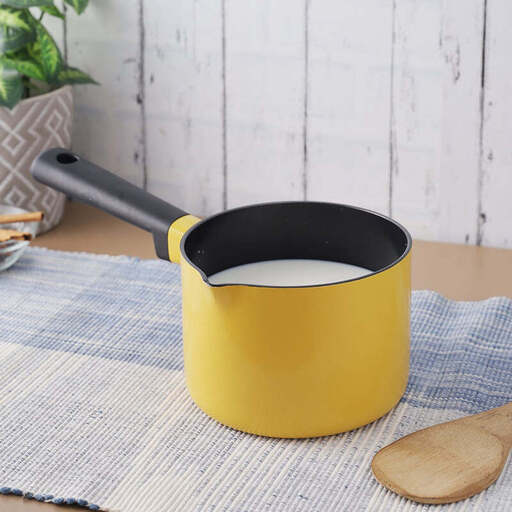
LocknLock Decor IH Induction Milk Pan 14 cm
Why this product fits the profile: This compact aluminium saucepan is designed for milk, sauces and small portions, and according to the product details it is suitable for induction, gas, electric and ceramic hobs.
The specifications clearly state the hob compatibility. For the ceramic surface, medium to low heat and hand washing are recommended.
14 cm diameter, Bakelite handle and ceramic coating on the inside and outside.
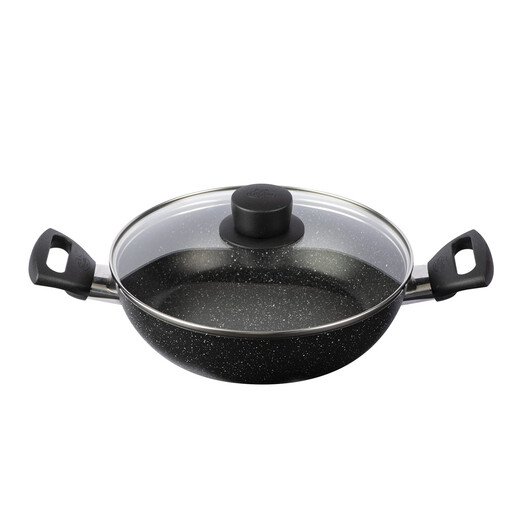
ZWILLING Vipiteno Sauté Pan with Glass Lid
Why this product fits the profile: This 24 cm sauté pan combines an aluminium body with a glass lid, a four-layer non-stick coating and a described bimetal base for induction.
The specifications explicitly separate hob and oven suitability. Soft kitchen utensils and no abrasive cleaners are recommended for the coating.
24 cm diameter, glass lid, induction compatibility and, according to the product details, dishwasher suitability.
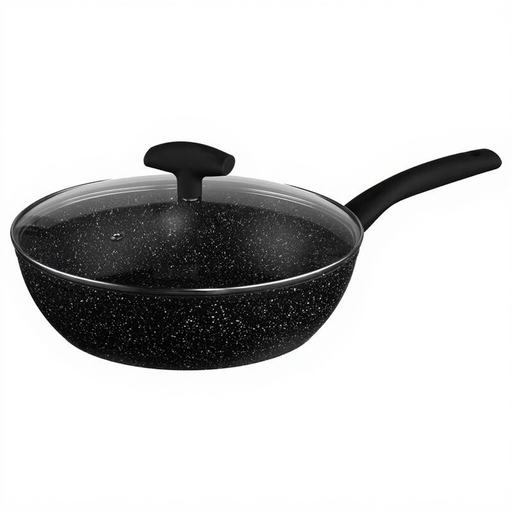
28cm Forged Aluminium Pan with Lid
Why this product fits the profile: This large aluminium frying pan is ideal for braised dishes, vegetables and family-sized portions. The glass lid supports slow cooking and allows you to keep an eye on things.
The product details mention a stainless steel induction base and suitability for various hob types. Hand washing is recommended to protect the coating.
28 cm diameter, forged aluminium, glass lid and ergonomic handles.
Which Size Suits Your Household?
- 16 to 18 cm: Sauces, milk, porridge and small portions.
- 20 to 24 cm: Everyday use for two or more people, soups and side dishes.
- 28 to 30 cm: Roasts, vegetable stir-fries and larger family portions.
- From around 4 litres: Ideal for batch cooking, stews and larger households.
A bigger pan isn't automatically more practical: on small hob zones, the heat can be unevenly distributed. The base should match your hob zone as closely as possible.
Looking for more options?
We've put together a complete, regularly updated list of products that fully meet these strict selection criteria and the safety regulations in force in the EU.
FAQ on Aluminium Pots and Pans
Are aluminium pots and pans suitable for induction?
Only if they have a suitable magnetic base. Look for explicit mention of induction suitability, as the aluminium body alone is not enough for induction.
How long does a coated frying pan last?
That depends on usage, heat and care. Gentle heating, soft kitchen utensils and hand washing can help extend the life of the coating. If you see bubbles, peeling or deep scratches, the product should no longer be used.
Is aluminium cookware dishwasher-safe?
This depends on the model. Some products are dishwasher-safe according to the product details, while for others hand washing is recommended. The care instructions from the respective manufacturer are key, especially for non-stick coatings and plastic handles.