
Buying Milk Chocolate: A Guide to Taste, Format and Use
If you're looking to buy milk chocolate, you'll find a huge selection of bars, chocolate blocks and baking ingredients online. But the differences between Alpine milk chocolate, Swiss milk chocolate, Belgian milk chocolate and products with nuts or caramel go far beyond taste and brand. Cocoa content, pack size, allergens and your intended use all play a part in making the right choice.
As Joybuy's Product Recommendation Officer, I've filtered the most important product information to show you what really matters when shopping. This way, you can avoid the typical pitfalls – whether you're after chocolate for snacking, sharing, gifting or baking.
Common Pitfalls When Buying Milk Chocolate
1. Confusing pack size with value for money
A 300g bar or a bulk pack can often look cheaper at first glance than individual 90g or 100g bars. What really counts, however, is the unit price per 100g. For a small household, a bulk pack might be unnecessary if the chocolate won't be eaten in good time. For offices, families and parties, on the other hand, a bulk chocolate pack can make more sense than buying lots of individual bars.
2. 'Alpine milk' doesn't automatically mean a consistent flavour profile
Labels like Alpine milk chocolate or whole milk chocolate alone tell you nothing about sweetness, milk powder content or texture. So always check the ingredients list and the stated cocoa content. In the selection here, several products contain at least 30% cocoa, while Toblerone states at least 28% cocoa in its milk chocolate.
3. Chocolate bars aren't automatically suitable for baking
Standard chocolate bars can melt, seize or spread unevenly when baked. For cookies, muffins and cakes, specially labelled baking chocolate chips or chocolate chunks are far more practical. According to Ruf's product description, baking-stable pieces keep their firm structure even after a longer time in the oven. For decoration, chocolate sprinkles, chocolate shavings or chocolate flakes are a better choice.
Key Criteria Before You Buy Milk Chocolate
Cocoa content and ingredients list
Cocoa content helps you classify the product, but it isn't the only measure of quality. Also look out for:
- The order of ingredients: the first ingredient listed is present in the largest quantity.
- Milk components such as whole milk powder, skimmed milk powder, whey powder or butterfat.
- Additions like hazelnuts, almonds, caramel, honey, nougat or salt.
- Emulsifiers, for example soya lecithins.
- Information about palm oil, if that matters to your buying decision.
For products containing nuts, the ingredients list needs particularly careful checking. A milk chocolate with hazelnuts is not suitable for anyone who must avoid hazelnuts. Additionally, warnings like 'May contain traces of nuts' can indicate unintentional traces.
Format and portioning
A 90g or 100g bar is ideal for occasional snacking or gifting. A 180g bar offers more to share, while a 300g bar like the Lindt Swiss Classic Whole Hazelnut Milk Chocolate is designed for multiple servings. Individually wrapped chocolate bars such as the Daim 36-pack make distribution easier at events, in the office or at parties.
Pre-portioned products can also help you keep track of consumption. With bars, however, the packaging after opening matters: for aroma and texture, chocolate should be stored in a dry, dark place away from heat.
Allergens and nutritional information
Milk chocolate typically contains milk components and often soya lecithin. Depending on the recipe, nuts, barley, wheat or egg may also be present. The labelling on the product packaging is definitive, as recipes can change.
As a guide: the bars listed here range from roughly 530 to 565 kcal per 100g, depending on the recipe. Varieties with nuts or caramel may differ due to additional fat and sugar sources. For a fair price assessment, you should compare not just the pack price, but also the weight, ingredients and intended use.
Recommendations by Buyer Profile
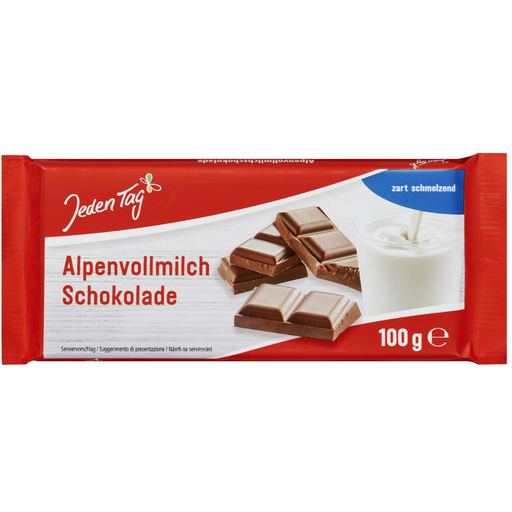
Jeden Tag Alpine Milk Chocolate Bar 100g
Why this product fits the profile: The 100g bar is ideal for occasional purchases, snacking or as a simple addition to desserts and baking recipes.
The pack size stays manageable. Ingredients and allergens are clearly stated, including milk, hazelnut and soya.
100g content, at least 30% cocoa and a recipe with milk components and hazelnut paste.
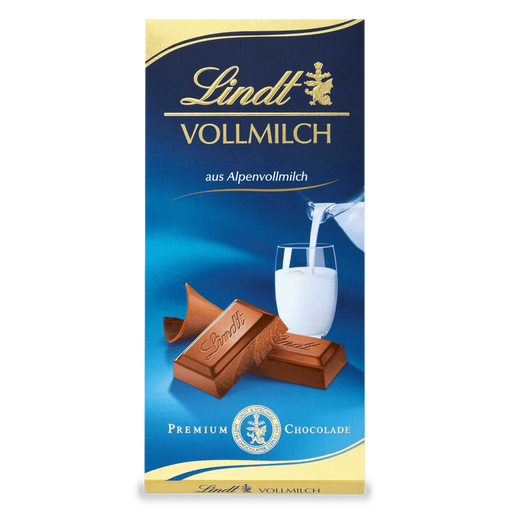
Lindt Swiss Classic Milk Chocolate Bar 100g
Why this product fits the profile: The Swiss milk chocolate comes as a classic 100g bar, perfect for pure enjoyment or as a small gift.
The stated cocoa content of at least 30% and full allergen labelling make comparison easy.
100g bar format, at least 30% cocoa and a stated storage recommendation of around 15–18°C.
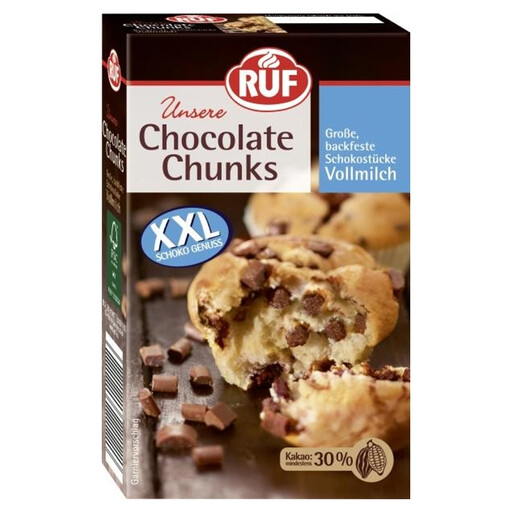
Ruf Milk Chocolate Baking Chunks 100g
Why this product fits the profile: Home bakers get large chocolate chunks for baking in cookies, muffins, cakes and decorations.
The chunks are explicitly described as baking-stable. A slight grey bloom caused by temperature fluctuations does not affect use, according to the product information.
100g content, at least 30% cocoa and large chunks for a visible chocolate structure in baked goods.
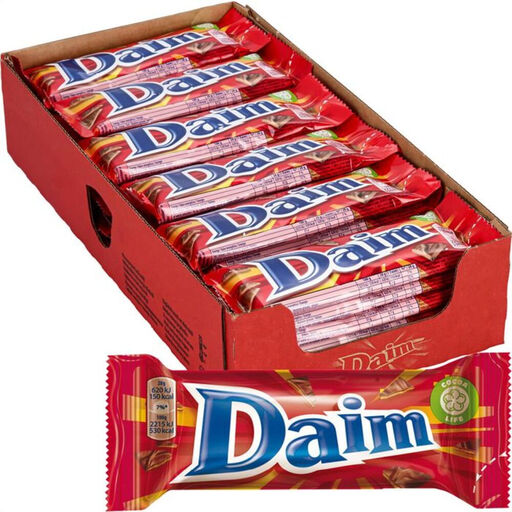
Daim Crunchy Caramel Milk Chocolate Bars 36x28g
Why this product fits the profile: The bulk pack contains 36 individually wrapped 28g bars with milk chocolate, crunchy caramel and almonds.
The individual portions avoid opening a large bar for every serving and make quantity planning for groups much easier.
36 individually wrapped bars, total weight 1,008g, with stated allergens including milk, almonds and soya.
Looking for more options?
We've put together a full, regularly updated list of products that fully meet these strict selection criteria and the safety regulations in force in the EU.
FAQ on Buying Milk Chocolate
Which milk chocolate is suitable for baking?
For cookies, muffins and cakes, chocolate chunks that are explicitly labelled as baking-stable are ideal. For the surface of tarts, ice cream or desserts, chocolate sprinkles, chocolate shavings and chocolate flakes work well. A standard whole milk chocolate can also be melted, but depending on the recipe it requires more attention to temperature and consistency.
How should milk chocolate be stored?
Store milk chocolate in a dry, dark place away from heat. Many product recommendations suggest a temperature of around 15 to 18°C. Storing it in the fridge can alter the surface and texture due to moisture and temperature fluctuations. Once opened, bars should be kept as airtight as possible and not stored near strongly scented foods.
Is bulk-pack chocolate worth it?
That depends on how much you use. For offices, families, event organisers and regular consumers, a bulk pack can be practical thanks to the larger total quantity and individual portioning. For one person, a 90g or 100g bar is often more manageable. Before buying, compare the unit price, the best-before date, storage conditions and the portion size you want.