
Milk Chocolate 2026: A Product Selection Guide
Milk chocolate is a widely popular confectionery product whose composition is regulated within the European Union by the Cocoa and Chocolate Products Regulations. According to these regulations, a chocolate bar labelled as milk chocolate must contain a minimum of 25% total dry cocoa solids. Other essential components include dry milk solids (at least 14%), cocoa butter, sugar, and milk fat. These parameters form the basis for sensory properties such as flavour, texture, and melting behaviour. This article analyses various products based on their specifications to facilitate an informed purchasing decision.
Selection Criteria for Milk Chocolate
The selection of a suitable milk chocolate can be based on objective, technical specifications. The following criteria are relevant for an evaluation:
1. Cocoa Content and Origin
The cocoa content significantly influences the flavour intensity. While the minimum requirement is 25%, many products offer a higher content of 30% to 40%, resulting in a more robust cocoa profile. The origin of the cocoa can also lead to sensory differences, but this is not always specified by the manufacturer.
2. Fat Composition
The primary fat source in high-quality chocolate is cocoa butter. It is responsible for the characteristic melting point, which is close to human body temperature, creating the smooth-melting mouthfeel. Some products also contain other vegetable fats, such as coconut or palm kernel fat, which modify the texture and melting behaviour. The milk fat content contributes to the creaminess.
3. Ingredient List and Emulsifiers
A short and clear ingredient list can be an indicator of a product with minimal additives. A commonly used emulsifier is soy lecithin, which serves to homogenise the cocoa butter and other components and improve the flow properties of the chocolate mass.
4. Additions and Fillings
Additions like nuts, caramel, or fruit pieces alter the textural and flavour profile. With chocolate with hazelnut, for example, the degree of roasting and the size of the nut kernels are crucial for the sensory experience. Filled chocolates, such as those with a praliné cream, have a different consistency than solid bars.
5. Certifications and Production Standards
Certifications like Fairtrade chocolate refer to specific social and economic standards in the cultivation and trade of cocoa. These seals are based on criteria such as set minimum prices and premiums for community projects in the growing regions. Compliance with these standards is monitored by independent organisations.
Our Product Selection for 2026
The following selection is based on an analysis of the product specifications and unique selling points of each chocolate.
Schogetten Fine Alpine Milk Chocolate with Hazelnuts 100 g
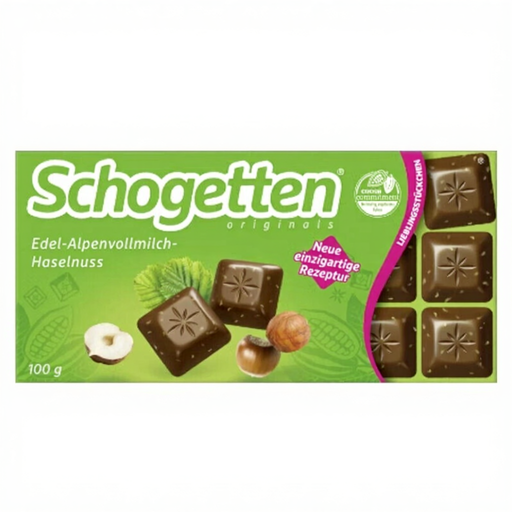
Why we recommend this product: The main feature of Schogetten is its functional design. The chocolate is already divided into 18 individual, bite-sized portions. This eliminates the need to break the bar and facilitates both sharing and portion control. The combination of Alpine milk chocolate and whole hazelnut kernels represents a classic and widely popular flavour profile.
Advantages:
- Convenient Portioning: Pre-portioned into 18 segments, ideal for sharing or controlled indulgence.
- Specific Cocoa Content: Contains at least 30% cocoa in the Alpine milk chocolate, according to the manufacturer's specifications.
- Textural Contrast: Roasted hazelnut kernels (10% content) provide a crunchy contrast to the creamy chocolate mass.
- Origin: Made in Germany.
Who it's for: Consumers who value convenience and straightforward handling. Also suitable for those looking for a classic chocolate with hazelnut and who appreciate the ease of sharing.
Tony's Chocolonely Milk Chocolate 180 g
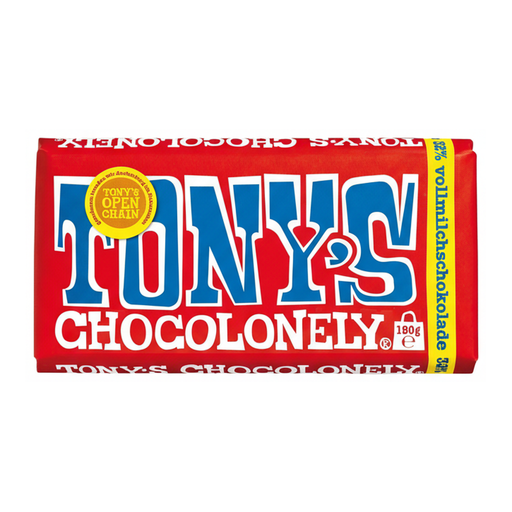
Why we recommend this product: Tony's Chocolonely positions itself with a clearly defined mission, which is also reflected in its product design. The unevenly divided segments of the chocolate bar are intended to symbolically highlight the inequality within the cocoa supply chain. The product is Fairtrade certified, which can be a decisive criterion for consumers who focus on ethical production standards.
Advantages:
- Fairtrade Certification: The product meets Fairtrade standards, supporting a transparent and traceable supply chain.
- Defined Cocoa Content: With a 32% cocoa content, this product exceeds the legal minimum for milk chocolate.
- Palm Oil-Free: According to the manufacturer, no palm oil is used in its production.
- Symbolic Design: The uneven segmentation serves as a communication tool for the brand's message.
Who it's for: Buyers for whom ethical aspects and certifications like Fairtrade are a high priority. Users who prefer a product with a clear brand message and a solid 32% cocoa content.
View Tony's Chocolonely on Joybuy now
Lindt LINDOR Milk Chocolate Bar, 100g
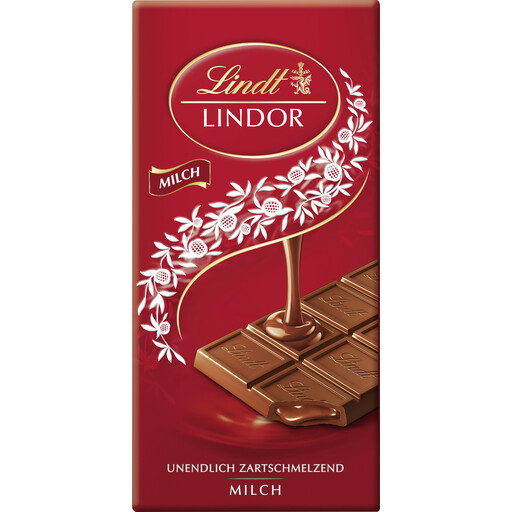
Why we recommend this product: The Lindt LINDOR bar is distinguished by its specific texture. It consists of a milk chocolate shell that encloses a filling with a particularly low melting point. This characteristic is achieved by using vegetable fats like coconut and palm kernel fat in the filling, leading to the "smooth-melting" experience described by the manufacturer.
Advantages:
- Dual Texture: A combination of a solid chocolate shell and a soft, creamy filling.
- Characteristic Melting Behaviour: The filling is designed to melt quickly at mouth temperature, leaving a distinctly creamy sensation.
- Ingredient Combination: The recipe includes coconut and palm kernel fat in addition to cocoa butter, which creates the filling's specific consistency.
- Aromatic Addition: Barley malt extract is used as an ingredient to round out the flavour.
Who it's for: Connoisseurs who place a special emphasis on texture and melting behaviour. Those seeking a very creamy and intense sensory experience will find this to be a suitable product.
View Lindt LINDOR on Joybuy now
Discover More Options and Varieties
The market for chocolate products is diverse, including dark, white, and filled varieties in addition to milk chocolate. Each type offers its own unique profile in terms of flavour, texture, and ingredients. If you wish to expand your interest beyond the products featured here and want to buy sweets online, you will find a broader selection in our main category.
Discover the full range of Milk Sweets on Joybuy.
Frequently Asked Questions (FAQ)
1. What is the technical difference between milk and dark chocolate? The main difference lies in the cocoa and milk content. In the EU, milk chocolate must contain at least 25% dry cocoa solids and 14% dry milk solids. Dark chocolate (or bittersweet chocolate) has a higher cocoa content (often 50% or more) and contains little to no milk components, resulting in a more intense and less sweet cocoa flavour.
2. How should chocolate be stored correctly? Chocolate should be stored in a cool, dry, and dark place at a constant temperature between 15 and 18°C (59-64°F). High temperatures can cause the cocoa butter to rise to the surface, forming a greyish film known as "fat bloom" or "blooming." While this does not affect edibility, it does impact the texture and appearance. Storing chocolate in the refrigerator is not ideal, as the humidity can cause sugar crystals to form on the surface.
3. What does the "May contain traces of nuts" advisory mean? This is an advisory for individuals with allergies. It means the product is manufactured in a facility where products containing nuts (or other allergens like gluten or eggs) are also processed. Despite thorough cleaning of the production lines, cross-contamination cannot be 100% ruled out. Therefore, it is not an ingredient but a precautionary measure.