
LiFePO4 Battery 12V 300Ah Buyer's Guide
A high-performance LiFePO4 battery 12V 300Ah is the heart of many off-grid systems, whether as a leisure battery in an RV, a 12V solar battery for a home off-grid setup, or a durable power source for boats. However, the market is saturated, and not every product delivers on its promises. This guide will help you identify the critical features and avoid common purchasing pitfalls.
The 2 Most Common Mistakes When Buying a Deep Cycle Battery
Before you make a decision, you should be aware of two widespread issues that often lead to disappointment and unnecessary costs.
- Misleading Cycle Life Claims: Many manufacturers advertise extremely high cycle counts of 10,000 or more. However, these figures are often achieved under laboratory conditions, such as at a very shallow Depth of Discharge (DOD) of only 50%. In real-world use, where the battery is put under more strain, the actual lifespan can be significantly shorter. A realistic rating, like "4,500 cycles at 80% DOD," is far more meaningful.
- Inadequate Battery Management System (BMS): The BMS is your battery's most critical safety component. Budget models often cut corners on crucial functions. A frequently missing, yet critical, feature for use in colder climates is low-temperature charging protection. Charging a LiFePO4 cell at temperatures below 0°C (32°F) can cause irreversible damage. A good BMS reliably prevents this.
What to Look For When Making Your Selection: The Core Parameters
To make an informed decision, focus on three core technical parameters that determine your battery's performance and longevity.
1. The Battery Management System (BMS) and Its Protective Functions
A high-quality 12V lithium battery with BMS is non-negotiable. It protects the cells from critical conditions and ensures safe operation. Look for the following protection mechanisms:
- Over-voltage protection: Prevents damage from excessive charging voltage.
- Over-discharge protection: Protects cells from harmful deep discharge.
- Short-circuit protection: Interrupts the circuit in the event of a short.
- Over-current protection: Protects against excessive charging and discharging currents.
- Low-temperature charging protection: An essential function that stops charging in freezing conditions, thus protecting the battery. This is a must-have for use as an RV lithium battery or for LiFePO4 for camping and boats in colder climates.
2. Cycle Life in Relation to Depth of Discharge (DOD)
Cycle life indicates how many times a battery can be charged and discharged before its capacity significantly degrades. This value is only meaningful when paired with the Depth of Discharge (DOD). Unlike lead-acid batteries, a LiFePO4 battery can be almost completely discharged (often 90–100% DOD) without taking damage. A deep cycle battery with a rating like "4,500+ cycles at 80% DOD" provides a transparent and reliable basis for calculating its lifespan.
3. Continuous Discharge Current
The capacity in amp-hours (Ah) indicates how much energy can be stored. The continuous discharge current (in amps, A) specifies how much power the battery can deliver continuously. This value is limited by the BMS. A 300Ah leisure battery is only useful if its BMS can also handle the power demands of your appliances. Are you planning to run an inverter for a coffee machine or a hairdryer? Then you need a BMS that allows for a high discharge current, for example, 150A or more.
Products Matched To You
Here are some models tailored to specific user profiles that avoid the pitfalls mentioned.
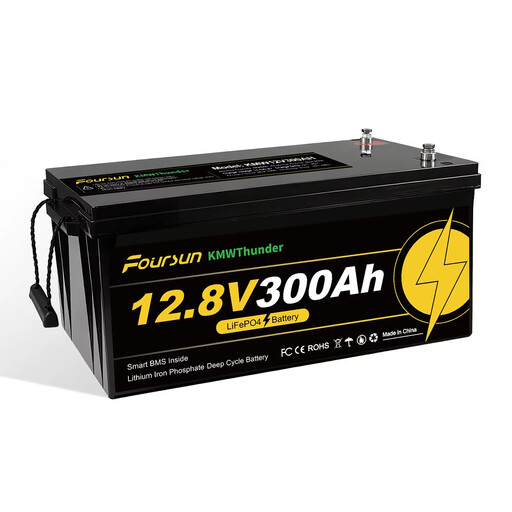
Foursun 12V 300Ah LiFePO4 Battery with Low-Temp BMS Protection
Why This Fits Their Persona: Ideal for users looking to replace their old lead-acid battery in an RV or boat with a powerful, long-lasting, high-capacity solution, without paying for extra features like Bluetooth.
The integrated BMS includes explicit low-temperature protection. The cycle life is realistically rated at 4500+ cycles, setting transparent expectations.
Offers a very high 300Ah capacity for extended off-grid time. The maximum discharge current of 235A is sufficient for most inverters and high-draw appliances.
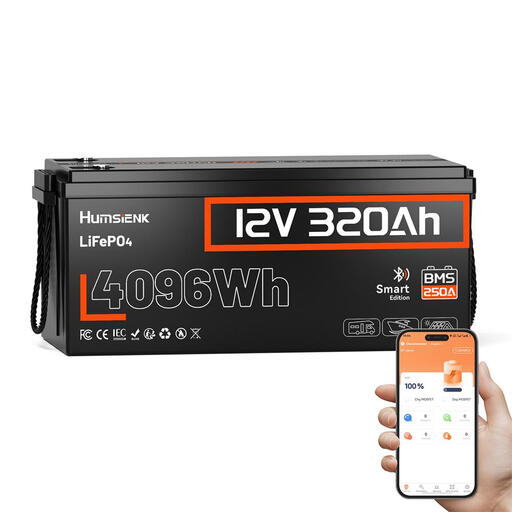
HumsiENK 12V 320Ah LiFePO4 Battery with Bluetooth
Why This Fits Their Persona: Perfect for van-lifers and yacht owners who want full control and monitoring. The Bluetooth feature allows for convenient tracking of state of charge, voltage, and temperature via a smartphone.
The smart 250A BMS not only provides all critical protections, including for low temperatures, but its app connectivity also allows for transparent monitoring of cell health.
A very high 250A continuous discharge current for demanding applications. Bluetooth monitoring adds convenience and an extra layer of control over battery status.
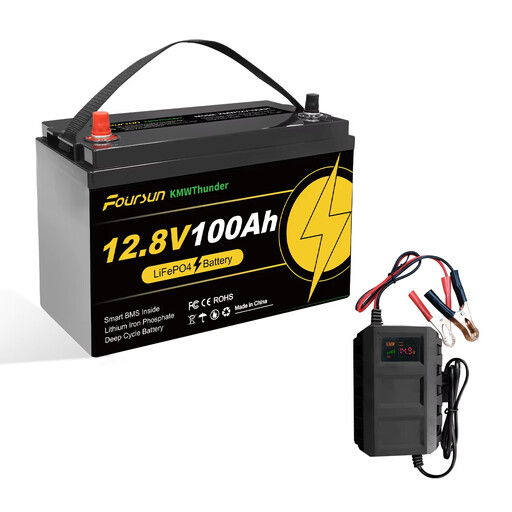
Foursun 12V 100Ah LiFePO4 Battery with Low-Temp BMS Protection
Why This Fits Their Persona: Instead of one large 300Ah battery, DIY solar system builders often prefer modular setups. Three of these 100Ah batteries connected in parallel provide 300Ah with greater flexibility and redundancy.
This model is explicitly designed for series and parallel connections (up to 4S4P). Each battery's BMS operates independently to protect its cells, enhancing overall system safety.
High scalability and redundancy. If one battery fails, the rest of the system continues to operate. Smaller, lighter units are easier to handle and install.
Looking for More Options?
We've curated a complete, up-to-date list of products that fully meet these strict selection criteria and safety standards.
Frequently Asked Questions (FAQ)
How many years does a LiFePO4 300Ah battery really last?
The lifespan is measured in charge cycles rather than years. A battery rated for 4,500 cycles that is discharged to 80% daily has a theoretical lifespan of over 12 years (4,500 days / 365 days/year). With less intensive use, such as only on weekends, the lifespan can extend to 15 years or more. Chemical aging limits the maximum lifespan regardless of usage.
Can I simply replace my old lead-acid battery with a LiFePO4 battery?
In many cases, yes, but there are important points to consider. Your charger or solar charge controller should have a specific charging profile for lithium (LiFePO4) batteries. They require a different charging voltage (typically 14.4V – 14.6V) and do not need a float charge like lead-acid batteries. Check the compatibility of your existing charging infrastructure to avoid damaging the new battery.
What does a 200A BMS mean on a 300Ah battery?
This means the Battery Management System (BMS) allows for a continuous discharge current of up to 200 amps. The 300 amp-hour (Ah) capacity describes the amount of energy stored, while the BMS rating (A) defines the maximum power output. A 200A BMS can therefore continuously supply a load of up to 2,400 watts (200 A x 12 V), which is sufficient for most high-power devices in an RV or boat.