
Buyer's Guide to Choosing Quality Canned Tuna
Canned tuna is a staple in many household pantries. It's convenient, has a long shelf life, and is incredibly versatile. Yet, when faced with the supermarket aisle or browsing online, the selection can be overwhelming. Labels make big promises, but not every can delivers. Before you make a choice, it's helpful to understand the common points of confusion that can lead to the wrong purchase.
- Pitfall #1: The "Fillet" Deception. The term "fillet" suggests a large, intact piece of fish. However, it often conceals smaller, broken pieces that may be unsuitable for a salad.
- Pitfall #2: The Ambiguous Packing Liquid. "Tuna in oil" can mean anything from high-quality olive oil to basic sunflower oil. "Tuna in its own juice" is lower in calories but can have a high salt content that significantly alters the taste.
- Pitfall #3: Vague Sustainability Claims. Many brands advertise "sustainable fishing" without backing it up with a recognised certification. This makes it difficult for consumers to make a truly environmentally conscious choice.
This guide will help you navigate these pitfalls and find the right canned tuna for your needs.
The Decisive Criteria: What Really Matters When Buying
To make an informed decision, you should check three core parameters. These determine the quality, taste, and suitability for your intended use.
Packing Liquid: Tuna in Oil, in Its Own Juice, or in Sauce?
The liquid in which the tuna is preserved has a significant impact on its calorie count, texture, and flavour.
- Tuna in its own juice (or water): Often labelled as tuna without oil, this is the top choice for a calorie- and fat-conscious diet. The fish retains its pure, natural flavour and is particularly protein-rich. It's excellent for salads or as an ingredient where the pure taste of the fish should be the star. Pay attention to the salt content, which can vary between products.
- Tuna in oil: The oil makes the fish juicier and more flavourful. The type of oil is crucial here. Sunflower oil is neutral in taste, while olive oil gives the tuna a Mediterranean note. High-quality olive oil can significantly increase the price, but also the quality. This version is ideal for pasta dishes or antipasti, as the flavoured oil can be used directly in the recipe.
- Tuna in sauce: Ready-made varieties in tomato, vegetable, or spicy sauces offer maximum convenience. They are intended as a quick meal or as a base for pasta sauces. It's worth taking a look at the ingredients list, especially the sugar and salt content.
Cut: True Tuna Fillets or Just Chunks?
The description on the can provides information about the texture of the contents.
- Tuna Fillets: This should consist of larger, cohesive pieces of the fish fillet. They are visually appealing and have a firm texture. Tuna fillets are ideal for dishes where the fish is presented whole, such as in a Salade Ni?oise.
- Tuna Chunks: These are smaller, broken pieces. They are versatile and a good choice for tuna salad spreads, casseroles, or as a pizza topping.
- Tuna Flakes (shredded): Here, the fish is already finely shredded and is primarily suitable for spreads or fillings.
Sustainability: What the MSC Label Means for Your Tuna
For environmentally conscious buyers, the origin of the fish is a key criterion. The MSC (Marine Stewardship Council) label is a reliable indicator. MSC-certified tuna comes from fisheries that are proven to operate sustainably. This means they ensure the conservation of fish stocks, minimise their impact on the marine ecosystem, and are subject to transparent management. The label guarantees that the fish is traceable from catch to can. Look for this blue logo if you want to be sure your tuna comes from responsible sources.
Selecting Your Ideal Version
Based on these criteria, we have selected a few products from our range that are suitable for different user profiles.
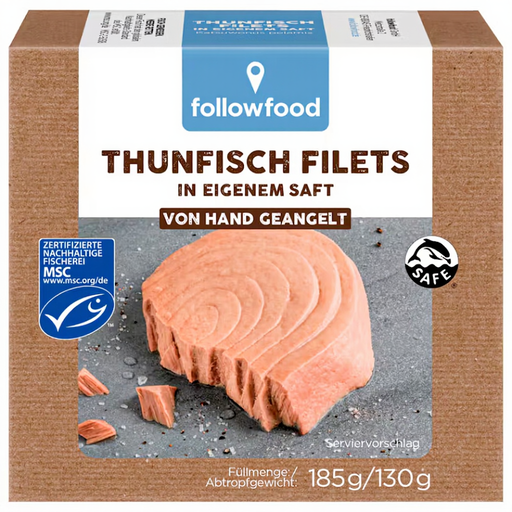
Followfood MSC Tuna Fillets in Natural Juice 185 g
Why This Fits Their Persona: Ideal for a high-protein diet after a workout or as a light meal. The high protein content with minimal fat supports muscle growth and a conscious diet.
This product combines clear facts: it contains real tuna fillets in their own juice, not just chunks. Its sustainability is transparently verified by the MSC label.
Very high protein content (27 g per 100 g) with only 0.7 g of fat. The sustainable "pole and line" fishing method is an additional plus.
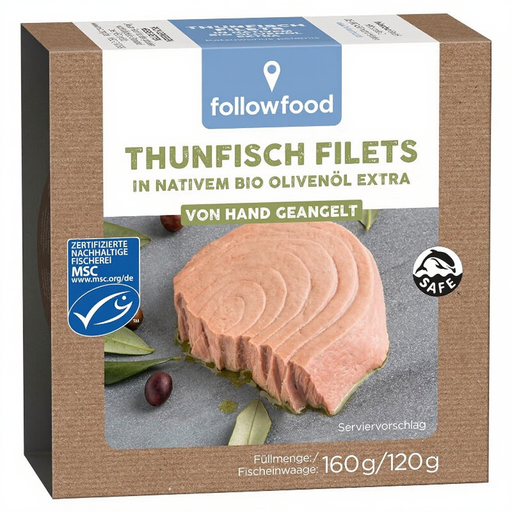
Followfood MSC Tuna Fillets in Extra Virgin Organic Olive Oil 160 g
Why This Fits Their Persona: For those who make no compromises on ingredients. The combination of hand-caught fillets and organic olive oil elevates salads and Mediterranean dishes.
This avoids the ambiguous oil trap: it uses clearly declared organic extra virgin olive oil. The fillet quality and MSC certification build additional trust.
The combination of MSC-certified, hand-caught tuna and organic olive oil offers superior product quality for sophisticated dishes.
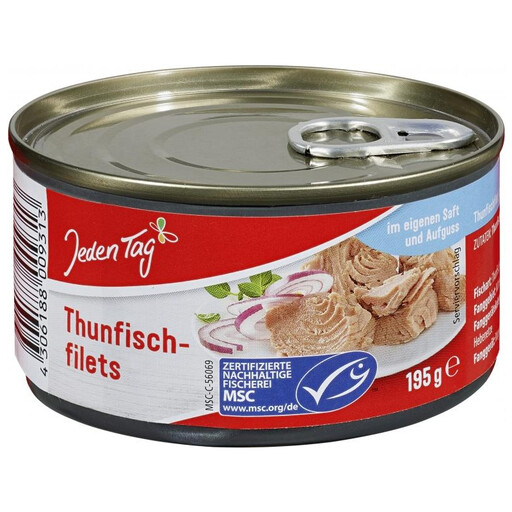
Jeden Tag Tuna Fillets in Brine 195g
Why This Fits Their Persona: A straightforward product for quick meals. The chunked fillets in brine are versatile for salads, casseroles, or sandwiches and offer solid value for money.
The product is transparently labelled as "tuna fillets in brine, chunked." It doesn't promise whole fillets, delivering exactly what is practical for everyday use.
High protein content (26 g per 100 g) and low fat. The 195g can is practical for family-sized portions or for stocking the pantry.
Looking for More Options?
If you'd like to discover more products that meet our selection criteria, you can find our complete range here. Browse through different brands and preparations to find the perfect tuna for your taste and recipes.
Frequently Asked Questions About Canned Tuna
How long does canned tuna last after opening?
After opening, the contents of the can should be immediately transferred to a sealable, non-metallic container (e.g., glass or plastic). Stored in the refrigerator, the tuna will then typically last for 1 to 2 days. Always trust your sense of smell and taste.
What does the MSC label on a can of tuna mean?
The blue label from the Marine Stewardship Council (MSC) identifies fish and seafood from sustainable fisheries. An MSC-certified fishery ensures that fish stocks are conserved for the future, the impact on the marine ecosystem is minimised, and the fishery is managed effectively. It is a reliable sign of a responsible purchase.
Is tuna in oil or in its own juice the better choice?
There is no single "better" choice—it depends on the intended use and personal preference.
- For the health-conscious:Tuna in its own juice is the lower-calorie and lower-fat option. It is ideal if you want the pure taste of the fish and want to control the added fat and calories.
- For the gourmet:Tuna in oil is juicier and more flavourful. The oil, especially high-quality olive oil, can be used as part of the dressing or sauce, adding extra flavour to the dish.