
Konjac Snack Buying Guide: Spicy, Low-Calorie Options Explained
By Joybuy Product Recommendation Officer, August 28, 2026
Konjac snacks have evolved from a niche product to a staple for Asian food enthusiasts. The spicy variety, often called "vegetarian tripe," is especially popular for its intriguing texture and low calorie count. However, many encounter hurdles when trying to buy konjac snacks online. Vague product descriptions and exaggerated marketing claims can lead to a disappointing taste experience.
This guide will help you avoid the common pitfalls and make an informed choice that meets your expectations for an authentic, low-calorie snack.
The 3 Most Common Pitfalls When Buying Konjac Snacks
Before making your selection, you should be aware of the most common issues that can lead to a purchase you'll regret.
- The Texture Trap: Many products advertise a "tripe-like" texture. However, this term is flexible. Some snacks are soft and almost gelatinous, while others have a firm, chewy, or even crispy bite. If you're expecting a specific consistency, you'll often be disappointed without closely examining the product's features.
- The Calorie Deception: A "low-calorie snack" is konjac's main selling point. However, this benefit can be negated by high levels of sugar or sodium in the marinade. A quick glance at the calorie count alone isn't enough to fully assess a product's health aspects.
- The Spice Lottery: The term "spicy" is subjective. The spectrum ranges from a mild kick to the intense and numbing heat of Sichuan pepper (Mala). Without a more precise description of the seasoning style, you're essentially buying blind and risk getting a product that is either too bland or unbearably hot for your taste.
What to Look For When Choosing: The Key Criteria
To ensure you find the right konjac snack, focus on three objective criteria.
1. Konjac Content and Texture
The base of every konjac snack is konjac flour, derived from the root of the konjac plant. The konjac flour content, often listed as a percentage (e.g., 6% or 7%), is an indicator of quality and texture. A higher percentage generally results in a firmer and chewier bite. Products described as vegetarian tripe are usually cut into thin, wavy strips to mimic the texture of actual tripe. Look for descriptions like "crisp," "chewy," or "smooth" to get an idea of the consistency.
2. Seasoning Style and Spice Level
Chinese snacks are known for their complex flavour profiles. Instead of just relying on the word "spicy," look for more specific terms that describe the type of seasoning:
- Mala (麻辣): A combination of heat (La) from chillies and a numbing sensation (Ma) from Sichuan pepper. This is a classic flavour of Sichuan cuisine.
- Hot Pot (火锅): Inspired by the broth of a Chinese hot pot, often a rich, savoury, and umami-heavy blend.
- Sour & Spicy (酸辣): A spicy base that gets a tangy note from vinegar or pickled vegetables.
- BBQ / Grill Flavour (烧烤): Often smoky and slightly sweet, less spicy than Mala or Hot Pot varieties.
These designations give you a much better idea of the flavour profile than generic descriptions.
3. Complete Nutritional Information
Responsible snacking means reading the entire nutrition label. A low-calorie snack is a good start, but pay special attention to two other values:
- Salt/Sodium: Many spicy snacks have a high salt content, which is listed per 100g on the label. A high value can offset the health benefit of the low calorie count.
- Sugars: Sugar can also be hidden in the marinade. Compare the sugar content, especially if you're looking for a purely savoury option.
A good vegan snack should not only be plant-based but also have balanced nutritional values.
Konjac Snacks for Every Preference
Here are a few recommendations tailored to different flavour profiles and needs.
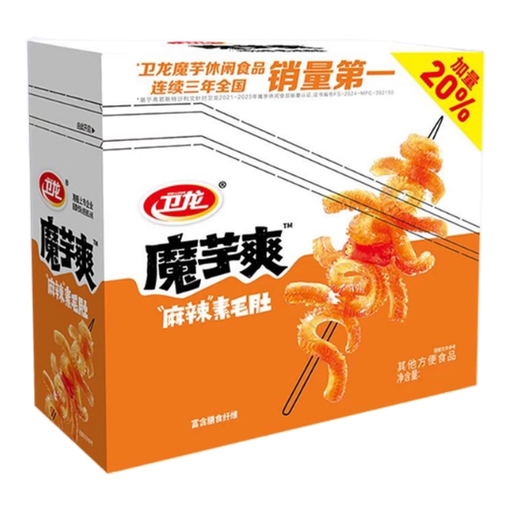
Wei Long Konjac Snack, Vegetarian Tripe Numbing & Spicy 360g Box
Why This Fits Their Persona: Ideal for those seeking the authentic taste of Sichuan cuisine. This snack delivers the characteristic "mala" experience—a combination of intense heat and the signature tingling of Sichuan pepper.
The product name "Numbing & Spicy (Mala)" precisely defines the type of heat, thus avoiding the "spice lottery."
Authentic mala flavour; chewy, tripe-like texture; individually packed portions for on-the-go snacking.
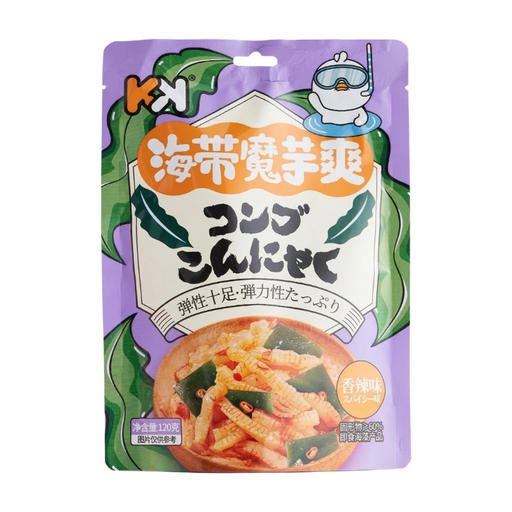
Chaoyouwei Spicy Kelp & Konjac 120g
Why This Fits Their Persona: At just 58 kcal per 100g, this snack is one of the lightest options on the market. The combination of konjac and kelp offers a varied texture and is ideal for a guilt-free snack.
This product bypasses the "calorie deception" with a verifiably low energy value that is clearly stated in the nutritional information.
Extremely low in calories (58 kcal/100g); interesting texture combination of konjac and kelp; ready-to-eat.
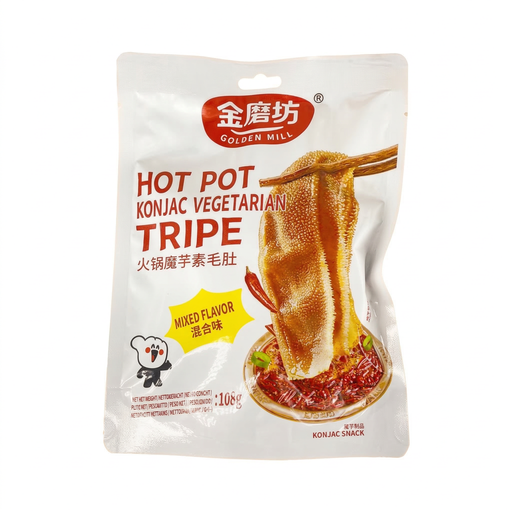
Jinmofang Hot Pot Konjac Plant-Based Tripe Snack - Mixed Flavors, 108g
Why This Fits Their Persona: For anyone new to the world of konjac snacks or who simply enjoys variety. This mixed-flavour pack offers a chance to sample different varieties without committing to a large quantity of one.
This product solves the problem of buying a large pack of an unknown flavour. It provides a curated selection and minimises the risk of a bad purchase.
Multiple flavours in one pack; ideal for sampling; can also be used as an ingredient in hot pot or stir-fry dishes.
Looking for More Options?
We've compiled a complete, up-to-date list of products that fully meet these strict selection criteria.
Frequently Asked Questions (FAQ)
1. What exactly is a konjac snack and what does it taste like?
A konjac snack is made from the flour of the konjac root, a plant native to Asia. The base itself has a firm, slightly rubbery or gelatinous consistency and is almost tasteless. The snack gets its characteristic flavour entirely from the marinade it's soaked in. This is usually savoury, salty, and often spicy, inspired by regional Chinese cuisines.
2. Are konjac snacks vegan?
In most cases, yes. Since the base is made from the konjac plant, the snack is naturally a vegan snack. However, it is essential to check the ingredients list. In rare cases, seasonings or additives may contain animal-derived ingredients, such as milk powder or certain flavourings. The products featured here are based on plant-based ingredients.
3. How should I store opened konjac snacks?
Konjac snacks are typically packaged in individual or larger bags and are intended for immediate consumption. If you don't finish a pack completely, it's best to store the leftovers in an airtight container in the refrigerator and consume them within one to two days to preserve freshness and texture. Always follow the storage instructions on the packaging.