
Low-Calorie Konjac Jelly Selection Guide
By Joybuy Product Recommendation Officer, August 29, 2026
Finding a sweet snack that tastes great without derailing your calorie goals can be a challenge. Konjac jelly, often known as a jelly drink from Korea, has emerged as a popular option for health-conscious consumers. However, not all products live up to their claims. Before you buy a konjac jelly, it's crucial to understand the common pitfalls to make an informed decision.
Many snacks marketed as "healthy" contain hidden traps that undermine their intended benefits. Here are the three most common issues to watch out for:
- Hidden Sugars and Unwanted Additives: Some products advertised as low-calorie may use sugar substitutes, but they also contain a long list of artificial flavours, colours, or preservatives. Sometimes, fruit syrup is added, which discreetly increases the sugar content.
- Misleading Nutritional Information: The calorie count on the front of the package might refer to an unrealistically small serving size. A pouch that seemingly has only 10 calories could actually be declared for two or more servings, leading to a miscalculation of your actual calorie intake.
- Unsatisfying Texture and Taste: The quality of konjac products can vary significantly. Poorly formulated jellies often have a rubbery, firm consistency or a chemical aftertaste that spoils the experience, leaving the product to gather dust in your cupboard.
What Really Matters When Making Your Choice
To avoid disappointment, you should check three key parameters before buying. These will help you objectively assess the quality and suitability of a konjac jelly.
1. The Main Ingredient: Glucomannan (Konjac Flour)
The foundation of konjac jelly is glucomannan, a water-soluble dietary fibre extracted from the root of the konjac plant. This ingredient is responsible for the characteristic gel-like consistency and its high swelling capacity. A high proportion of pure konjac flour helps create a satiating jelly that can aid in controlling cravings between meals. Pay close attention to the ingredients list to ensure that konjac flour (or glucomannan) is one of the main components and not just present in trace amounts.
2. Sweetener Type and Calorie Content
A key advantage of konjac jelly is its potential as a sugar-free dessert. This is typically achieved by using sugar alcohols like erythritol. Unlike conventional sugar, erythritol is barely metabolised by the body and therefore provides almost no calories. Products sweetened exclusively with erythritol or other zero-calorie sweeteners like sucralose typically have a calorie count of under 10 kcal per serving. Check the nutrition facts panel carefully for the "of which sugars" line to ensure it is a truly low-calorie snack.
3. Gelling Agents and Texture
In addition to konjac flour, other gelling agents like carrageenan, gellan gum, or xanthan gum determine the final texture. The combination and ratio of these ingredients are crucial in deciding whether the jelly has a pleasantly soft, drinkable consistency or a firm, chewy structure. Products from South Korea, known as Korean jelly drinks, are often formulated to have a smooth texture that is easy to squeeze and consume from the pouch.
Our Picks for Different User Profiles
Based on these criteria, we have curated a selection of products suitable for different needs and preferences.
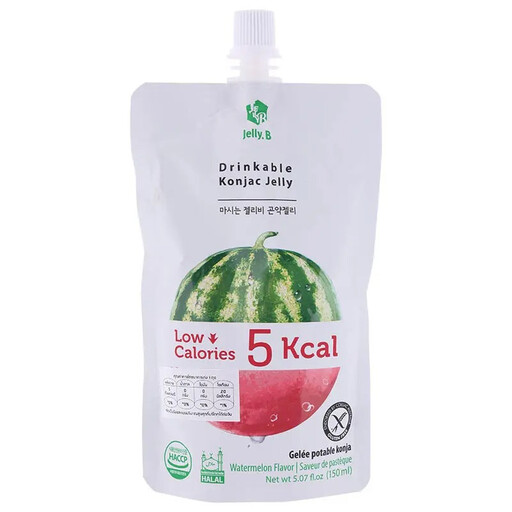
Jelly B Konjac Jelly Watermelon 150ml
Why This Fits Their Persona: Ideal for those who love authentic Korean snacks. The refreshing watermelon flavour and convenient squeeze pouch make it the perfect on-the-go companion, fully embracing modern K-food trends.
This jelly is sweetened with erythritol and contains no added sugar. The nutritional information is clearly declared per pouch (150 ml), allowing for precise calorie tracking (5 kcal).
Extremely low in calories with a pleasantly drinkable texture. The resealable packaging is practical for consuming in stages.
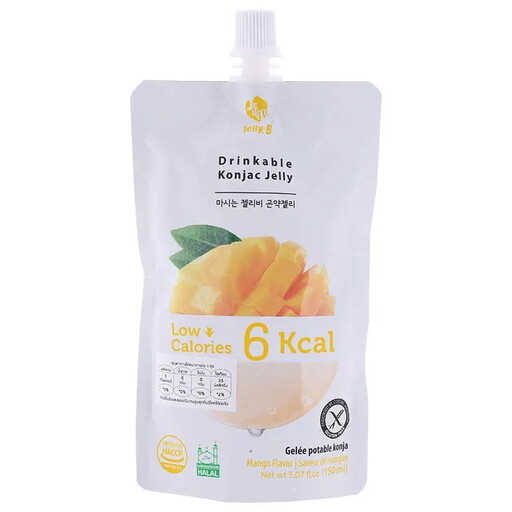
Jelly B Konjac Jelly Mango 150ml
Why This Fits Their Persona: For those seeking a sweet, fruity taste without the guilt. The intense mango flavour provides a satisfying dessert experience and is a great choice for curbing afternoon cravings.
With only 6 kcal per 150 ml serving and 0g of sugar, this product is transparent in its composition. The formulation is designed for a pleasant, non-rubbery texture.
The rich, tropical flavour effectively satisfies sweet cravings. It's a vegan jelly and a great alternative to sugary fruit yoghurts or puddings.
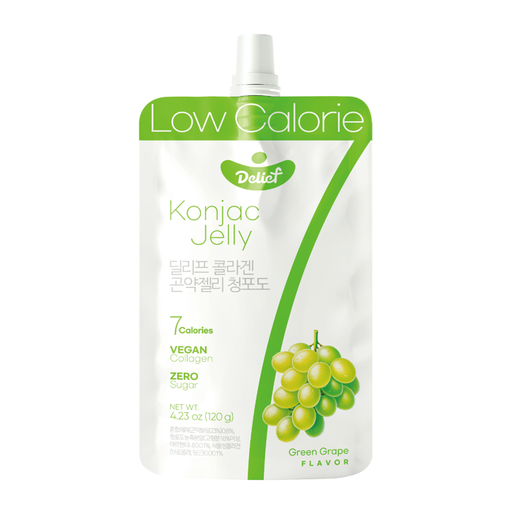
Delief Konjac Jelly Green Grape (Vegan) 120g
Why This Fits Their Persona: This product is perfect for consumers who value a clean and vegan ingredient list. The classic green grape flavour is refreshing and not overly artificial, making it a solid choice for daily enjoyment.
The ingredient list is transparent and focuses on functional components. At 5 kcal per 100g and 0g of sugar, it's a reliable, low-calorie option with no hidden calorie traps.
The formula is explicitly declared as vegan and uses plant-based collagen from carrots. The taste is classic and refreshing without being overly sweet.
Looking for More Options?
We have compiled a complete, up-to-date list of products that fully meet these strict selection criteria.
1. How do you eat konjac jelly correctly?
Konjac jelly is typically sold in flexible pouches with a screw cap. Before opening, the pouch should be kneaded lightly to ensure a uniform consistency. The jelly is then squeezed directly from the opening and consumed. It is important to chew the jelly thoroughly and not to swallow it whole. For an especially refreshing taste experience, the product can be chilled in the refrigerator before consumption.
2. Can you lose weight with konjac jelly?
Konjac jelly is not a weight-loss product, but it can be a valuable component of a calorie-conscious diet plan. As a snack for weight management, it is suitable because it offers a very low-calorie alternative to chocolate, biscuits, or other sweets. The included dietary fibre, glucomannan, swells in the stomach and can thus contribute to an increased feeling of fullness. This can help reduce overall calorie intake when used as a substitute for more energy-dense snacks.
3. Is konjac jelly always vegan?
Most konjac jellies are naturally vegan, as they are based on the plant-derived konjac root and use plant-based gelling agents instead of animal-derived gelatine. This makes them a suitable vegan jelly. Nevertheless, it is always advisable to check the ingredients list. In rare cases, products might contain milk components or other non-vegan additives, especially in creamy or milk-coffee-style flavours.