
Hot Pot Soup Base 2026: Which Broth Suits Your Spice Level, Ingredients and Occasion?
Preparing hot pot at home is far more straightforward with a ready-made hot pot soup base than with homemade stock. Even so, products vary considerably in terms of spice level, fat content, salt, allergens, serving size and preparation volume. Anyone who focuses only on the brand name or appealing packaging can quickly end up with a base that is too spicy, too salty or not versatile enough for their household.
The following selection by the Joybuy Product Recommendation Officer categorises relevant products according to their intended flavour profile and practical applications. The information is based on the respective product details and nutritional tables.
Common Pitfalls When Buying a Hot Pot Soup Base
1. Spice and “Mala” Are Often Confused
A Sichuan hot pot base typically combines chilli heat with the tingling, numbing sensation of Sichuan pepper. This is not the same as an ordinary spicy hot pot soup. Terms such as “Mala”, “Spicy” or “Sichuan” indicate a distinctly seasoned profile, but do not automatically reveal how intense the heat will be.
For groups with different preferences, a divided broth can be a practical solution: prepare one half with a Mala base and the other with a clear or vegetarian base.
2. The Pack Size Does Not Automatically Equal One Meal
A 110 g pack may be intended for approximately 1,100 to 1,200 ml of water, while concentrated pastes may be designed for around 600 to 1,000 ml of liquid. The key factor is therefore the recommended dilution, not the net weight alone.
Using too little water produces an extremely intense broth. Too much liquid, on the other hand, dilutes the flavour. For several people, consider the pack size, pot capacity and quantity of additional ingredients together.
3. Ingredient Lists and Allergens Are Easily Overlooked
Many Asian soup bases contain soy, wheat, sesame, mustard or sulphites. Some seafood-based products also list crustaceans, fish or molluscs as allergens. Even with a supposedly vegetarian broth, it is worth checking the specific ingredient list.
Fat and salt levels can also vary significantly. Examples from the product information available: Haidilao Clear Broth contains 15.3 g of salt per 100 g, while Haidilao Mushroom Soup contains 19.7 g. These figures refer to the concentrate rather than the prepared, diluted broth, but they are still relevant when comparing products.
Parameters to Check Before Buying
Flavour Profile and Intended Use
- Clear hot pot broth: mild in flavour, often with mushrooms, dates, goji berries or spices.
- Mushroom hot pot broth: suitable for vegetarian ingredients, tofu, noodles and vegetables.
- Tomato hot pot base: fruity and tangy, and generally mild or entirely non-spicy.
- Sichuan or Mala base: chilli, fermented bean paste and Sichuan pepper create a bold, sometimes numbing profile.
- Guizhou sour soup: tomato-based, fermented and tangy; well suited to fish, noodles and vegetables.
- Yuan-Yang base: multiple sachets with different flavour profiles for a divided pot.
Preparation Volume and Portion Format
Check whether the base is dissolved directly in water or whether additional stock, chilli, Sichuan pepper or aromatics are recommended. According to the product information, Haidilao Clear Broth 110 g is prepared with approximately 1,200 ml of water. Bai Jia Sichuan Hot Pot Soup Base 200 g calls for 50 to 100 g per approximately 1 litre of water or stock, allowing the flavour to be adjusted to taste.
Allergens, Storage and Shelf Life After Opening
Storage instructions vary by product. Several pastes must be refrigerated after opening and consumed promptly. Haidilao Clear Broth, for example, is to be refrigerated and consumed within two days. Do not use packaging that has swollen. The instructions on the respective packaging always take precedence.
Our Selection by User Profile
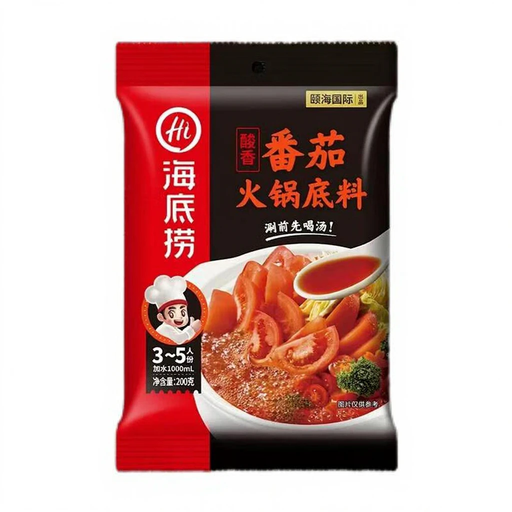
Haidilao Hot Pot Base (Tomato) 200 g
Why it’s a good fit: Its tomato-forward, sweet-and-tangy, non-spicy profile is ideal for first-time hot pot evenings with vegetables, meat or noodles.
The product is clearly identified as a mild tomato base, avoiding the uncertainty around the spice level of many Mala products.
Tomato paste accounts for at least 15% according to the product information; the base is also suitable for noodle soup and braised dishes.
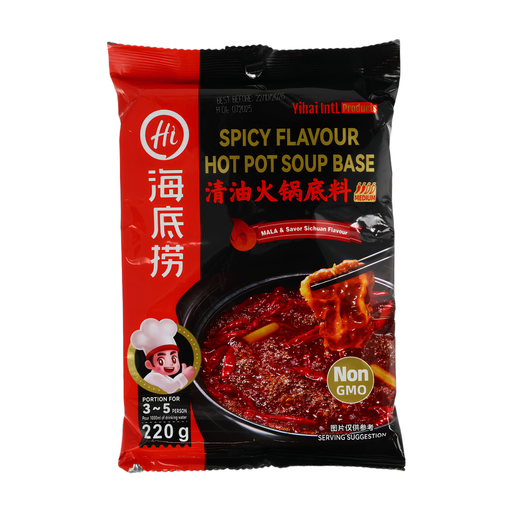
Haidilao Sichuan Clear Oil Mala Hot Pot Base 220 g
Why it’s a good fit: The ingredient list specifies 10% chilli and 0.8% Sichuan pepper, providing a clear point of reference for fans of the bold, numbing Mala style.
The stated quantities make it easier to assess the flavour profile before buying, ensuring that “Sichuan” is not used merely as a broad marketing term.
Suitable for hot pot, stir-fries and braised dishes; contains soy and wheat as declared allergens.
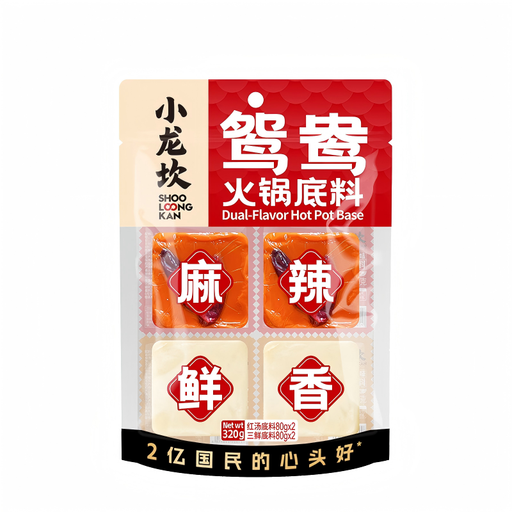
Shoo Loong Kan Yuan Yang Hot Pot Base 320 g
Why it’s a good fit: Four individual sachets—two spicy and two clear or vegetarian—make it easy to prepare a divided pot.
The individual sachets reduce the risk of having to store a large opened pack for an extended period.
Four 80 g sachets; clear and spicy variants in one pack. The ingredient list identifies soy and mustard as allergens.
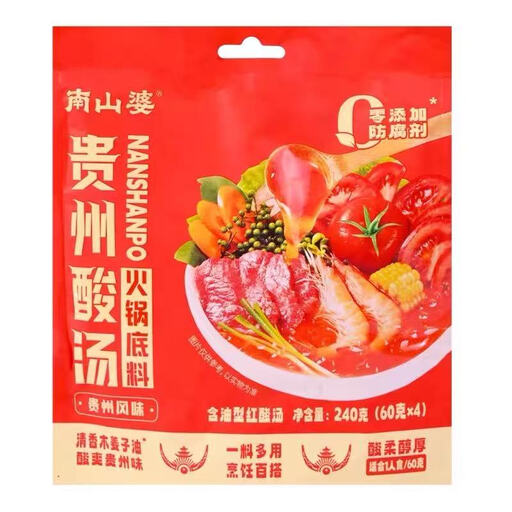
Nanshanpo Guizhou Sour Soup Hot Pot Base 240 g
Why it’s a good fit: Guizhou sour soup combines tomato, chilli and fermented ingredients into a tangy, savoury profile.
The product description clearly identifies the flavour as sour and refreshing rather than presenting it as a classic clear broth.
240 g contents; according to the product information, suitable for hot pot, noodle soup and fish soup. Soy is listed as an allergen.
Looking for more options?
Our full selection includes hot pot soup bases with different spice levels, ingredient lists and preparation formats.
How to Prepare Hot Pot Properly at Home
For a well-balanced selection, first prepare the broth according to the package instructions and bring it fully to the boil. You can then cook ingredients such as beef, pork, prawns, tofu, Chinese cabbage, mushrooms, glass noodles or pak choi in batches.
It is important to keep raw and cooked foods separate. Meat and seafood should be cooked through completely. A mild Asian soup base can be enhanced with spring onions, garlic, ginger or additional mushrooms. With a robust Mala broth, neutral ingredients such as tofu, potatoes and leafy greens are often all you need.
Hot Pot Soup Base FAQ
How Much Hot Pot Broth Do I Need for Four People?
As a practical guideline, allow approximately 1.5 to 2 litres of prepared broth. The exact amount depends on the pot size, ingredients and desired concentration. Always follow the mixing ratio printed on the respective base.
Can a Hot Pot Soup Base Also Be Used for Other Dishes?
Yes. According to the product information, several products are also intended for noodle soups, braised dishes, stir-fries or tomato beef stews. A Mala base is better suited to richly flavoured dishes, while clear or mushroom varieties can be incorporated more easily into soups and noodle dishes.
How Long Does an Opened Base Keep?
This depends on the type of product. Many liquid or paste-based bases should be refrigerated after opening and consumed within a few days. Dry, unopened sachets are generally easier to store. The packaging, best-before date and storage instructions determine the exact shelf life.