
Hot Pot Soup Base Buyer's Guide: Selecting Broth
A cozy evening with friends, a steaming pot in the center of the table, and an array of fresh ingredients—making hot pot at home is a true culinary experience. But its success hinges on the quality of the Hot Pot Soup Base. The selection at the supermarket or online can be overwhelming, and not every base delivers on its promise. Before you buy a hot pot base, it's crucial to know the common pitfalls that often lead to a disappointing result.
Many people choose the wrong broth because they fall for misleading claims. The most common problems include:
- Misleading Spice Levels: A base labeled "mild" can be surprisingly intense for the Western palate, while a broth marked "spicy" often just burns without delivering the characteristic, numbing mala quality of Sichuan peppercorns.
- One-Dimensional Flavor: Budget-friendly products often taste merely salty and spicy. They lack the aromatic depth that comes from a complex blend of spices like star anise, fennel, fermented beans, and cardamom.
- Unclear Portion Sizes: The packaging rarely specifies precisely how much water to use or how many people the base serves. The result is often a watery or an overly concentrated hot pot broth.
This guide will help you avoid these mistakes and make an informed decision.
What Really Matters When Buying a Hot Pot Base
To find the right Chinese hot pot base, you should focus on three key features. These parameters largely determine the flavor, authenticity, and ease of use.
1. Consistency: Oil-Based vs. Paste-Based Foundations
Hot pot soup bases mainly come in two forms: solid, oil-based blocks or soft pastes.
- Oil-Based Bases: These often consist of hardened vegetable fat (e.g., palm oil) or beef tallow, which encases chilies, Sichuan peppercorns, and other spices. They dissolve in hot water to create a rich, often reddish, and highly aromatic broth. This form is typical for authentic Sichuan hot pots like the Mala Hot Pot and delivers a particularly deep flavor.
- Paste and Powder Bases: These are often packaged in sachets and are easier to portion. They are a convenient option, especially for milder varieties like the Tomato Hot Pot Base or clear mushroom broths. Their consistency also makes them versatile for preparing noodle soups or stir-fry dishes.
2. The Flavor Profile: From Mildly Aromatic to Mala Spicy
The variety of flavors is immense. The main categories can be classified as follows:
- Spicy Soup Base (辣, Là): Here, the heat from chilies dominates. However, a good spicy soup base should offer more than just heat. Look for ingredients like Doubanjiang (fermented broad bean paste), which provides a savory depth.
- Numbing-Spicy (麻辣, Málà): This is the signature of Sichuan cuisine. In addition to the heat (辣, là), Sichuan peppercorns provide a tingling, slightly numbing sensation on the tongue (麻, má). A true Mala Hot Pot thrives on this complex combination.
- Tomato Base (番茄, Fānqié): A fruity, slightly tangy, and umami-rich option that is popular with kids and adults who avoid spiciness. It pairs wonderfully with meat, seafood, and vegetables.
- Mild and Clear Broths (清汤, Qīngtāng): These are often based on mushrooms, chicken fat, dates, or herbs. They are subtle in flavor, allowing the natural taste of the high-quality ingredients in the pot to shine through.
3. The Ingredient List: A Look at Authenticity and Quality
A quick glance at the ingredient list reveals a lot about the quality. Authentic bases often contain a long list of spices and specific ingredients.
- Key Ingredients: Look for terms like Doubanjiang (broad bean paste), fermented soybeans (Douchi), Sichuan peppercorns, and a variety of spices (e.g., star anise, fennel, cinnamon, bay leaf). For spicy bases, the use of beef tallow (Niu You) is an indicator of a particularly rich, traditional flavor.
- Additives: Flavor enhancers like monosodium glutamate (MSG, E621) are standard in many Asian condiments and contribute to the umami taste. Those who wish to avoid it should specifically look for products made without it.
Soup Base Selections Unveiling
Based on the criteria above, we have compiled a selection of products suitable for different preferences and occasions.
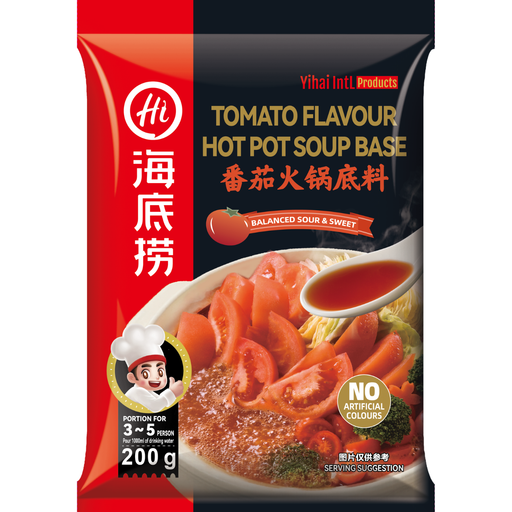
HAIDILAO Tomato Hot Pot Base 200g
Why This Fits Their Persona: Ideal for beginners, families with children, or anyone looking for a non-spicy yet flavor-packed alternative. The balanced, sweet-and-sour tomato flavor is approachable and pairs well with almost any ingredient.
This base has a clear and honest flavor profile with no hidden spiciness. The fruity tomato taste is authentic and not just salty.
Highly versatile, it can also be used for noodle soups or as a base for stews. The Haidilao brand is known for its consistent quality.
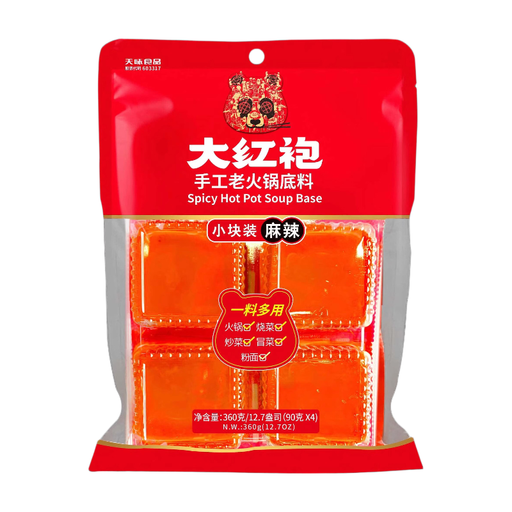
Hao Ren Jia Spicy Hot Pot Soup Base 360g
Why This Fits Their Persona: For anyone seeking the genuine, complex, and aromatic flavor of a Sichuan hot pot. This base delivers that characteristic mala quality that goes beyond mere heat.
It delivers a multi-layered flavor instead of just salt and heat. The division into four 90g packets elegantly solves the problem of unclear portion sizes.
An authentic, artisanal-style recipe with palm oil, broad bean paste, and traditional spices. The convenient portion packs are ideal for 2-4 people.
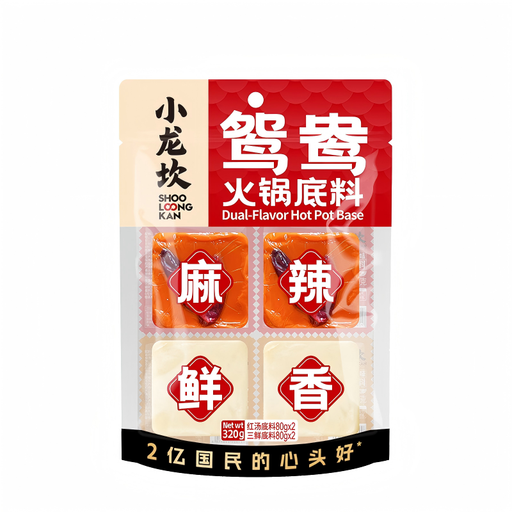
Shoo Loong Kan Yuan Yang Hot Pot Base 320g
Why This Fits Their Persona: Perfect for hosts who need to cater to both spicy and mild preferences simultaneously. This set is specifically designed for a "Yuan Yang" pot with two compartments.
It solves the problem of having to find a compromise for the whole group. Everyone gets the flavor they prefer, ensuring no one feels left out.
Includes two packets for a spicy mala broth and two packets for a mild, clear broth. The portioning is clear and easy to use.
Looking for more options?
We've compiled a complete, up-to-date list of products that meet these strict selection criteria and quality standards.
Frequently Asked Questions (FAQ)
1. How much water do you need for a hot pot soup base?
The amount of water needed varies by product and desired flavor intensity. As a rule of thumb, solid, oil-based blocks (approx. 150-200g) are typically simmered with 1 to 1.5 liters of water or broth. For pastes and powders, you'll often find more precise instructions on the packaging. It's a good idea to start with slightly less water and add more as needed to avoid diluting the broth.
2. Can you use a hot pot soup base for other dishes?
Yes, absolutely. Many soup bases are extremely versatile. A spicy soup base is excellent as a seasoning paste for stir-fries (e.g., "Mala Xiang Guo"), for braising meat, or as a base for a robust noodle soup. A Tomato Hot Pot Base can serve as a foundation for stews or sauces.
3. What is the difference between a regular spicy and a mala soup base?
The main difference lies in the Sichuan peppercorns. A "regular" spicy base (辣, là) gets its heat primarily from chilies. A Mala base (麻辣, málà) combines this heat with the unique, tingling, and slightly numbing effect of Sichuan peppercorns (麻, má). This interplay creates a more complex flavor experience that is characteristic of Sichuan cuisine.