
Home Cinema Projector Buying Guide: Avoid 3 Common Mistakes
A giant image that replaces your TV—the idea is tempting. But the path to your own home cinema is often paved with costly mistakes. Many devices promise more than they can deliver, luring you in with marketing terms that mean little in practice. Before you buy a home cinema projector, it's crucial to know the typical pitfalls to make an informed decision.
Based on market analysis and user feedback, we have identified the three most common issues that lead to disappointment:
- The Lumen Trap: Manufacturers often advertise with misleading brightness values like "9000 Lumens" or "LED Lumens." These figures are not standardised and say little about the actual image brightness. The result is often a pale, washed-out picture as soon as there is any ambient light in the room.
- The "Smart" Fallacy: A smart projector isn't always intelligent. Many models lack official licenses for streaming apps like Netflix or Prime Video. This means the apps don't work at all, only run in low resolution, or require cumbersome workarounds.
- The Setup Patience Test: Budget-friendly projectors often require tedious manual focusing and keystone correction. Every time the device is moved even slightly, the adjustment process starts all over again. This is impractical and frustrating in daily use.
What Really Matters: The Decisive Technical Features
To avoid these traps, you should focus on objective, verifiable parameters. These three features are non-negotiable for a successful home cinema experience.
Interpreting Brightness Correctly: ANSI Lumens as the Only True Standard
The only reliable value for a projector's brightness is ANSI Lumens. This value is measured according to a standardised procedure and allows for a direct comparison between different devices. Marketing terms like "Light Source Lumens" are often several times higher and are not meaningful.
- Under 300 ANSI Lumens: Suitable for completely darkened rooms. Ideal for a mini projector in the bedroom.
- 300 - 700 ANSI Lumens: A good choice for living rooms where the light can be controlled (e.g., in the evening with curtains closed).
- Over 700 ANSI Lumens: Necessary for use in daylight or in rooms with significant ambient light.
Understanding Resolution: Native Full HD as the Minimum Standard
Pay attention to the native resolution. Many devices advertise "supports 4K," which only means the projector can process a 4K signal. However, the actual display is often in a much lower resolution. For a sharp and detailed image, a Full HD projector with a native resolution of 1920 x 1080 pixels is the minimum standard. A true 4K projector offers a native resolution of 3840 x 2160 pixels, but this comes at a significantly higher cost.
Smart Features That Work: Android TV and Connectivity
A modern Android TV projector offers direct access to the Google Play Store and thus to thousands of officially licensed apps. This guarantees that services like Netflix, YouTube, and Prime Video work smoothly and in high quality. Equally important is a projector with Wi-Fi and Bluetooth for wireless streaming and connecting external speakers or headphones. Features like a projector with autofocus and automatic keystone correction save you from manual setup and ensure instant movie enjoyment.
Recommended Products for Different Users
Instead of presenting a cluttered list, we have selected models that meet specific needs and consistently avoid the pitfalls mentioned.
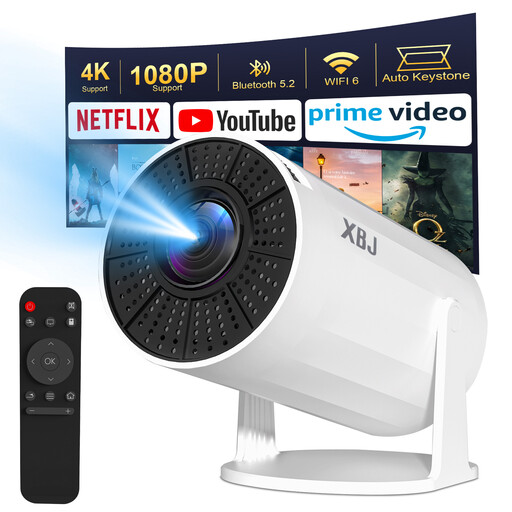
XBJ Portable Projector with WiFi 6 & Bluetooth 5.2
Why This Fits Their Persona: Ideal for users looking for a straightforward and flexible projector for the bedroom or spontaneous movie nights. The 180° rotatable design allows for easy projection onto the ceiling without needing a tripod.
With 200 ANSI Lumens, the brightness is clearly defined for darkened rooms. The integrated Android 11 system provides direct app access, and the automatic vertical keystone correction saves you from tedious manual adjustments.
The unique selling proposition is its integrated, rotatable stand. Additionally, with Wi-Fi 6, it offers a modern and fast wireless connection for smooth streaming.
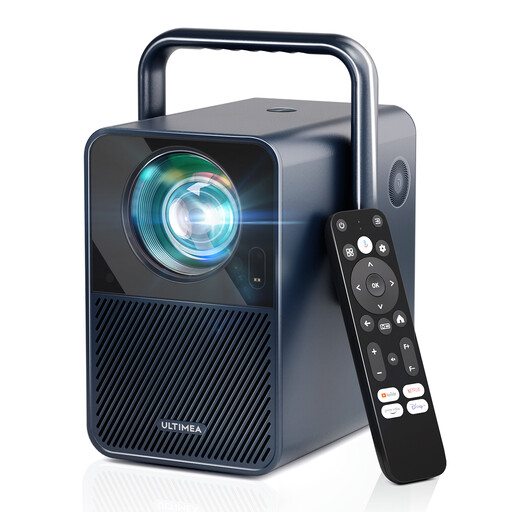
Ultimea Poseidon E40 Projector 1000 ANSI Lumens
Why This Fits Their Persona: Perfect as a TV replacement in the living room. This model is aimed at users who seek high image quality, brightness, and smart features without compromise for an immersive cinematic experience.
At 1000 ANSI Lumens, it's bright enough for daylight use. The certified Android TV 11 with Netflix solves the software problem. Autofocus and 6D keystone correction make the setup fully automatic.
The combination of high brightness, native 1080p resolution, 4K support, and Dolby Audio sound offers a complete and high-quality home cinema package in a single device.
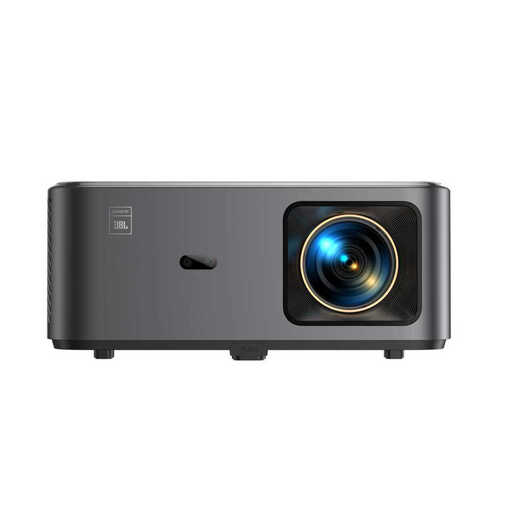
Yaber K2s Wifi 6 Bluetooth Projector with Google TV
Why This Fits Their Persona: For anyone who wants a single, powerful solution for picture, sound, and smart content. Ideal for users who don't want to connect additional speakers or streaming sticks.
Google TV provides access to over 7,000 apps, comprehensively solving the software problem. Automatic image adjustment avoids manual corrections. The integrated sound system makes external devices redundant.
The standout feature is the integrated JBL stereo speaker system combined with Dolby Audio, which delivers room-filling sound. The NFC function also allows for easy screen mirroring.
A good picture needs a good surface. While a white wall is sufficient, a dedicated projector screen significantly optimises contrast and colour accuracy. Models like the foldable XBJ 100-inch Projector Screen are a cost-effective and flexible solution to get the most out of your portable projector, whether indoors or outdoors.
Looking for more options?
We have compiled a complete, up-to-date list of products that fully meet these strict selection criteria and German safety regulations.
Frequently Asked Questions (FAQ)
How many ANSI Lumens do I really need?
This depends entirely on your environment. For a dedicated home theatre in the basement or a bedroom at night, 200-300 ANSI Lumens are often sufficient. For the living room, where you might watch during the day or not turn off all the lights in the evening, 700 ANSI Lumens or more is a sensible choice to ensure a vibrant and high-contrast image.
Is a Full HD projector enough, or do I need 4K?
For most screen sizes up to 120 inches (approx. 3-meter diagonal), a native Full HD projector (1080p) provides excellent sharpness that is barely distinguishable from 4K to most eyes. True native 4K projectors are a significant investment. A model that supports 4K content but displays it natively in 1080p is a very good compromise, as it is future-proof and can optimally process high-resolution sources.
Do I need a special projector screen?
A screen is not strictly necessary, but it is highly recommended. A smooth, white wall can work, but it is rarely perfect. Imperfections, wallpaper texture, or slight colour deviations can degrade the image quality. A projector screen is designed to reflect light evenly, improve contrast, and ensure more accurate colours. This difference becomes especially noticeable in brighter environments.