
Buying Chicken Stock: What to Look for in Ingredients, Form and Use
A good chicken stock can quickly round off soups, sauces, rice dishes and stews. However, the choice when shopping isn't always straightforward: chicken bouillon, poultry stock, chicken broth and seasoning powders differ significantly in ingredients, concentration, salt content and preparation. If you only look out for terms like "rich", "natural" or "generous", you might end up buying a product that doesn't suit your everyday cooking.
Common Pitfalls When Buying Chicken Stock
1. Stock, Broth and Seasoning Are Used Interchangeably
A ready-to-drink poultry stock from a jar is already liquid and can be heated or used as a base for sauces. A chicken broth is often more concentrated and is diluted depending on the product. Chicken stock powder, granules and paste, on the other hand, are seasoning or concentrate forms that are prepared with water or added directly to dishes.
Comparing the pack contents alone is therefore not enough. What matters is how many millilitres of finished stock you get and whether the product is intended as a soup, a cooking ingredient or purely for seasoning.
2. "Chicken Flavour" Doesn't Automatically Mean a High Chicken Content
In bouillon and seasoning products, salt, starch, sugar, yeast extract or flavourings are often quite high up the ingredients list. The actual proportion of chicken meat, chicken fat, chicken extract or concentrated poultry stock can be relatively low by comparison. The ingredients list and the quantitative declaration are therefore more informative than marketing claims on the front of the pack.
3. Allergens and Salt Content Are Overlooked
Celery, wheat (or gluten), soya, egg and milk can be present in chicken stocks or seasoning mixes, or may be listed as possible traces. The salt content also varies widely. With products that have a high salt content, you should only add extra salt after tasting.
The Most Important Selection Criteria
Form and Yield
- Liquid chicken stock: ready to use, convenient for soups and sauces, usually needs refrigeration after opening.
- Chicken stock paste: can be portioned out and works well for risotto, casseroles, vegetables or rice. Pay attention to the preparation instructions per 150 ml or per litre.
- Powder and granules: have a long shelf life and are space-saving. Check before buying how much finished stock one jar or sachet makes.
- Seasoning product for Asian dishes: often contains ingredients like pepper, ginger, chilli, shiitake or Sichuan pepper. This composition doesn't automatically suit a classic British stock.
- Soup base with dried ingredients: may require a longer cooking time. With a herb or spice mix, check whether it actually contains chicken components.
Ingredients List and Allergens
With an organic chicken stock, you should check the organic certification including the control body number on the packaging. For example, the product Langbein Organic Poultry Stock carries the certification DE-ÖKO-009. The ingredients include poultry stock, carrots, dried tomatoes, onions, soya sauce and spices. According to the product information, this means it is not suitable for people with a soya allergy and contains gluten-containing cereals.
If you're looking for a halal chicken stock, look for a specific certification or label. The Nan De Halal Chicken Stock Seasoning states "Halal certified". According to the ingredients list, this product contains chicken powder, salt, sugar, shiitake mushroom powder, spring onion, pepper, ginger and chilli.
Preparation and Storage
The dosage information determines the actual purchase price per litre. Examples from the selection:
- Knorr Bouillon Pur Chicken is dissolved in 500 ml of boiling water according to the product information.
- Maggi Clear Chicken Bouillon Powder 92 g makes 4 litres of finished stock according to the description.
- Maggi Chicken Bouillon in a jar is used at one teaspoon per 150 ml of water; one jar is said to make 3.5 litres.
- Larco Concentrated Chicken Broth 340 ml is diluted with three times the amount of water.
After opening, liquid products usually need special attention. Depending on the product, refrigeration and consumption within two to four days or two weeks is recommended. Always follow the label on the individual jar.
Our Selection for Different User Profiles
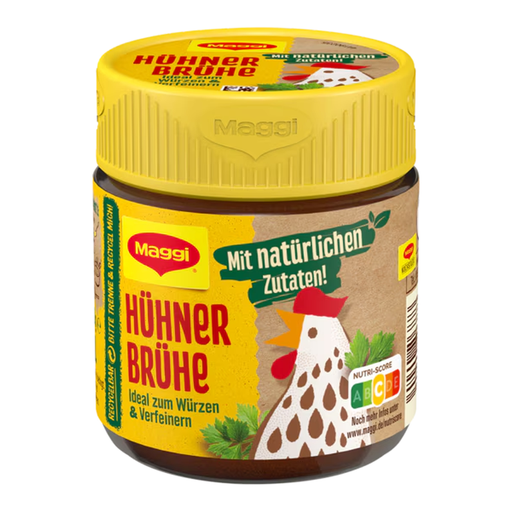
Maggi Clear Chicken Bouillon Powder 92g
Why this product fits the profile: The powder is space-saving and, according to the product information, yields 4 litres. It is suitable for soups, stews, sauces and vegetable dishes.
The stated yield makes it easy to compare with smaller jars. Allergens such as celery and gluten, as well as possible traces of egg, milk, mustard and soya, should be checked before purchase.
Powder form, versatile use and dosage according to desired stock intensity.
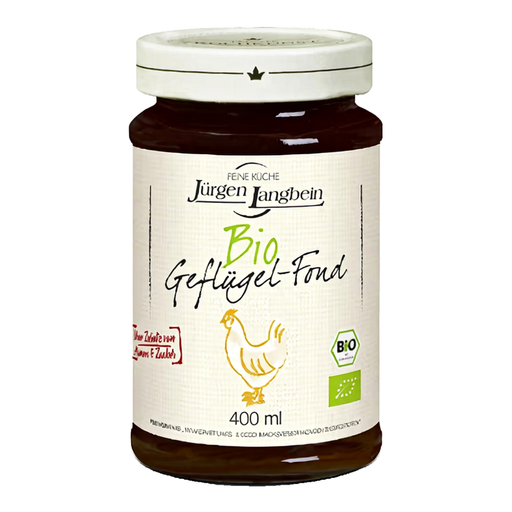
Langbein Organic Poultry Stock 400ml
Why this product fits the profile: The liquid organic poultry stock is intended for sauces, chicken soups, fricassée and ragouts. It should be shaken before use and comes in a jar.
The organic certification DE-ÖKO-009 is specifically stated. At the same time, the ingredients list indicates soya and gluten-containing cereals, which makes allergen checking easier.
Organic certified, lactose-free according to the product information and ready to use as a liquid base.
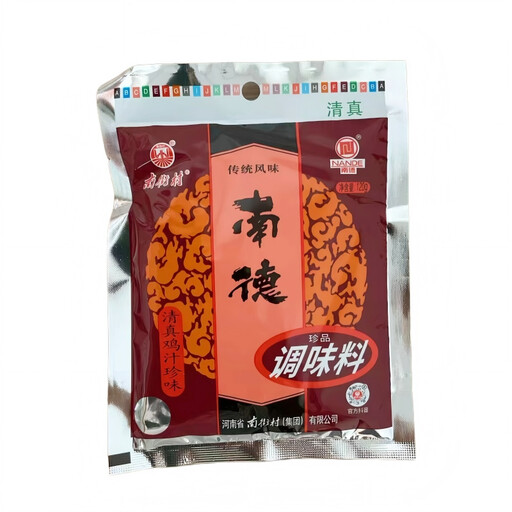
Nan De Halal Chicken Stock Seasoning 120g
Why this product fits the profile: The seasoning mix, stated as halal certified, is intended for soups, stir-fries, marinades, grilled dishes, rice, noodles, and wonton and dumpling soups.
The halal label is explicitly stated. Due to the high salt content of 60.2 g per 100 g according to the nutritional information, it should be used sparingly and not salted in advance.
Halal certification, no allergens according to the product information and versatile Asian seasoning applications.
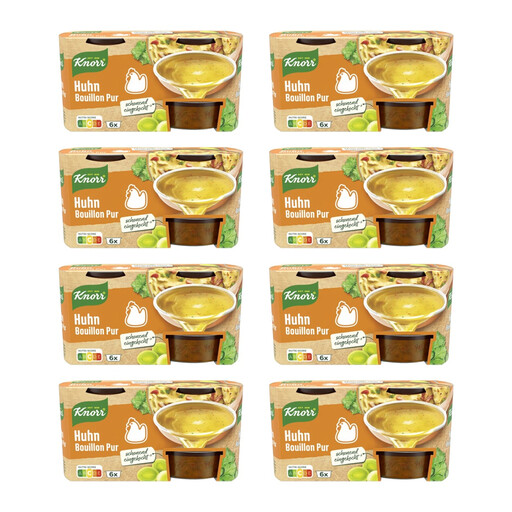
Knorr Bouillon Pur Chicken 8x6x28g
Why this product fits the profile: The individual portions can be used for soups, risotto, curry, ramen, pho, gratins and roasts. This makes dosing easier when you're using different recipes.
The portion sachets and the instruction of 500 ml of water per sachet provide a clear dosing basis. Barley is listed as an allergen.
Individual portions, gluten-free according to the product information and versatile for both classic and Asian dishes.
Looking for more options?
We've put together a complete, regularly updated list of products that fully meet these strict selection criteria and the safety regulations in force in the EU.
FAQ About Chicken Stock
How long does chicken stock last after opening?
That depends on the form. Liquid products usually need to go in the fridge after opening. For individual products, two to four days is stated, and for certain pastes up to two weeks. Powder and granules should be stored dry, sealed and protected from heat and moisture. Always follow the manufacturer's instructions on the label.
What is the difference between chicken stock and chicken bouillon?
Chicken stock often refers to a ready-made liquid or one cooked from meat and vegetables. Chicken bouillon is usually a concentrated seasoning product, available as a paste, powder, granules or liquid concentrate. Before use, it is diluted with water or stirred directly into dishes.
Which chicken stock is best for seasoning?
For flexible seasoning, chicken stock paste, granules and powder are ideal because they can be portioned out. For a clear soup, liquid stocks or precisely dosed bouillon products are practical. For Asian dishes, seasoning mixes with ginger, chilli, pepper or shiitake work well; for delicate recipes, choose a milder poultry stock without additional spicy seasonings.