
Buying beef stock: what to look for in ingredients, yield and use
If you’re looking to buy beef stock, you’ll find a wide range of products online: ready-to-use beef stock in jars, concentrated beef stock, powders, granules and portioned bouillon. The differences go beyond price. Ingredients, salt content, yield, allergens and storage requirements all affect whether a product is right for your kitchen.
Common pitfalls when buying beef stock
1. Beef flavour doesn’t automatically mean beef stock
Depending on the product, the term ‘beef stock’ can refer to a liquid stock containing beef, a stock made from bones and meat, or a seasoning powder. A product with a beef flavour doesn’t necessarily contain the same proportion of beef or beef bones as a traditional stock. That’s why it’s more important to check the ingredients list than to rely on terms such as ‘rich’ or ‘gourmet’.
2. Small packs can vary in yield
A 400 or 500 ml jar is ready to use, while powders and granules need to be mixed with water. What matters is the total prepared quantity. For example, according to the product information, Maggi Clear Beef Bouillon Granules 125 g makes 8 litres of clear stock. Other products are measured out by the teaspoon or portion. So compare the price per litre of prepared stock, not just the pack price.
3. Salt and allergens are easy to overlook
Beef bouillon and seasoning powders often contain salt, yeast extract, flavourings or flavour enhancers. Ready-made stocks may also contain celery, soya, milk, egg or cereals containing gluten. Always check the information on the product packaging, as recipes can change. If you have an allergy or intolerance, be sure to check the current labelling before you buy.
Key things to consider when buying beef stock, stock and bouillon
Choose a format that suits your cooking routine
- Beef stock in a jar: Ready to use and handy for soups, sauces and braised dishes. Once opened, the jar usually needs to be refrigerated and used within a few days.
- Beef stock powder or granules: Easy to store dry, simple to measure out and suitable for making larger quantities. Look for clear dosage instructions.
- Concentrated beef stock: Depending on the product, it can be diluted with water or used straight from the pack for seasoning. It can take up less space, but needs to be measured carefully.
- Portioned bouillon: A good choice if you regularly need small amounts and want consistent results.
Check the ingredients and beef content
For a traditional stock, look for ingredients such as beef stock, beef bones, beef, vegetables and spices. Organic beef stock should carry a recognised organic label and the inspection body’s code number. For example, Langbein Organic Beef Stock displays the organic certification DE-ÖKO-009. According to the product description, it contains beef stock, sea salt, soya sauce and spices, among other ingredients, as well as the allergens gluten from wheat and soya.
Products without artificial colours, preservatives or flavour enhancers shouldn’t automatically be considered healthier, either. Your choice should be guided by the specific ingredients, salt content and how you plan to use the product.
Compare yield and salt content
A clear beef stock for use as a soup base should be easy to prepare according to the pack instructions without turning out too salty. With powders and granules, it’s worth comparing:
- the recommended amount per 150 or 500 ml of water,
- the total quantity of prepared stock,
- the salt content per 100 ml of prepared stock,
- opening and storage instructions.
For liquid products, nutrition tables often give the salt content per 100 ml. According to the product details, Langbein Rich Beef Stock contains 1.0 g of salt per 100 ml, while Lacroix Pure Beef Stock contains 1.1 g per 100 ml. These figures provide an objective basis for comparison, but don’t tell you which product will suit your taste.
Our picks for different needs
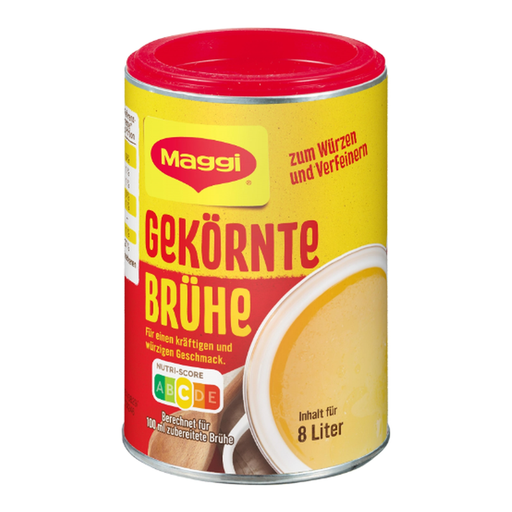
Maggi Clear Beef Bouillon Granules 125g
Why this product suits these needs: Mix the granules with boiling water to make up to 8 litres of clear stock, according to the product information. That makes them a good choice for households that regularly cook soups, sauces or stews.
The stated yield makes it easier to compare with small jars. Be sure to check the ingredients and allergen information before buying.
A dry format, easy teaspoon measuring and a stated yield of 8 litres.
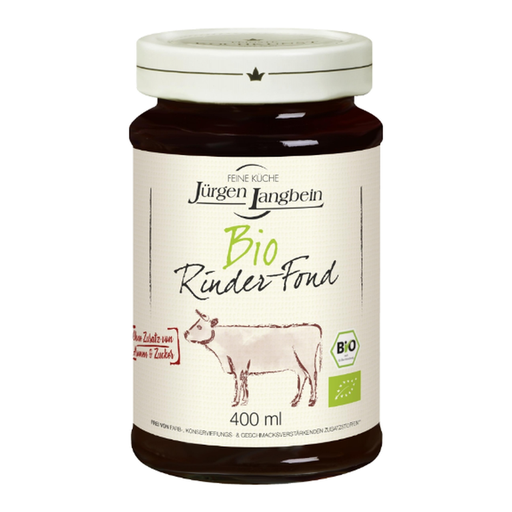
Langbein Organic Beef Stock 400ml
Why this product suits these needs: This liquid organic beef stock is made with roasted organic beef bones and organic vegetables, and is certified as DE-ÖKO-009.
The organic certification is clearly verifiable. Gluten and soya are explicitly listed as allergens, rather than being obscured by general claims about quality.
Organic certification and a ready-to-use liquid format for sauces, soups and ragouts.
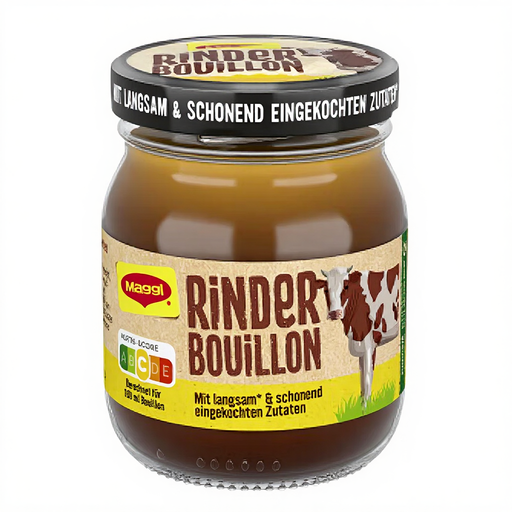
Maggi Clear Beef Bouillon Powder 3.5L
Why this product suits these needs: The recommended measure of one teaspoon per 150 ml of water makes it suitable for frequent use in the kitchen. Use the powder as a soup base or to season rice, polenta and sauces.
The stated preparation quantity makes it easier for frequent users to calculate the yield. Check whether gluten and celery, which may be present or are listed as allergens, are suitable for you.
Easy to store dry, versatile to use and comes with a recommended measure for making 3.5 litres of stock.
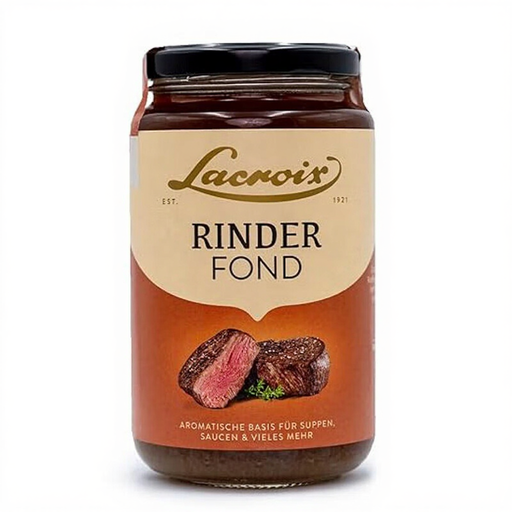
Lacroix Pure Beef Stock 400ml
Why this product suits these needs: This ready-to-use beef stock in a 400 ml jar is designed for deglazing, reducing and enriching sauces, as well as for braised dishes.
The ingredients list includes soya, milk, celery and egg. This information can help you avoid unsuitable purchases if you have allergies or specific dietary requirements.
A ready-to-use stock in a jar, described as suitable for sauces, risotto, vegetables and braised dishes.
Looking for more options?
We’ve put together a complete, regularly updated list of products that meet these strict selection criteria and fully comply with the safety regulations in force in the EU.
How to store and use beef stock
Store unopened jars, powders and granules in a cool, dry place away from direct sunlight, following the instructions on the packaging. Once opened, storage times vary from product to product. For example, Lacroix Pure Beef Stock should be refrigerated and used within three days. Langbein Rich Beef Stock should also be refrigerated after opening and used promptly.
For stock for sauces and stews, you can use the stock as it is or reduce it. Reducing it allows water to evaporate, which changes the flavour and saltiness. So season only after reducing. Powders and bouillon, on the other hand, are especially useful for adjusting the flavour gradually as you cook.
Frequently asked questions about buying beef stock
What’s the difference between beef stock and beef bouillon?
Beef stock is usually a liquid cooking base made from stock, meat, bones, vegetables and spices. Beef bouillon is often sold as an instant powder, granules, cubes or paste, and can be used both as a clear stock and as a seasoning. The exact ingredients vary from product to product.
How long does opened beef stock keep?
It depends on the format and the instructions on the packaging. Liquid products in jars often need to be refrigerated and used within two to a few days. Dry products last longer once opened, as long as they’re kept dry and sealed tightly.
Which beef stock is best for sauces?
Ready-to-use stocks, such as liquid beef stock, are handy for sauces and ragouts because you can use them straight away for deglazing or reducing. Powders and concentrated beef stock give you more control over the amount you use. Whichever type you choose, check the salt content, ingredients and allergens.