
Vegetable Broth Buyer's Guide: Selecting Your Flavor
Vegetable broth is a cornerstone in many kitchens—a quick and easy way to add flavour to soups, sauces, and stews. But the selection on supermarket shelves can be overwhelming. Many products promise more than they deliver, leading to disappointment in the kitchen. Before you grab the next package, it's helpful to know the most common pitfalls to make an informed decision.
A frequent problem is the misleading impression of naturalness. Some broths advertise themselves as "purely plant-based" or "like homemade," but a closer look reveals they primarily contain salt, fillers, and flavourings instead of a significant vegetable content. Another point is hidden sugar. In a savoury product like broth, few consumers expect to find sugar, dextrose, or glucose syrup, yet these often appear high on the ingredient list to round out the flavour. Finally, consistency can also be an issue; some powders are prone to clumping and dissolve poorly, which compromises dosing and the overall cooking experience.
What to Look for Before Buying Vegetable Broth
To find the right vegetable broth for your needs, a few objective criteria are more important than the marketing promises on the packaging. Focusing on these key parameters will help you select a product that serves as a reliable soup base or for seasoning.
1. The Format: Powder, Paste, or Liquid Stock?
The form of the broth directly impacts its application and taste. Each variant has its specific advantages:
- Vegetable Broth Powder: This is the classic and most widespread form. It has a long shelf life, is very high-yield, and can be dosed flexibly. Powder is an excellent all-rounder in the kitchen, whether for a clear soup or for seasoning pasta water and vegetable dishes.
- Paste: Broths in paste form are often more concentrated and flavour-intensive. They typically dissolve very well in hot liquid and are particularly suitable for creating rich sauces or for stirring directly into pan-fried dishes.
- Liquid Vegetable Stock: A liquid stock is ready-to-use and often comes closest to the taste of a homemade broth. It is typically used as a direct base for more sophisticated soups, risottos, or delicate sauces where a round and deep base flavour is desired.
2. The Ingredient List: Vegetable Content, Salt, and Unwanted Additives
The quality of a vegetable broth is best assessed by its ingredient list. Here are three crucial points:
- Vegetable Content: A high percentage of vegetables, herbs, and spices is a clear hallmark of quality. Products consisting mainly of salt and fillers like starch often deliver only a one-dimensional flavour.
- Salt Content: The salt content can vary widely. A look at the nutrition table (specified per 100 ml of prepared broth) allows for a direct comparison. A broth with a moderate salt content gives you more control over the seasoning of your dishes.
- Additives and Certifications: Those who follow a health-conscious diet should look for products declared as vegetable broth with no added sugar or vegan vegetable broth. An organic vegetable broth is also subject to the strict guidelines of the EU's organic regulation, which governs the use of certain additives.
Versatile and Reliable Cookware Recommendations
The choice of the right vegetable broth depends heavily on individual cooking styles and personal preferences. Here are some recommendations tailored to different user profiles.
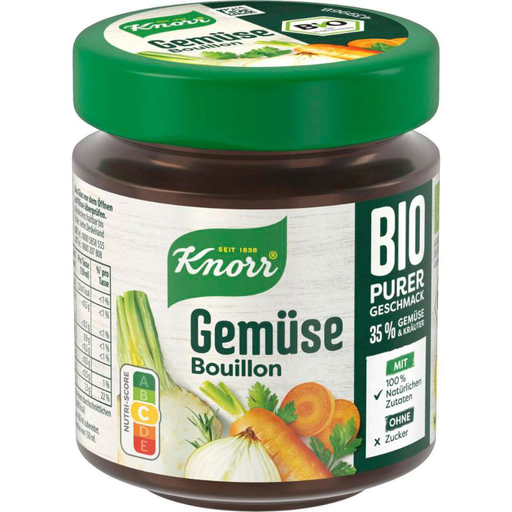
Knorr Organic Vegetable Broth, Vegan, 5500 ml
Why This Fits Their Persona: Ideal for families who prioritise a clean ingredient list. The organic certification and vegan, no-sugar-added formula meet the demands of a health-conscious daily diet. The large bulk container is also practical and economical.
This product avoids the sugar trap by being explicitly labelled "no added sugar." In compliance with EU organic regulations, it also omits flavour enhancers and artificial colours.
High vegetable and herb content of 35% from certified organic farming; AT-BIO-901 certified; very high yield.
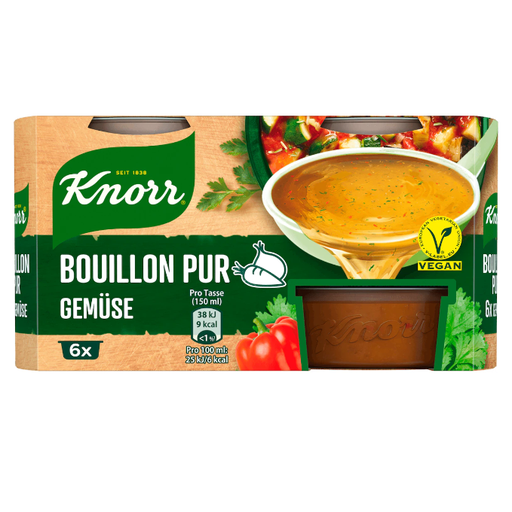
Knorr Bouillon Pur Vegetable, 6 x 500ml
Why This Fits Their Persona: For cooks who need speed without sacrificing flavour. The pre-portioned pots are extremely convenient and dissolve instantly, making them perfect for quick weeknight meals.
Unlike powders that can clump if added carelessly, the paste format in these pots guarantees effortless and even distribution in your dish. This ensures a consistent flavour result with no hassle.
Convenient portion pots for easy dosing; dissolves instantly; versatile for soups, sauces, or directly seasoning vegetables and rice.
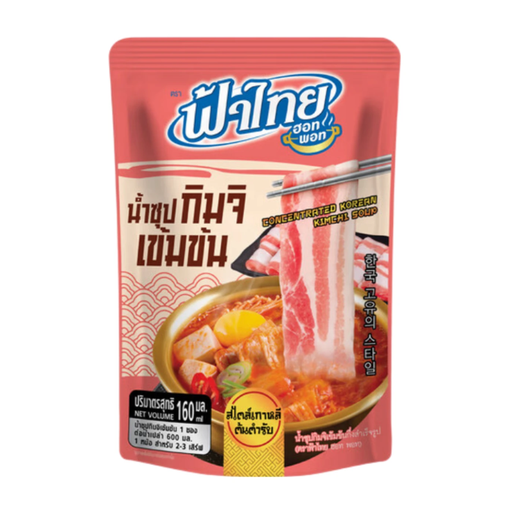
FATHAI Kimchi Soup Concentrate 160ml
Why This Fits Their Persona: For anyone looking to create authentic Asian dishes. This concentrate delivers the specific, spicy-sour flavour of kimchi that can't be achieved with a conventional vegetable broth.
It avoids the disappointment of a generic "vegetable" taste. Instead, it offers a complex, authentic flavour profile that is essential for specific recipes like Korean kimchi soup.
Authentic kimchi flavour; serves as a quick base for Korean soups; highly concentrated for intense seasoning.
Looking for More Options?
We've compiled a complete, up-to-date list of products that fully meet these strict selection criteria.
Frequently Asked Questions
What is the difference between vegetable broth and vegetable stock?
Although the terms are often used interchangeably, there is a subtle difference. Vegetable broth is typically a seasoning agent, made from powder, paste, or cubes, primarily used to quickly add flavour to dishes. A vegetable stock, on the other hand, is a liquid base, often simmered for an extended period from vegetables, water, and herbs. It usually has a deeper, more rounded flavour and is used as the foundation for high-quality soups and sauces.
How can I identify a vegetable broth with no added sugar?
The surest way is to take a close look at the ingredient list. Watch for terms like sugar, glucose syrup, dextrose, or maltodextrin. The nutrition table, under "Carbohydrates, of which sugars," provides further information on the sugar content per 100 ml of prepared broth. Products explicitly labelled as vegetable broth with no added sugar offer a reliable guide.
How do I properly store opened vegetable broth?
Proper storage depends on the format. Vegetable broth powder should always be kept dry, in an airtight container, and at room temperature to prevent clumping. Opened jars of paste or packages of liquid vegetable stock belong in the refrigerator and should be used within a few days, according to the manufacturer's instructions on the packaging.