
Buying a hot pot: What to look for when choosing one for family meals, induction hobs and sociable gatherings
A hot pot isn’t just for Asian broths. Depending on the design, it can also serve as a soup pot, Asian-style cooking pot, sukiyaki pot or shabu-shabu pot for everyday use. However, many buyers focus mainly on diameter and appearance when comparing models. Other details can make all the difference to how practical your pot is in the long run.
Common mistakes when buying a hot pot
1. Taking “suitable for all hob types” at face value
The phrase “suitable for all hob types” should be backed up with specific details. An induction-compatible pot needs a magnetic base that sits flat on the hob. If you’re buying a pot for a gas hob, the flame should not extend beyond the base. On ceramic and electric hobs, a flat contact surface is important.
So don’t rely on product images alone. Check that the technical specifications explicitly list induction, gas, electric and ceramic hobs.
2. Diameter doesn’t tell you how much the pot can hold
A 28 cm hot pot can hold different amounts depending on its wall height and base shape. A shallow pot offers more surface area for frying, while a deeper family pot holds more broth and ingredients. If you’re cooking for several people, the handles and overall weight matter too, especially when you need to move a full pot from the hob to the table.
So check the capacity, pot depth, base diameter and handle design – not just the outside dimensions.
3. Non-stick coatings aren’t always easy to care for
A non-stick coating can help prevent food from sticking, but it needs the right care. Metal utensils, abrasive cleaners and excessive heat can damage the surface. An uncoated stainless steel pot is often more resistant to scratches, but food cooked at too high a temperature or starchy dishes can leave discolouration and residue.
Choose a material that suits the way you cook: a coating for easy food release and cleaning, or stainless steel for a durable, uncoated cooking surface.
Technical specifications to check before you buy
Material and construction
Several models are available in 304 stainless steel. These products are uncoated and designed for hot pot dishes, cooking and braising. A multi-layer or encapsulated base can help distribute heat more evenly on induction, gas and other types of hob.
Alternatively, you can choose die-cast aluminium pots with a ceramic or other non-stick coating. These are a good option if you’d like to make sukiyaki, curry, fried dumplings or stir-fries as well as broth. If you choose one, check the guidance on silicone handles: on some models, the handle covers need to be removed while the pot is heating.
Size and capacity
As a rough guide:
- 26 cm: suitable for smaller households and gatherings of around three to six people, depending on the depth.
- 28 cm: a versatile size for family meals, soups and hot pot.
- 30 cm and above: a good choice when several people will be adding ingredients to the broth at the same time.
- 4 to 6.5 litres: suitable for larger portions, although you shouldn’t fill the pot to the brim for safety reasons.
A 28 cm hot pot isn’t necessarily a large family pot. Check the stated depth and capacity as well.
Lid, handles and cleaning
A hot pot with a glass lid lets you keep an eye on the food without constantly lifting the lid, helping to keep heat and steam in the pot. Glass lids and handles get hot during cooking, so use suitable oven gloves or heat-resistant mitts to handle them.
Cleaning instructions vary: some models are listed by the manufacturer as dishwasher-safe, while others should be washed by hand. Stainless steel can be cleaned with a soft sponge. White limescale or starchy residue can often be removed with a little vinegar or lemon juice. Avoid scouring sponges and metal scourers on coated or textured surfaces.
Our picks for different needs
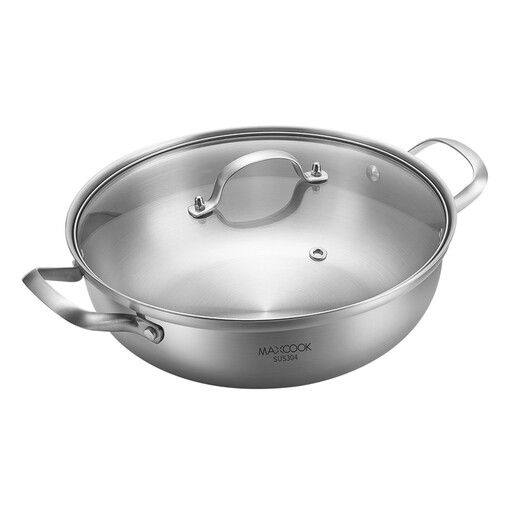
Maxcook Tri-Ply 304 stainless steel hot pot, 26 cm
Why it suits this type of buyer: Its compact size is ideal for smaller households and a range of everyday dishes. According to the product details, the pot is suitable for gas, induction, electric and ceramic hobs.
The hob compatibility and multi-layer base are specified clearly, rather than relying on a vague claim that the pot suits all hobs.
Uncoated 304 stainless steel; listed as dishwasher-safe in the product details.
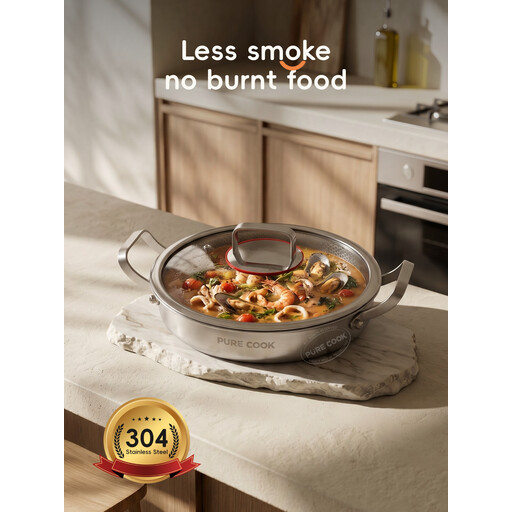
PURECOOK Hot Pot Series 304 stainless steel, 26 cm
Why it suits this type of buyer: The textured interior, glass lid and wide double handles will appeal to buyers who value ease of use and clear material specifications.
The care instructions specifically recommend soft sponges and advise against metal utensils and abrasive cleaners.
304 stainless steel, an encapsulated base and a glass lid, plus compatibility with gas, induction and electric ceramic hobs.
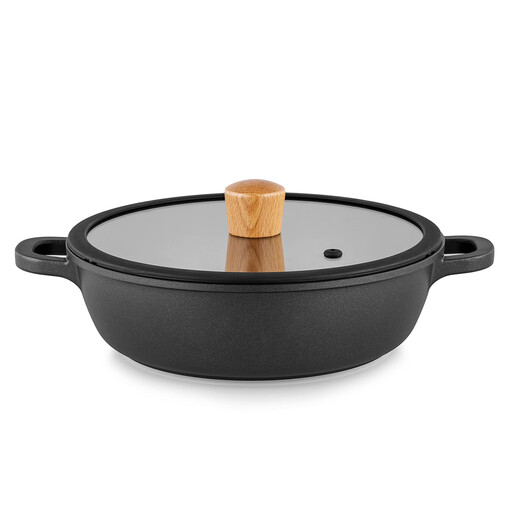
SENSARTE 28 cm sukiyaki and shabu-shabu pot
Why it suits this type of buyer: Its shallow 28 cm design is made for sukiyaki, broths, stews and pan-fried dishes. The product details list compatibility with several hob types and include a glass lid.
The product details make the limits of the coating clear: avoid metal utensils and abrasive cleaners, and never heat the pot when empty.
28 cm diameter, glass lid, non-stick coating according to the product details, and compatibility with induction, gas, ceramic and electric hobs.
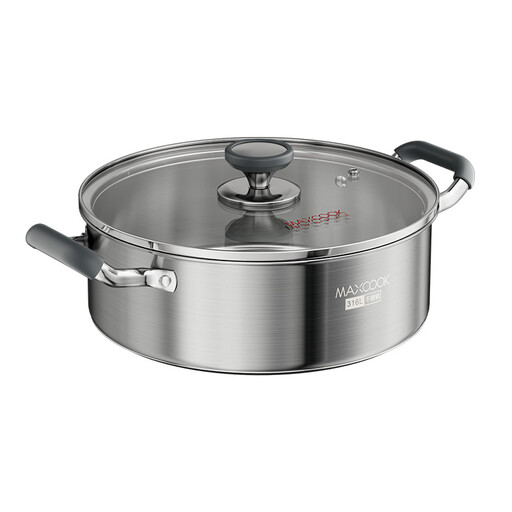
Maxcook 316L stainless steel hot pot, 30 cm, 6.5 litres
Why it suits this type of buyer: Its stated capacity makes it a good choice for larger gatherings. The product details list a glass lid, silicone handles and a composite base designed for use on different hob types.
The size and capacity are clearly stated. The instructions also include guidance on using low to medium heat and handling the pot safely.
6.5-litre capacity, 30 cm diameter and compatibility with gas, induction, electric, ceramic and halogen hobs according to the product description.
Looking for more options?
We’ve put together a complete, regularly updated list of products that meet these strict selection criteria and fully comply with the safety regulations in force in the EU.
Care and safe use
Before using a new stainless steel pot for the first time, wash it with warm water and washing-up liquid. If there may be manufacturing residue, follow the manufacturer’s instructions for cleaning the pot before use. Don’t heat the pot when it’s empty, and make sure it sits securely on the hob. Avoid exposing a glass lid to sudden changes in temperature.
Use wooden, plastic or silicone utensils with coated models. Let the pot cool before cleaning, and dry stainless steel after washing to reduce water marks.
Frequently asked questions about hot pots
What size is suitable for four people?
A 26 cm or 28 cm hot pot is often a good choice for four people. As well as the diameter, consider the depth and capacity. If you’d like to serve lots of ingredients at once, choose a deeper model or a large family pot.
Can you use a hot pot on an induction hob?
Yes, as long as the base is specifically listed as induction-compatible. A multi-layer or magnetic composite base may make it suitable. Also check that the base sits flat on the hob.
How long does a hot pot last?
Its lifespan depends on the material, heat, cleaning and how often you use it. Uncoated stainless steel models are less prone to scratches. Coated pots need more careful handling, and should no longer be used if the coating starts to peel or becomes damaged.