
Heat-Resistant Glass Food Storage Containers: What to Look for When Buying
A heat-resistant glass food storage container has to juggle several tasks in daily life: storing leftovers in the fridge, freezing meals, reheating food in the microwave, and preparing dishes in the oven. However, not every model is suitable for all of these uses. If you only focus on capacity or a low price, you often overlook important details about the glass, lid, and locking system.
Common Buying Pitfalls with Glass Containers
1. “Oven-safe” often only applies to the glass container
A typical product claim is “suitable for the oven.” What matters is whether this refers to the entire container or just the glass. Plastic lids, silicone seals, and locking clips generally must not be heated. With the models featured here, the lid must be removed before use in the oven.
There are also specific rules for the microwave: some lids must be completely removed, others can be left loosely on top, or have a steam vent. You should therefore check the instruction manual before first use.
2. Airtight does not automatically mean leak-proof
A glass container with a lid can have a seal without reliably holding liquids. For soups, sauces, or dressings, multiple locking points and a continuous silicone seal are advisable. An airtight glass container with a four-sided closure offers a different design than a lid that is simply placed on top.
The claim “leak-proof” should also be considered in relation to the closure and the correct positioning of the seal. Before transporting, it is a good idea to do a quick test over a sink.
3. Temperature changes can damage the glass
Even borosilicate glass is not indestructible. If a frozen container is placed directly into a hot oven, or a hot glass is held under cold water, a thermal shock can occur. This can cause the material to crack or break. Damaged glass containers should not be used further.
The Most Important Selection Criteria
Borosilicate Glass and Heat Resistance
Borosilicate glass has a relatively low thermal expansion and is therefore often used for heat-resistant storage containers. According to the product specifications of the LocknLock models featured, certain glass containers without lids are suitable for the oven up to 400 °C. This temperature rating is not a general value for all borosilicate glass containers. It applies only to the specific product and the conditions stated.
When shopping, you should check:
- Is the glass container suitable for the oven and microwave?
- Does the lid need to be removed or just opened?
- Is there a specific temperature limit?
- Is the container also approved for the freezer?
- Can the product be placed on a cold or wet surface?
A freezer-safe glass container should be used according to the manufacturer's instructions. Leave some space between the contents and the lid if food can expand when freezing.
Capacity and Shape
380 ml is suitable for smaller side dishes, fruit, snacks, or individual portions. 500 to 750 ml is practical for many office lunches and meal prep portions. For larger dishes or family portions, models with 900 ml or 1 litre are more appropriate.
Square and rectangular glass boxes can often be arranged to save space in the fridge. A raised lid rim can make stacking easier. Round shapes, on the other hand, are suitable for certain foods and can be easier to stir. What matters is whether the dimensions fit your fridge shelves, drawers, and storage racks.
Lid, Seal, and Cleaning
A tightly sealing lid reduces the risk of liquid leaking during transport. Silicone seals should be removable so that food residue and moisture do not permanently collect in the edges. A dishwasher-safe glass container is practical for everyday use; however, check whether the lid should only be cleaned in the top rack or washed by hand.
For a meal prep glass container, transparent lids, stackable shapes, and clearly visible portions are also helpful. For dry goods like muesli or grains, a tightly sealing lid is also important, even if the container is not heated.
Our Selection by Use Case
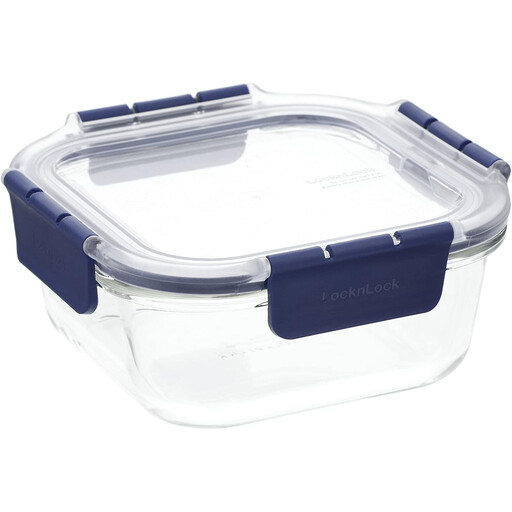
Bestco Heat-Resistant Glass Food Storage Container, 380 ml
Why this product fits the profile: The 380 ml capacity is ideal for smaller portions, dry goods, and leftover side dishes. The oblong shape can fit into narrow fridge compartments.
The clip-lock lid with silicone seal is designed for airtight and leak-proof storage. For the microwave, the lid is removed according to the product specifications.
380 ml capacity, BPA-free materials according to the product description, and suitability for the freezer and dishwasher.
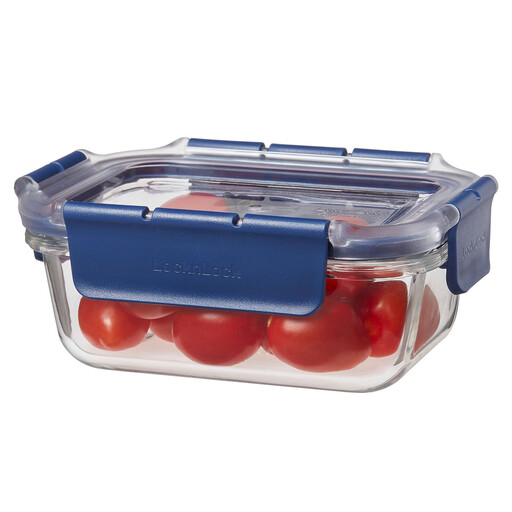
LocknLock Top Class Heat-Resistant Glass Food Storage Container, 380 ml
Why this product fits the profile: This container combines a compact volume with borosilicate glass and a four-sided locking system. That makes it interesting for households that want to combine storing, reheating, and stacking.
The product specifications clearly distinguish between the glass container and the Tritan lid: for the oven up to 400 °C, the lid is removed; in the microwave, it is placed loosely on top or opened.
Borosilicate glass, stackable transparent lid, and according to the product specifications, an airtight and leak-proof seal.
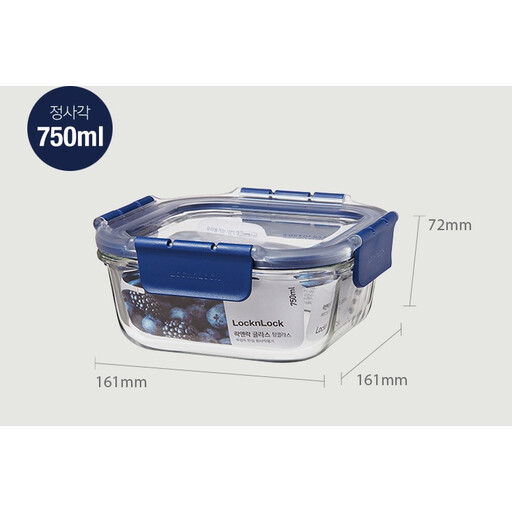
LocknLock Top Glass Series Heat-Resistant Glass Square Food Storage Container, 750 ml
Why this product fits the profile: The volume of around 750 ml is suitable for larger meal prep portions, soups, and liquid dishes. The product description also mentions use in an air fryer without the lid.
The product specifications state clear limits: heating in the oven, microwave, and air fryer is done without the lid; for freezing, a limit of -20 °C is given.
Four-sided closure with silicone seal, stackable shape, and according to the product description, suitability for the oven, microwave, air fryer, freezer, and dishwasher.
Safe Everyday Use
- Check the glass and seal for cracks, chips, or deformation before each use.
- Remove plastic lids before using in the oven, on the hob, or in the air fryer.
- Only use the temperature and freezing limits specified by the manufacturer.
- Allow hot containers to cool on a suitable surface.
- When using the microwave, open the designated steam vent or remove the lid.
- Clean removable seals separately and dry all parts before closing.
Looking for more options?
We have compiled a complete, regularly updated list of products that fully meet these strict selection criteria and the safety regulations in force in the EU.
FAQ about Heat-Resistant Glass Containers
Can a heat-resistant glass container go straight from the freezer into the oven?
This should generally be avoided. The sudden temperature change can cause stress in the glass. Check the manufacturer's instructions and allow frozen contents to thaw first or let the container come to room temperature.
Is a glass storage container with a lid suitable for the microwave?
That depends on the lid. With many models, it must be completely removed. Other lids may only be placed loosely on top or must have an open steam vent. For the oven, the lid must not be used with the models mentioned.
How long does a glass food storage container last?
A fixed lifespan cannot be given as a general rule. It depends on handling, temperature changes, drops, and the care of the seal. The glass should be checked regularly and replaced if any visible damage appears.