
Glass Food Containers: A Buyer’s Guide and Recommendations
Finding the right food storage solution can be a challenge. Many of us know the problem: plastic containers get stained, absorb odours, or warp in the dishwasher. Glass food containers offer a durable and versatile alternative. They are not only hygienic and non-porous, but also true all-rounders—perfect for everything from freezing and reheating in the oven to serving at the dinner table.
This article serves as your guide. We'll highlight the key criteria to consider when making your choice and present a selection of models with different features to help you decide.
What to Look For: A Quick Guide
Before you make a decision, you should consider a few functional aspects. These features determine how well a food container will fit your daily needs.
1. Material and Temperature Resistance: The Difference is in the Glass
Not all glass is suitable for high temperatures. For use in the oven, oven-safe glass storage containers are a must. Look for the term borosilicate glass. This special glass is resistant to rapid temperature changes (thermal shock) and, unlike standard soda-lime glass, can withstand high heat in the oven. Such containers can often go directly from the freezer to the microwave (without the lid) or into the oven after a short thawing period. This makes them a practical casserole dish with a lid, eliminating the need to transfer food between dishes.
2. Lids and Seals: For Freshness and Portability
The lid is a critical feature. An airtight glass container with a lid protects aromas and keeps food fresh for longer. For transporting soups or sauces, a leak-proof glass lunch box is essential. Pay attention to these details:
- Gasket: A wrap-around silicone gasket is the standard here. Ideally, it should be removable to allow for thorough and hygienic cleaning.
- Locking Mechanism: Snap-locks on all four sides have proven to be particularly reliable. They distribute pressure evenly and ensure the lid stays firmly in place.
- Lid Material: Many lids are made of BPA-free plastic. Higher-end models use Tritan, an exceptionally durable and shatter-resistant plastic that does not stain.
3. Shape, Size, and Stackability: Kitchen Organisation
For efficient organisation, stackable storage boxes in the kitchen are a major advantage. Rectangular or square shapes make optimal use of space in the fridge, freezer, or pantry. Some manufacturers integrate a raised rim into the lid to prevent containers from slipping when stacked. Anyone who regularly prepares meals will benefit from a set of glass meal prep containers in various sizes.
Recommended Food Containers
Here is a selection of containers that cater to different needs—from the daily lunch box to a large family-sized casserole dish.
Lock&Lock TOP Class Glass Container, Rectangular 1.0 L
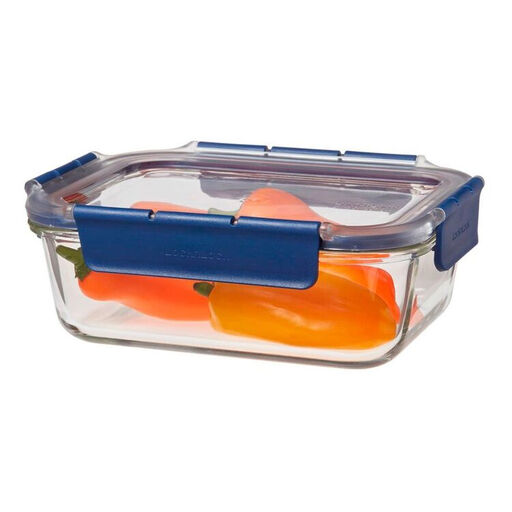
Why it stands out: This model combines a robust borosilicate glass container with a well-designed Tritan lid. The 4.8 mm raised lid rim allows for exceptionally stable stacking, ensuring an organised fridge.
Pros:
- Container: Heat-resistant borosilicate glass, oven-safe up to 400°C (without lid).
- Lid: Made from shatter-resistant and stain-proof Tritan plastic.
- Seal: Patented 4-sided locking system with a silicone gasket for an airtight and watertight seal.
- Stackability: The specially designed lid rim ensures a secure fit when stacking.
Best for: Ideal for individuals and couples looking for a reliable, high-quality glass lunch box for the office, or for storing leftovers to be reheated directly in the oven. The 1-litre size is perfect for a single meal.
Emsa N10412 Clip & Close Glass Food Container, 3.0 L
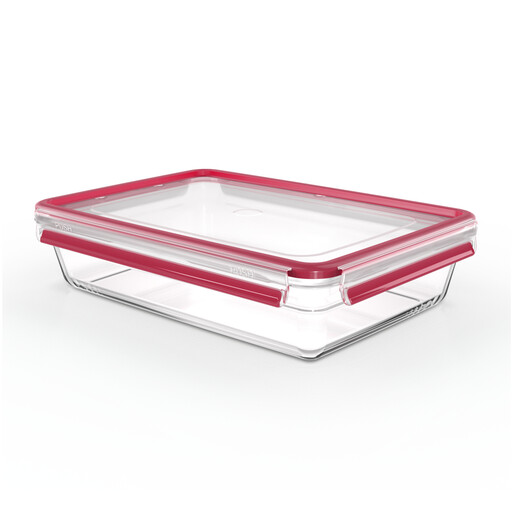
Why it stands out: With a 3-litre capacity, this container is an excellent choice for families or for cooking in large batches. The improved design with a reinforced rim and special stacking edge makes it particularly robust and practical to handle. According to the manufacturer, it is the first food container certified for baby food.
Pros:
- Large Capacity: 3 litres are perfect for casseroles, salads, or storing family-sized portions.
- High Temperature Resistance: The glass container is oven-safe up to 420°C and freezer-safe down to -40°C.
- Secure Stacking: A non-slip stacking rim allows for the safe placement of same-sized containers on top of each other.
- Leak-proof Seal: The special gasket ensures a leak-proof closure.
Best for: Perfect for families who need a large casserole dish with a lid, or for anyone who regularly batch cooks. Its certification for baby food also makes it an attractive option for parents.
LocknLock Fresh Block Storage Jars (Plastic)
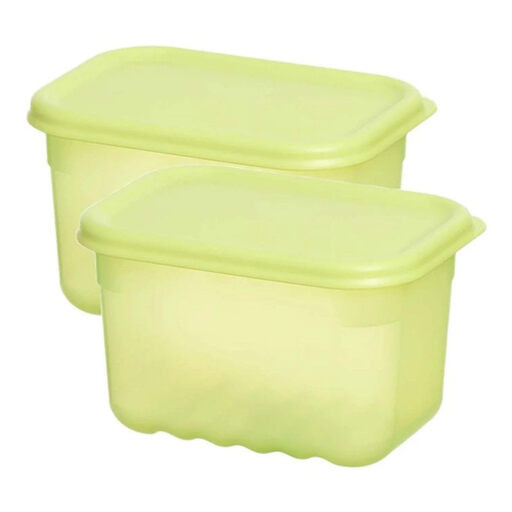
Important Note: This model is a plastic container, not glass. We are including it in our selection because it offers a specialised function for storing fruits and vegetables that may be of interest to some households.
Why it stands out: This container was specifically designed to extend the shelf life of fruits and vegetables. The "Breath Care Fresh Solution" is claimed by the manufacturer to absorb ethylene, a ripening gas that many fruits and vegetables release.
Pros:
- Specialised Function: Designed to keep fruits and vegetables fresh for longer.
- Material: Made from BPA-free food-grade plastic that is impact-resistant and lightweight.
- Double Seal: Blocks odours and protects the contents.
- Modularity: The design is optimised for stackability and space-saving storage.
Best for: For users whose priority is maximising the freshness of fruit and vegetables and who are looking for a lightweight, shatter-proof alternative to glass for this specific purpose.
Looking for Other Sizes or Sets?
Our selection covers common use cases, but every household has different needs. You might require a complete set for meal prepping or a specific size for your refrigerator.
? Discover more models and sets in the Freezer-to-Oven Glass Containers category here.
Frequently Asked Questions (FAQ)
1. Are glass food containers better than plastic ones? Both materials have their pros and cons. Glass is hygienic, doesn't absorb odours or stains, is often oven-safe, and contains no BPA. However, it is heavier and can break if dropped. Plastic is lightweight, usually shatter-proof, and often more affordable. High-quality BPA-free food containers are also safe but can discolour over time and are not suitable for the oven. The choice depends on the intended use.
2. How can I tell if a glass food container is oven-safe? Check the manufacturer's information on the packaging or in the product description. The key indicator is the material: only containers made of borosilicate glass are designed for use in the oven. A maximum temperature (e.g., 400°C) is usually specified. Important: The plastic lid must never go in the oven.
3. How do I properly clean glass food containers and their gaskets? Most glass containers and lids are dishwasher-safe (check the manufacturer's instructions; lids often belong in the top rack only). For an especially thorough cleaning, it is recommended to regularly remove the silicone gasket from the lid and clean it separately. This prevents moisture or residue from building up underneath. Let all parts dry completely before reassembling and storing the container.