
Upholstery Cleaner Selection and Stain Removal Guide
A spilled glass of wine on the new sofa, muddy paw prints on the carpet, or the inevitable marks of daily life on car seats—stains on upholstery and textiles are a nuisance. An upholstery cleaner, often called a spot cleaner or wet vacuum, promises a quick fix. However, the market is flooded with devices whose real-world performance often falls short of their marketing claims.
As your Joybuy Product Recommendation Officer, I'm here to help you identify the crucial features and avoid common purchasing traps. This guide focuses on the objective criteria that define a quality device, enabling you to make an informed decision.
The 3 Most Common Mistakes When Buying an Upholstery Cleaner
Many buyers focus on marketing buzzwords instead of technical substance. This often leads to devices that create more problems than they solve. Pay close attention to these three points:
- Insufficient Suction Power: The biggest problem with many budget-friendly devices is weak suction. While they spray water onto the stain, they can't fully extract the dirty liquid. The result: dirt is just pushed deeper into the fabric, creating unsightly water stains and, in the worst-case scenario, risking mould growth from residual moisture.
- Inefficient Single-Tank System: Models with only one water tank mix fresh and dirty water. This means that after a certain point, you're just spreading the dissolved dirt back onto the surface you're trying to clean. Hygienic and effective cleaning is nearly impossible this way.
- Lack of a Heating Function for Stubborn Stains: While cleaning with cold water is often sufficient for fresh stains, dried-in or greasy messes require a higher temperature to be dissolved effectively. Devices without a heating or steam function quickly reach their limits here.
What Really Matters: The Core Parameters for Effective Cleaning
To avoid the mistakes mentioned above, you should check three technical specifications before buying. These are the key determinants of cleaning performance and user convenience.
1. Suction and Motor Power
Suction power is the critical factor for a deep-down clean and short drying times. It is specified either in Pascals (Pa) or indirectly through the motor power in Watts (W).
- Suction Power (in Pa): A value of 12,000 Pa (12 kPa) or more is considered a solid baseline for most household applications, such as cleaning a sofa or removing stains from a carpet. Higher values, like 15 kPa or more, provide extra power for deep-set dirt, which is common when cleaning car seats or dealing with pet hair.
- Motor Power (in W): The motor's wattage alone isn't always a direct measure of suction power, but it serves as a good indicator. Powerful devices for home use often have a motor power between 400 W and 800 W. Models with an integrated heating or steam function will have a higher total power rating (e.g., 1500 W or more), as the heating element requires additional energy.
2. The Dual-Tank System
A dual-tank system is essential for hygienic cleaning. It separates the clean water (often mixed with a cleaning solution) from the extracted dirty water. This ensures you are always working with a fresh solution and that the dirt is securely collected in a separate container. Pay attention to the tank capacity:
- Clean Water Tank: A volume of over 1 litre saves you from constant refilling when tackling larger areas like a sofa or mattress.
- Dirty Water Tank: A sufficiently large tank (e.g., 0.8 litres or more) prevents you from having to interrupt your work to empty it.
3. Cleaning Modes and Accessories
Different types of messes require different methods. Modern devices often offer more than just cold-water cleaning.
- Hot Water and Steam Function: An integrated heater that warms the water to 60°C or more can significantly increase effectiveness on greasy and oily stains. A steam function (approx. 100°C) also has a sanitising effect and can break down even the most stubborn, caked-on grime.
- Brush Attachments: A set of different brushes isn't a luxury, but a necessity. A wide brush is suitable for carpets and large upholstered surfaces, while a narrow brush is ideal for crevices, corners, and detailed cleaning of car seats.
What’s Right for You
Based on the objective criteria above, we have identified a few models that represent a suitable solution for specific user groups.
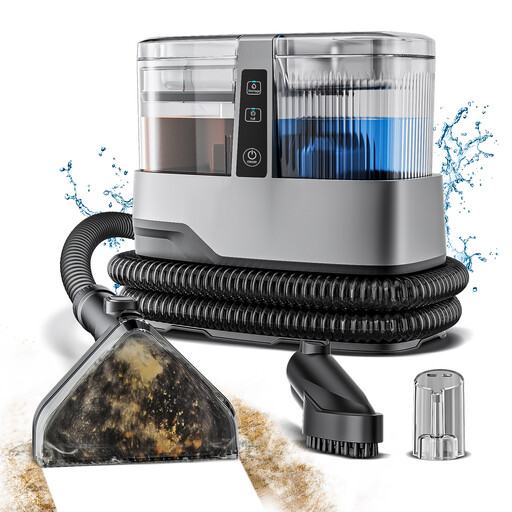
OMESER C688A Carpet Cleaner Machine 600W 17KPa
Why This Fits Their Persona: Ideal for households where unexpected spills from kids or pets are a regular occurrence. The device offers high performance to quickly and thoroughly remove even trodden-in dirt or liquids.
With 17 kPa of suction power, driven by a 600W motor, it minimises the risk of residual moisture and water stains. The hygienic dual-tank system prevents the redistribution of dirt.
The combination of powerful suction and a portable design makes it a versatile tool for sofas, carpets, and car seats. It delivers high cleaning performance in a compact package.
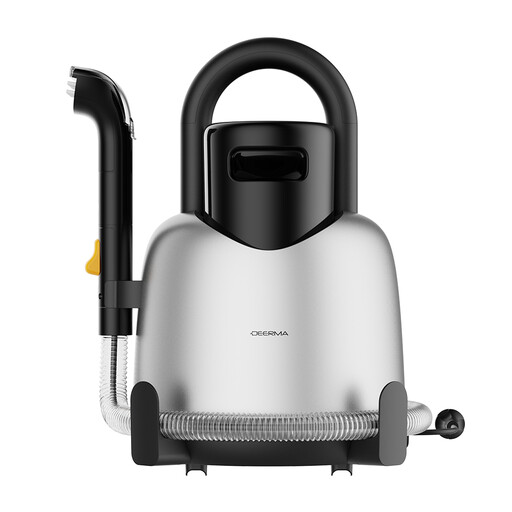
Deerma BY700 S Corded Spot Cleaner
Why This Fits Their Persona: For users who want to tackle not just surface stains but also deep-set dirt, bacteria, and odours. Ideal for deep cleaning mattresses, upholstered furniture, or for car enthusiasts.
This model bypasses the trap of insufficient cleaning power with its three modes: 100°C Steam, 60°C Hot Water, and Cold Water. This allows it to effectively dissolve even old and greasy stains.
The versatility offered by the temperature modes is its biggest advantage. Large tanks (1.7L clean water / 1.4L dirty water) and a set of 5 brush attachments enable comprehensive, uninterrupted cleaning throughout the house.
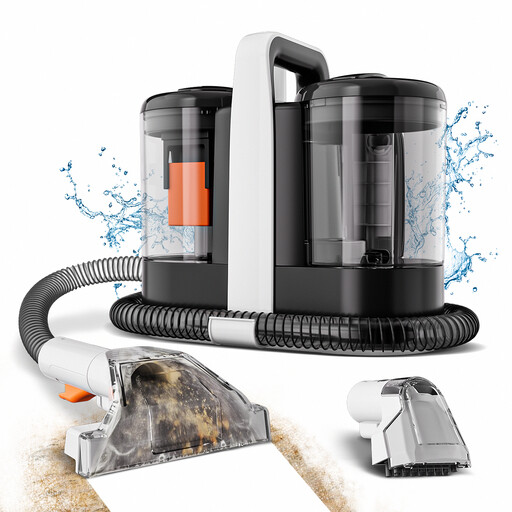
OMESER W07 Carpet Cleaner Machine
Why This Fits Their Persona: Perfect for those living in smaller apartments or anyone looking for an easy-to-store device for quick, on-the-spot stain removal. Its simple operation is ideal for first-time users.
Despite its compact design, this device offers a solid 15 kPa of suction power and a full-fledged dual-tank system (1.5L / 0.8L). This makes it a powerful spot cleaner, not a weak spray-only device.
The thoughtful, space-saving design with integrated hose and cord storage makes it very easy to put away. The long reach, thanks to its extended cord and hose, increases flexibility during use.
Looking for More Options?
We have compiled a complete, up-to-date list of products that fully meet these strict selection criteria and rigorous safety standards.
1. How long does it take for upholstery to dry after cleaning with a spot cleaner?
The drying time heavily depends on the device's suction power, the ambient room temperature, and ventilation. With a high-suction device (e.g., 13 kPa or more), the surface is often touch-dry within 2 to 4 hours. A complete deep-dry can take 6 to 12 hours, depending on the thickness of the upholstery. Open windows or use a fan to speed up the process.
2. Can I use regular laundry detergent in an upholstery cleaner?
It is strongly advised not to use conventional laundry detergent or dish soap. These products tend to create excessive foam, which can damage the device's motor and block suction. Furthermore, they can leave behind a sticky residue in the fabric that attracts new dirt. Only use special, low-foaming cleaning solutions designed for spot and carpet cleaners.
3. How do I clean the upholstery cleaner after use?
Proper maintenance is crucial for the device's longevity and hygiene. After each use, empty and thoroughly rinse the dirty water tank to prevent odours and bacteria from building up. Also, clean any hair and debris from the brush attachments. Allow all parts to air-dry completely before reassembling and storing the device. Some models, like the Deerma BY700 S, offer a self-cleaning function that simplifies this process.