
How to Choose an Upholstery Cleaner Wisely
One careless moment is all it takes: a red wine stain on the light-coloured sofa, muddy paw prints from the dog on the carpet, or the remnants of a child's snack on the car seat. Such mishaps are an unavoidable part of daily life, and manual cleaning is often tedious and rarely completely successful. An upholstery cleaner, also known as a spot cleaner or wet cleaner, promises a fast, deep-cleaning solution.
However, the market is crowded and filled with marketing promises that often obscure more than they clarify. Before you make a purchasing decision, it's crucial to understand the common pitfalls that lead to disappointment and an unused appliance gathering dust in a cupboard.
- Pitfall 1: The Wattage Fallacy. Many manufacturers advertise a high wattage, but this figure only indicates the motor's power consumption and doesn't necessarily reflect the actual cleaning performance.
- Pitfall 2: The "Smelly Hose" Problem. A frequent issue with cheaper models is the build-up of residual dirty water in the suction hose. This leads to the growth of bacteria and unpleasant odours the next time you use it.
- Pitfall 3: High-Effort Maintenance. Appliances with hard-to-reach tank corners or permanently installed brushes are difficult to clean. The result: the post-cleaning cleanup is so demanding that the device is rarely used again.
This guide will help you navigate these issues and find a device that truly fits your needs.
What Really Matters: The Key Performance Metrics
To avoid a purchase you'll regret, let objective technical data, not advertising slogans, guide your decision. Three metrics are central to the performance and longevity of an upholstery cleaner.
1. Suction Power (Pascals) vs. Motor Power (Watts)
The effectiveness with which a spot cleaner pulls dirt and water from textile fibres is determined by its suction power, measured in Pascals (Pa). A higher wattage does not automatically mean stronger suction. Pay attention to the Pa value:
- Up to 10,000 Pa: Sufficient for superficial, fresh stains on durable fabrics.
- 12,000 Pa to 17,000 Pa: A good range for deep cleaning, capable of tackling stubborn messes, dried-in stains, and removing pet hair. Ideal for cleaning upholstered furniture and car seats.
- Over 17,000 Pa: Offers very high performance that is particularly beneficial for heavily used carpets and for quasi-professional car interior detailing.
2. The Dual-Tank System: Hygiene and Efficiency
A dual-tank system is an absolute must-have for any good spot cleaner. It separates fresh water (with cleaning solution) from the vacuumed dirty water. This ensures you are always cleaning with clean water and not just spreading the dirt around on the surface. Pay attention to the tank capacity: larger tanks (e.g., over 1.5 litres for fresh water) mean fewer interruptions for refilling, which is especially practical when cleaning larger areas like a full sofa or a mattress.
3. Ease of Maintenance: The Self-Cleaning Function
To avoid the "smelly hose" trap, some modern devices offer a self-cleaning function. At the touch of a button, the hose is flushed with fresh water after use, removing dirt residue and bacteria. This feature is a significant convenience boost and ensures the long-term hygiene of the appliance. If this function is missing, the hose should at least be easily accessible for manual rinsing.
Recommended for specific needs
Based on these objective criteria, we have identified several models that represent a smart choice for specific user groups.

Vacmaster SCB0501 Upholstery & Carpet Cleaner
Why This Fits Their Persona: Ideal for those who need a compact, straightforward device for occasional mishaps. At 3.4 kg, it is very lightweight and easy to store in smaller apartments. Its performance is perfectly adequate for quickly removing fresh stains from the sofa or in the car.
The simple dual-tank system with removable containers is very easy to empty and rinse. This minimises maintenance effort and effectively prevents odour build-up without relying on complex technology.
Compact Design: Very lightweight and easy to transport and store. Cleaning Solution Included: A sample of the appropriate cleaning solution is included, so you can get started right away.
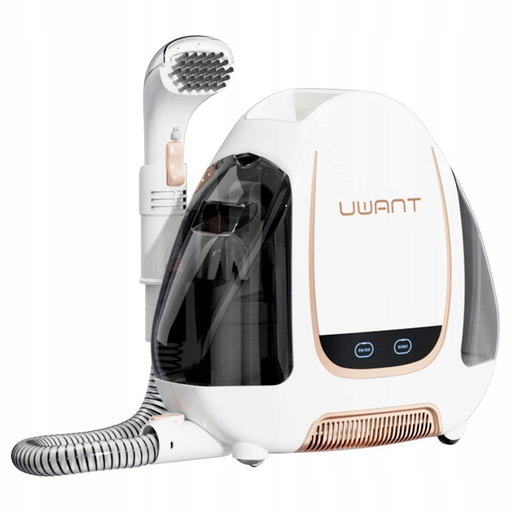
Uwant B100-E Carpet & Upholstery Cleaner
Why This Fits Their Persona: For families and pet owners who regularly deal with tough messes. The high suction power of 12,000 Pa and large tanks (1.8L fresh water) enable efficient cleaning of larger areas without constant interruptions.
This model directly addresses the "smelly hose" problem with a patented self-cleaning function that flushes the hose and brush after use. This prevents odour build-up and ensures hygiene.
Two Suction Modes: Offers an 8,000 Pa mode for lighter messes and a 12,000 Pa mode for deep-seated dirt. Automatic Cord Rewind: The 5-meter cord retracts at the push of a button, simplifying storage.
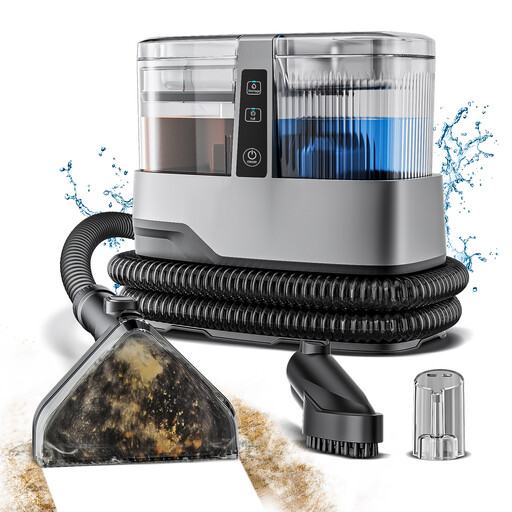
OMESER C688A Carpet Cleaner Machine
Why This Fits Their Persona: Perfect for car enthusiasts and anyone who needs maximum cleaning power for deep-seated dirt. The combination of a 600-watt motor and a very high suction power of 17 kPa makes it possible to remove even the most stubborn stains from car seats and floor mats.
This model bypasses the wattage fallacy by clearly stating a very high suction power value of 17 kPa. This performance ensures that not only dirt but also a maximum amount of moisture is removed, which shortens the drying time.
Very High Suction Power: With 17 kPa, the device offers performance suitable for the most demanding cleaning tasks. Handheld Design: Despite its high power, the device is designed as a handheld unit, allowing for flexible use on stairs or in tight vehicle interiors.
Looking for More Options?
We have compiled a complete, up-to-date list of products that fully meet these strict selection criteria and UK safety regulations.
Frequently Asked Questions (FAQ)
1. How often should I clean my upholstery cleaner? To prevent odours and bacterial growth, the dirty water tank and fresh water tank should be emptied and rinsed with clean water after every single use. Then, run clean water through the hose (either manually or via the self-cleaning function) to remove all residue. Allow all parts to air dry completely before storing the device.
2. Can I use any cleaning solution in a spot cleaner? No. It is important to use only low-foaming cleaning solutions or those recommended by the manufacturer. Conventional household cleaners or dish soap can create excessive foam. This foam can get into the motor and cause irreparable damage to the device.
3. What is the difference between an upholstery cleaner and a steam cleaner? An upholstery cleaner (or spot cleaner) works on the principle of spray extraction: it sprays a water-detergent solution into the fabric and immediately vacuums up the dirty liquid. A steam cleaner, on the other hand, generates hot steam under pressure to loosen dirt and grease and to disinfect surfaces. However, most steam cleaners do not have a suction function to remove the loosened dirt and moisture. For the deep cleaning of textiles, a spot cleaner is therefore generally the more suitable choice.