
Magnetic Chargers: Smart Buyer's Guide
A magnetic charger promises convenience: just snap on your smartphone and charging begins. But the market is flooded with products whose real-world performance often fails to match their marketing claims. Many users invest in a solution that quickly proves to be unreliable or slow.
As a Joybuy Product Recommendation Officer, I filter through the noise to provide you with a factual basis for your decision. This guide focuses on the technical pitfalls and the crucial parameters you should check before making a purchase.
The 3 Most Common Mistakes When Buying a Magnetic Charger
Marketing statements can be misleading. Pay close attention to three weak points that often only become apparent after the purchase, leading to frustration.
- Weak Magnetic Force Leads to Charging Interruptions: A common problem is a magnet that is too weak. The smartphone slips with the slightest movement, especially with a MagSafe car mount on uneven roads. The result: charging is constantly interrupted, or the device falls off. A secure connection is the fundamental requirement for reliable charging.
- Misleading Wattage Claims and Overheating: Many chargers advertise 15 watts of charging power but only achieve this for a few minutes. Without adequate thermal management, the device overheats, causing the charging electronics to drastically throttle the power, often down to 5 watts or less. The result is a charging process that takes significantly longer than expected.
- Lack of Certification and Compatibility Issues: Terms like "MagSafe-compatible" are not protected. Products without official Qi2 certification or Apple certification often don't deliver the promised 15-watt speed for a wireless iPhone charger. Furthermore, issues can arise with protective cases or future software updates.
What Really Matters: The Decisive Parameters
To avoid the problems mentioned above, you should focus on verifiable technical specifications. These three criteria are essential for an informed purchasing decision.
1. Charging Standard: MagSafe vs. Qi2
The technology behind magnetic charging has evolved. Understanding the standards is crucial for performance and future-proofing.
- MagSafe: This is Apple's proprietary technology for the iPhone (12 series and later). It enables precise magnetic alignment and a charging power of up to 15 watts.
- Qi2 (pronounced "Chee Two"): This is the new, open standard from the Wireless Power Consortium (WPC). It integrates the "Magnetic Power Profile" (MPP), which is based on Apple's MagSafe technology. A Qi2 charger also offers up to 15 watts of charging power and works with both newer iPhones and future Android devices that support this standard. A product with official Qi2 certification is therefore a more universal and future-proof choice.
2. Charging Power (Watts) and the Right Power Adapter
A device's maximum charging power is only achieved if the power adapter can supply the corresponding energy.
- Charger Power: Pay attention to the specified maximum output power in watts (W). For fast charging, 15W is the current standard for magnetic solutions.
- Power Adapter Requirement: A 15W charger typically requires a USB-C power adapter with Power Delivery (PD) and an output of at least 20 watts. Using a weaker or older USB-A power adapter will inevitably lead to a significantly reduced charging speed. Check whether a suitable power adapter is included or needs to be purchased separately.
3. Form Factor and Use Case
The intended application determines the ideal shape of the charger.
- For on the go: A magnetic power bank is ideal. Here, pay attention to the ratio of capacity (in mAh) to weight and size. Models with 5,000 mAh are compact, while 10,000 mAh versions offer more charging cycles.
- For the desk: A 3-in-1 magnetic charging station reduces cable clutter and simultaneously charges your smartphone, smartwatch, and headphones. It's important to check the charging power for each individual charging spot.
- For the car: A MagSafe car mount should have a robust attachment for the air vent or dashboard, as well as particularly strong magnets to hold the device securely even during vibrations.
Picks For Your Profile
Based on the criteria above, we have identified some products that are well-suited for specific usage scenarios.
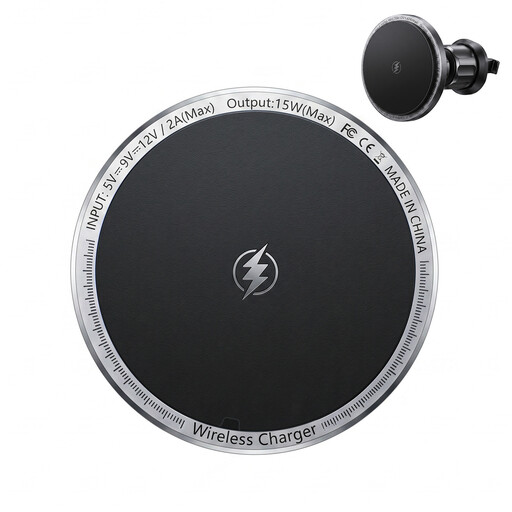
Rexsun 15W Magnetic Wireless Car Charger
Why This Fits Their Persona: Ideal for drivers who want a stable, one-handed charging solution for their iPhone. The compact design doesn't obstruct the view of the dashboard and ensures a clean look in the vehicle.
The strong magnets ensure a secure hold even on bumpy roads, bypassing the problem of weak magnetic force. A rear metal heat sink counteracts overheating and ensures consistent charging performance.
Offers up to 15W of charging power for fast charging on the go. Installation on the air vent is tool-free.
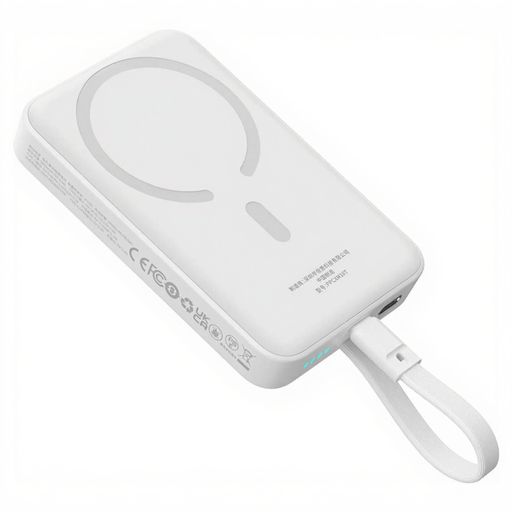
BASEUS 10000mAh Magnetic Mini Wireless Fast Charge Power Bank 30W
Why This Fits Their Persona: Suitable for travelers and users who need a flexible and powerful charging solution on the go. The 10,000 mAh capacity is sufficient for multiple smartphone recharges.
This model offers both fast wireless charging (up to 15W) and wired charging via USB-C at up to 30W. This avoids the trap of slow charging speeds and provides flexibility. The strong magnets ensure a stable connection.
Features an integrated USB-C cable, so there's no need to carry a separate one. Its wide compatibility extends beyond iPhones to other devices.
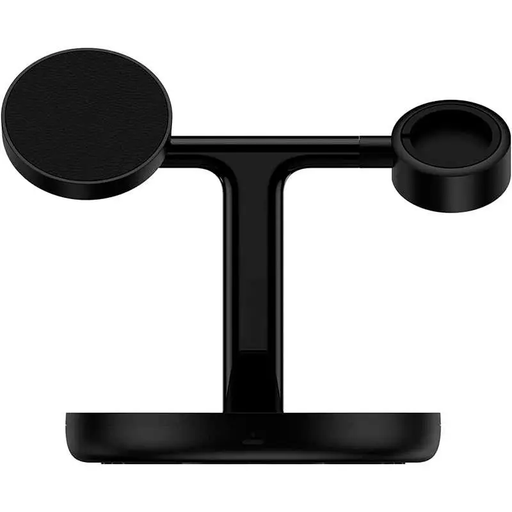
BASEUS 3-in-1 Wireless Magnetic Charging Bracket 20W
Why This Fits Their Persona: Perfect for users in the Apple ecosystem who want a central charging station for their iPhone, Apple Watch, and AirPods to keep their desk tidy. The adjustable viewing angle is practical for video conferences.
Designed as an integrated system for Apple devices, it ensures compatibility. The included 12V/2A power adapter guarantees that the total 20W output is actually available to charge multiple devices efficiently.
Eliminates cable clutter with a single station for three devices. The appropriate fast-charging power adapter and USB-C cable are already included in the box.
Looking for more options?
Besides chargers, there are also charging-only cables with magnetic properties that help keep things tidy. We have compiled a list of products that meet strict selection criteria.
Frequently Asked Questions (FAQ)
Does a MagSafe or Qi2 charger work with a case? Yes, provided the case is specifically designated as MagSafe or Qi2 compatible and has built-in magnets. Standard cases, especially thicker models made of silicone or leather without magnets, significantly weaken the magnetic hold and can prevent or slow down charging.
What is the difference between a MagSafe charger and a new Qi2 charger? MagSafe is a technology developed by Apple, used since the iPhone 12. Qi2 is the new, universal charging standard that adopts the magnetic alignment of MagSafe. A Qi2 charger is therefore a future-proof choice, as it will be compatible with both current iPhones and upcoming Android smartphones that support this standard. Both typically enable a charging power of up to 15 watts.
Do I need a special power adapter for a 15W magnetic charger? Yes, in most cases. To achieve the full 15 watts of charging power, a USB-C Power Delivery (PD) power adapter with an output of at least 20 watts is required. If you use a weaker adapter (e.g., an old 5W USB-A adapter), the charging speed will be significantly reduced. Before buying, check if a suitable power adapter is included.