
Buyer's Guide: Wireless Gaming Mouse for Competitive Play
For competitive gamers, choosing the right peripherals is crucial. Today, a wireless gaming mouse must do more than just offer freedom from cables. Low latency, precise sensors, and an ergonomic design are fundamental requirements for gaining an in-game advantage. This guide will help you navigate the options, presenting a selection of models tailored to specific technical demands and user needs. We'll analyse the features that matter most to esports enthusiasts and ambitious gamers in 2026.
What to Look for When Choosing a Wireless Gaming Mouse
Finding the right mouse can be complex given the vast array of technical specifications. The following points will help you evaluate the key performance metrics.
1. Weight and Ergonomics: Agility Meets Comfort
The weight of a mouse directly impacts aiming speed and fatigue during long gaming sessions. An ultra-lightweight gaming mouse weighing under 60 grams allows for faster movements and more precise corrections. At the same time, its shape is crucial. An ergonomic gaming mouse is adapted to the natural posture of the hand and supports your grip style (e.g., palm, claw, or fingertip), which increases comfort and reduces strain. For example, models with a low front profile can offer better control, as your fingers are positioned closer to the mousepad.
2. Sensor Performance and Polling Rate: The Key to Precision
The precision of a mouse is largely determined by its sensor and polling rate. While DPI (Dots Per Inch) indicates sensitivity, the polling rate (in Hertz, Hz) is responsible for responsiveness. It indicates how often the mouse reports its position to the computer. A 1000 Hz standard is well-established, but for the esports scene, models featuring an 8K polling rate are becoming the new benchmark. These report their position 8,000 times per second, reducing the latency between your movement and the cursor's reaction to an absolute minimum. Such a high-speed gaming mouse can make the decisive difference in critical in-game situations.
3. Battery Life and Connectivity
The reliability of a wireless connection is non-negotiable. Modern mice use stable 2.4 GHz wireless technology, ensuring lag-free transmission on par with wired models. Furthermore, a battery-powered gaming mouse should offer long battery life to survive extended gaming sessions without interruption. Figures of 70 hours or more are a good benchmark. A feature that allows you to continue playing while charging, often via a flexible USB-C cable, is also highly practical.
Our Recommended Wireless Mice
Based on the criteria above, we have compiled a selection of models that cover different needs—from maximum competitive performance to specialised ergonomics.
CHERRY XTRFY M64 Wireless Gaming Mouse
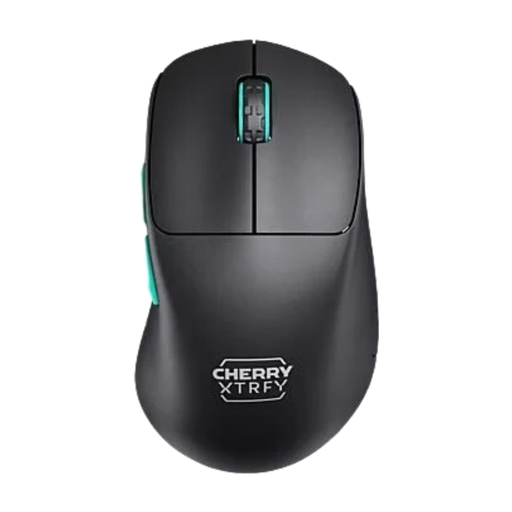
Why It Stands Out: The CHERRY XTRFY M64 Wireless is meticulously designed for the needs of esports athletes. Its standout feature is its extremely low weight of just 53 grams, combined with a unique ergonomic design. The low front profile allows the fingers to rest closer to the mousepad, providing exceptional control during rapid flick shots.
Advantages:
- Ultra-lightweight Design: At only 53g, it promotes maximum agility and minimises fatigue.
- Stable 2.4 GHz Connection: Ensures tournament-grade, lag-free performance.
- Long Battery Life: Offers up to 75 hours of playtime per charge, according to the manufacturer.
- Unique Ergonomics: The right-handed design with a low front is optimised for precise control.
Who It's For: This model is aimed at competitive gamers seeking an ultra-lightweight and responsive esports mouse. It is ideal for users who prioritise maximum freedom of movement and a specialised shape for optimising their aim.
CHERRY XTRFY M64 Pro Wireless Gaming Mouse
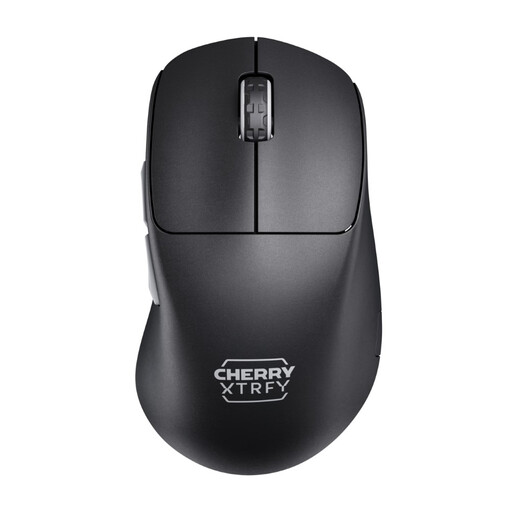
Why It Stands Out: The M64 Pro is the evolution for maximum performance, featuring an 8,000 Hz polling rate. This technology reduces input delay to a minimum and ensures exceptionally smooth cursor movement, making it one of the most responsive wireless mice on the market.
Advantages:
- 8K Polling Rate: Delivers data transmission eight times faster than conventional 1000 Hz mice for minimal latency.
- Pixart 3395 Sensor: A high-precision sensor designed for demanding gaming.
- Long Battery Life: Despite its high performance, the battery provides up to 90 hours of use, according to the manufacturer.
- Lightweight: At 55 grams, it remains extremely agile and easy to handle.
Who It's For: The Pro version of this Cherry gaming mouse is the choice for esports professionals and ambitious gamers for whom every millisecond counts. Anyone seeking the most technologically advanced equipment to reduce latency will find the right tool here.
Logitech MX Vertical Ergonomic Mouse
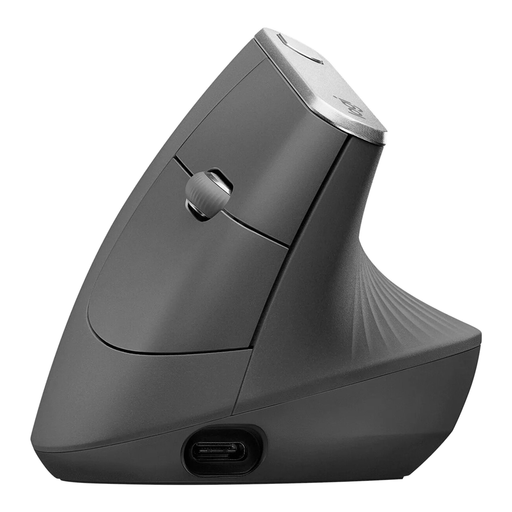
Why It Stands Out: The Logitech MX Vertical takes a different approach. Its focus is not on competitive gaming but on maximum ergonomics. The unique 57° vertical angle places the wrist in a natural handshake position, which Logitech claims can reduce muscle strain.
Advantages:
- Ergonomic Vertical Design: Promotes a natural hand posture to relieve wrist and forearm strain.
- Multi-Device Capability: Seamlessly connect with up to three devices and switch between them at the touch of a button.
- High-Precision 4000 DPI Sensor: Ensures precise cursor control with reduced hand movement.
- Long Battery Life: The battery lasts up to four months, according to the manufacturer, and is quickly rechargeable via USB-C.
Who It's For: This model is ideal for users who spend long hours working and gaming on the computer and place the highest value on comfort and preventing strain-related injuries. It is less suited for fast-paced FPS games but is an excellent choice for strategy, simulation, or role-playing games, as well as for productivity tasks.
Discover More Alternatives
If the models presented here don't exactly meet your requirements, or if you'd like to consider other options, there is a wide variety of other mice with different specifications available.
Discover a broader selection of models in our Black Optical Mouse category.
Frequently Asked Questions (FAQ)
1. What is the polling rate on a gaming mouse? The polling rate, measured in Hertz (Hz), indicates how often a mouse reports its position to the computer per second. A higher rate, such as 1000 Hz or 8000 Hz, results in lower delay (latency) and smoother cursor movement on the screen, which is particularly advantageous in fast-paced games.
2. How important is the weight of a wireless gaming mouse? Weight is a crucial factor for agility and comfort. A lighter mouse (under 70 grams) can be moved with less effort, enabling faster reactions and reducing arm fatigue during long gaming sessions. However, the choice also depends on personal preference.
3. Can a wireless mouse be as fast as a wired one? Yes. Modern wireless gaming mice that use 2.4 GHz wireless technology offer signal transmission with extremely low latency, which is equal to or even superior to that of wired mice. They are therefore fully suitable for competitive use and offer the added benefit of freedom of movement without cable drag.