
Window Cleaning Robots: Buying Guide and Recommendations for 2026
Cleaning large, high, or hard-to-reach glass surfaces is a recurring challenge for many households. A window cleaning robot is an automated device designed to simplify this process. Instead of manual cleaning, the device adheres to the glass surface using suction and moves systematically to remove dirt. This article provides a technical overview of how they work, outlines the key selection criteria for an automatic window cleaner, and presents a selection of recommended models.
What to Look for in a Window Cleaning Robot
The choice of a suitable model depends on specific technical parameters that define its performance, safety, and range of application.
Suction Power and Adhesion
Suction power, measured in Pascals (Pa), is a fundamental parameter. It determines how securely the window robot adheres to vertical and smooth surfaces. Higher suction power ensures stronger adhesion, which is particularly relevant for uneven surfaces or when cleaning exterior windows. Models with a suction power of 2800 Pa or more generally offer reliable adhesion.
Cleaning Modes and Path Planning
Modern window cleaning robots use intelligent path planning systems (e.g., AI-based or using gyroscope navigation) to ensure complete coverage of the area to be cleaned. The devices automatically detect window frames and obstacles and calculate an efficient cleaning route. Some models also offer special modes for intensive cleaning or targeted edge cleaning.
Spray Function and Water Tank
An integrated water tank with a spray function automates the process of moistening the surface. This increases cleaning efficiency by keeping the cleaning pad consistently damp. The technology ranges from simple single nozzles to advanced multi-nozzle systems that create a fine mist to minimise drips and streaks. The volume of the water tank (e.g., 60 ml or 80 ml) affects how long the device can operate without a refill.
Power Supply and Safety
Most robots for window cleaning are corded to ensure a constant power supply and, consequently, uninterrupted suction. In the event of a power outage, they feature an integrated backup battery (UPS) that keeps the device attached to the window for a limited time (e.g., 20–30 minutes). An additional, robust safety tether is an essential component that prevents the device from falling and must be secured to a fixed point indoors.
Control and Operation
Control is typically managed via an included remote control or a smartphone app. A remote offers straightforward, direct control of basic functions. App-controlled models often allow for advanced settings, such as selecting specific cleaning modes, monitoring progress in real-time, or receiving status notifications.
Areas of Application
Besides windows, many models are also suitable for other smooth, frameless, or framed surfaces. These include mirrors, glass shower enclosures, and even smooth tiles. The minimum size of the surface to be cleaned (e.g., 30 x 30 cm) is an important specification to consider.
Our Selection of Window Cleaning Robots for 2026
Based on the technical criteria mentioned above, we present a selection of models that cover different needs.
HUTT DDC55 Pro Window Cleaning Robot
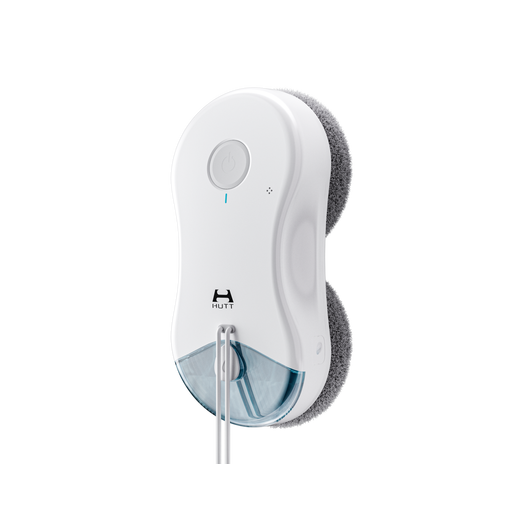
Why we recommend this product The HUTT DDC55 Pro combines a high suction power of up to 5,400 Pa with an 80 ml water tank and a targeted edge cleaning function. It is easily controlled via a remote, allowing for quick setup without needing to install an app.
Advantages
- Suction Power: Up to 5,400 Pa for a secure hold.
- Water Tank: 80 ml capacity for longer cleaning cycles.
- Operation: Simple control via remote or directly on the device.
- Safety: 30-minute backup power and a 4.5 m safety tether.
- Operating Noise: 68 dB.
Who it's for This model is suitable for users looking for a powerful and straightforward solution for cleaning glass, mirrors, and tiles, and who can do without app control.
ECOVACS WINBOT W2 PRO Omni Window Cleaning Robot
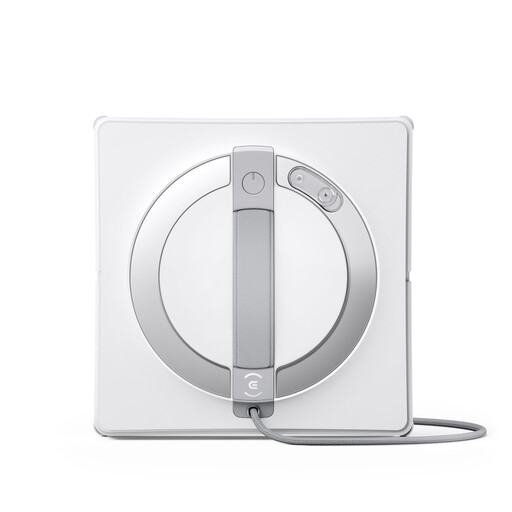
Why we recommend this product The ECOVACS WINBOT W2 PRO Omni is a system featuring a multifunctional station that serves as a base, storage unit, and safety anchor. Its three-nozzle, wide-angle spray technology ensures even moistening, while WIN-SLAM 4.0 path planning guarantees systematic cleaning.
Advantages
- Multifunctional Station: Serves as storage, power supply, and safety anchor.
- Spray Technology: Three-nozzle wide-angle atomisation for a fine mist.
- Path Planning: Intelligent WIN-SLAM 4.0 navigation.
- Safety: 12-stage protection system and a combined power and safety cord.
- Control: Full control and monitoring via the ECOVACS HOME App.
Who it's for This model is aimed at tech-savvy users who prefer a fully integrated system with advanced navigation, app control, and a convenient all-in-one solution.
PuRuiKai Window Cleaner Robot
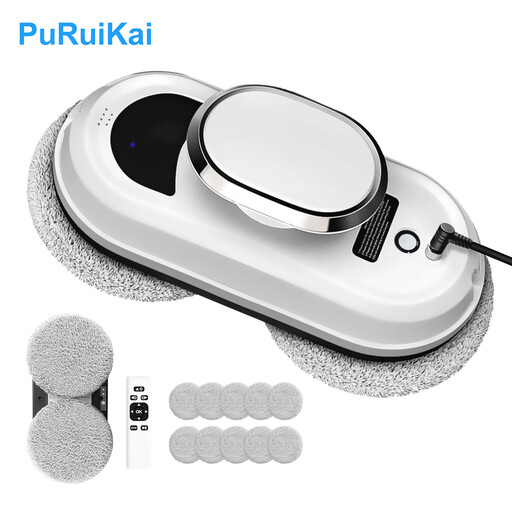
Why we recommend this product The PuRuiKai robot stands out with its dual suction system, delivering a combined force of 2800 Pa*2. Remote control operation and automatic edge detection make it an easy-to-use device for standard cleaning tasks.
Advantages
- Suction Power: Dual system with 2800 Pa per suction motor.
- Control: Intuitive operation via remote control.
- Navigation: Intelligent path planning modes and automatic edge detection.
- Safety: 20-minute backup battery and safety tether.
- Weight: A relatively lightweight model at 1.1 kg.
Who it's for Users looking for a device with strong adhesion from a dual suction system and simple remote control for windows and tiles will find this a functional option.
Discover More Models and Accessories
The models presented here represent a selection of the available technologies. The market for glass cleaning robots is constantly evolving, offering a wide variety of devices with different specifications. If you want to compare more options or find compatible accessories like extra cleaning pads or special cleaning solutions, you can find a broader overview in our category.
Discover more models in the Window Cleaners category.
Frequently Asked Questions (FAQ)
1. How well do window cleaning robots clean corners? Due to their typically round or square shape with rounded edges, the cleaning pads often cannot fully reach the outermost corners of a window. However, many models feature special edge-cleaning modes that guide the robot along the frame to minimise the uncleaned area. A manual touch-up of the corners may be necessary depending on your standards.
2. Can a window robot be used for sloped skylights? Most manufacturers recommend using their devices only on vertical or slightly inclined surfaces up to a certain angle (e.g., 60°). Classic, steeply sloped skylights are often excluded, as adhesion cannot be guaranteed on excessive inclines. Please refer to the manufacturer's specific guidelines, such as for the HUTT DDC55 Pro, which is not recommended for classic sloped skylights.
3. Does an automatic window cleaner require a special cleaning solution? Many manufacturers recommend using distilled water or their own specially formulated cleaning solution. Using conventional glass cleaners may clog the nozzles or leave streaks. It is advisable to follow the recommendations in the user manual for your specific device.