
Wild Animal Toy Selection Guide
The selection of toys representing wild animals is based on a set of objective criteria. Material properties, construction type, and the product's age-appropriateness are crucial for making an informed purchasing decision. The market offers two primary categories: detailed animal figurines for open-ended role-play and construction sets like LEGO animals, which focus on the building process. Both approaches foster different skills and appeal to various age groups. This guide analyses the essential parameters and presents a selection of products.
Buyer's Guide: What to Look for When Choosing
The evaluation of animal toys should be based on verifiable technical specifications and safety standards.
1. Material and Safety According to EU Standards
A toy's safety is the most fundamental aspect. Within the European Union, the CE marking is a mandatory indicator that a product meets the applicable health, safety, and environmental protection requirements.
- Plastics: Manufacturers like LEGO predominantly use Acrylonitrile Butadiene Styrene (ABS) for their bricks, a material known for its robustness and dimensional stability. Other producers of figurines, such as Schleich, use specific plastic compounds that allow for detailed modelling and longevity.
- Small Parts: The risk of choking on small parts is particularly relevant for toys intended for children under three. Products for this age group, such as DUPLO animals, are therefore intentionally designed to be larger and have no detachable small parts. The corresponding warning labels on the packaging must be strictly observed.
2. Educational Value and Play Concept
The educational value of a toy can be objectively assessed based on its concept.
- Open-Ended Play with Figurines: Realistic models like Schleich animals encourage imaginative play. Children can recreate scenarios from nature, which can support an understanding of animal behaviour and ecosystems. This type of educational animal toy is well-suited for imparting knowledge about fauna.
- Construction Play with Building Sets: Sets from LEGO or DUPLO promote fine motor skills, spatial reasoning, and the ability to follow instructions. Their modular nature also allows for creative custom builds that go beyond the original model.
3. Age-Appropriate Complexity
The complexity of the toy must be matched to the child's cognitive and motor skills.
- 2 to 5 Years: Large, easy-to-grip bricks and sturdy figures without delicate details are the correct choice here. The focus is on recognising shapes, colours, and simple animal species.
- 5 to 8 Years: Children in this age group can handle more detailed figures and simpler building sets. Collecting figures from a series (e.g., safari toys) becomes relevant.
- Ages 9 and Up: More complex building sets with hundreds of pieces, like those in the LEGO Creator series, present an appropriate challenge and result in models with high display value.
Our Top Curated Picks
The following selection represents different concepts and age groups in the wild animal toy category.
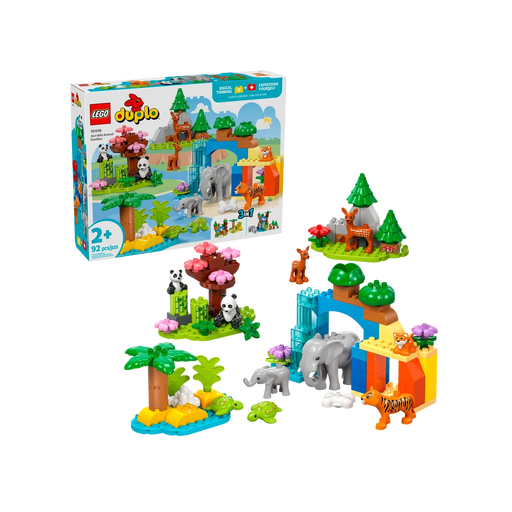
LEGO DUPLO Town 10446 3-in-1 Wild Animal Families
-
Why we recommend this product: This set is specifically designed for toddlers. It combines the safe handling of large DUPLO bricks with an educational concept. According to the manufacturer, children learn about social relationships and develop early sorting and matching skills by pairing parent animals with their young. The 3-in-1 concept allows for the construction of three different habitats (savannah, beach, forest), thereby increasing its play value.
-
Advantages:
- Promotes fine motor skills through connecting the bricks.
- Includes 10 animal figures (five parent-child pairs) to foster an understanding of family structures.
- Versatility through three buildable landscapes.
- Material and size are designed to meet safety requirements for children aged 2 and up.
-
Who it's for: Toddlers aged 2 to 5 who are being introduced to the animal world and initial building concepts in a playful way. A suitable gift for animal lovers of preschool age.
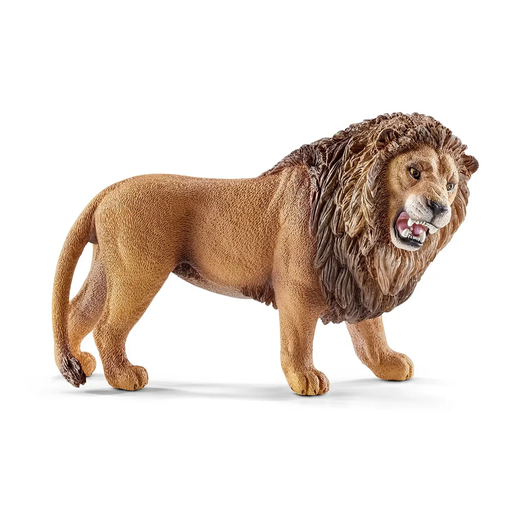
Schleich Wild Life Roaring Lion
-
Why we recommend this product: This figure represents the classic approach of realistic animal figurines. The manufacturer Schleich is known for its detailed and hand-painted modelling. This lion toy is a single, non-disassemblable figure that integrates seamlessly into existing play worlds or collections of the Wild Life series. The focus is on imaginative role-play and collector's value.
-
Advantages:
- High level of detail and realistic depiction for knowledge transfer.
- Durable material for long-lasting use, even during intensive play.
- Encourages free, unstructured play and creativity.
- Part of a comprehensive system of collectible figures.
-
Who it's for: Children aged 3 to 8 as well as collectors of animal models. Ideal for complementing play sets with a savannah or zoo theme.
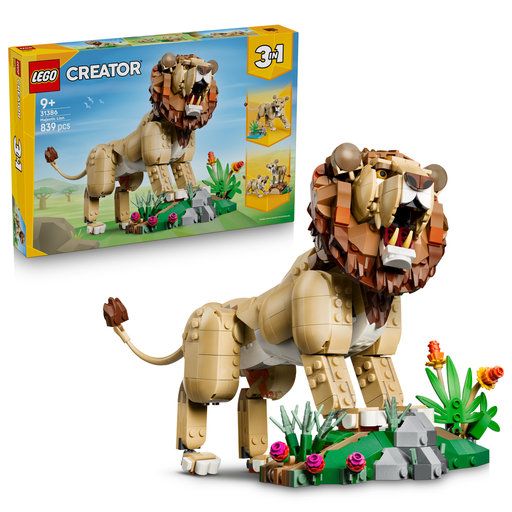
LEGO Creator 3-in-1 31386 Majestic Lion
-
Why we recommend this product: This set is aimed at older children and combines a challenging building task with high play and display value. The 839 pieces can be used to build a lion, a lioness, or two lion cubs. The models feature posable limbs, allowing for dynamic poses. The 3-in-1 principle offers significant added value as it encourages repeated rebuilding.
-
Advantages:
- Promotes concentration, technical understanding, and following complex instructions.
- High replay value with three different building options in one set.
- The finished models are suitable as both toys and display pieces due to their size and posability.
- Compatible with the entire LEGO system for limitless creativity.
-
Who it's for: Children aged 9 and up who enjoy detailed construction processes and are looking for a versatile model.
Other Options and Alternatives
The products presented cover specific use cases and age groups. For a broader overview that includes other animal species such as elephants, tigers, or sea creatures, as well as other types of toys, we recommend exploring the main category. There you will find an extensive selection of wild animal toys.
Frequently Asked Questions (FAQ)
1. What defines a good animal toy? A good animal toy is characterised by three main features: material safety (confirmed by the CE marking), age-appropriate construction (e.g., no small parts that can be swallowed by toddlers), and a well-conceived play concept that fosters either creativity in open-ended play (figurines) or technical and cognitive skills (building sets).
2. From what age are Schleich animals suitable? According to the manufacturer, most figures in the Schleich Wild Life series are suitable for children aged 3 and up. Due to their sometimes intricate and realistic design, as well as their collectible nature, they are often popular with children up to the age of 8 and with collectors beyond that. They are not recommended for children under 3 due to potential small parts.
3. What are the advantages of LEGO animals compared to solid figures? The main advantage of LEGO animals lies in the building process itself. It trains fine motor skills, spatial reasoning, and problem-solving abilities. Additionally, 3-in-1 sets offer high replay value through rebuilding options. Solid figures, like those from Schleich, on the other hand, are better at encouraging free, narrative role-play and are often more robust and ready to play with out of the box. The choice depends on whether the focus should be on building or on playing.