
Wi-Fi Water Timer Buyer's Guide for Smart Irrigation
Automated watering promises a pristine garden without the daily chore of manual irrigation. Wi-Fi-enabled models, in particular, offer superior convenience and app-based control. However, the market is flooded with devices whose advertised features often fail to deliver in practice. Before making a decision, it's crucial to understand the common pitfalls that can lead to a poor purchase.
This guide focuses on the objective criteria that define a reliable and efficient smart water timer. We'll highlight the technical specifications that truly matter, helping you make an informed choice.
3 Common Problems with Smart Water Timers
Many devices promise a simple, intelligent solution, but their real-world performance is often plagued by flaws that severely limit their usefulness. Watch out for these three critical issues:
- Hidden Costs from Hub Requirements: Some systems lure you in with a low price for the water timer itself, but neglect to mention that an additional, often expensive, gateway or hub from the same brand is required for it to work. Without this extra device, the Wi-Fi functionality is useless. This leads to unexpected costs and an unnecessarily complex installation.
- Short Battery Life and Unstable Connections: High power consumption is a frequent annoyance. Models with inefficient wireless technology can drain batteries in just a few months, which can lead to a complete system failure during a long absence, like when you need garden watering while on vacation. Furthermore, a weak Wi-Fi antenna causes constant connection drops if the router isn't nearby.
- Poor Software and Lack of Weather Adaptation: The companion garden watering app is the heart of the system. If it's confusing, crashes frequently, or only offers rudimentary scheduling, the "smart" advantage is lost. It's especially problematic when the device doesn't react to local weather data and waters the lawn during heavy rain—a waste of water that's also harmful to plant roots.
What Really Matters: The Core Parameters
To avoid the problems mentioned above, you should base your selection on three core technical parameters. These define the reliability and practical utility of a Wi-Fi water timer.
1. Connectivity: Direct Wi-Fi or a Hub-Based System?
The type of network connection is crucial for both cost and ease of installation.
- Hub/Gateway Systems: Here, the water timer communicates with a base station (the hub) via a proprietary wireless protocol (e.g., Zigbee or Bluetooth), which in turn connects to your Wi-Fi router. This can extend the range in large gardens but creates an additional point of failure and dependency on another device.
- Hub-Free Systems: Models with a direct Wi-Fi connection link straight to your 2.4 GHz home network. This significantly simplifies setup and avoids extra costs. For these, pay close attention to the specified Wi-Fi range to ensure a stable connection, even at a greater distance from your router.
2. Power Supply and Valve Technology
Since most water timers are installed outdoors, they are battery-powered. Efficiency is key.
- Battery Life: A long battery life of over a year is a mark of quality. This is achieved through low standby power consumption (measured in microamps, ?A) and efficient control mechanisms. Devices that claim a runtime of up to two years offer peace of mind and reliable planning.
- Valve Type: Modern devices use a latching solenoid valve. This type only requires a brief electrical pulse to open and close, consuming no power while in either state. This technology is critical for achieving long battery life compared to older, monostable valves.
3. Control Options and Smart Logic
Making a good smart water timer truly "smart" requires more than just a basic timer.
- App Features: Check the app's range of functions. Key features include the ability to create multiple independent watering schedules, a log of past watering cycles, and ideally, a cycle-and-soak mode that delivers water in intervals to prevent runoff.
- Weather Integration and Rain Delay: A connection to weather services allows the system to automatically pause watering when it rains (rain delay). This saves water and protects your plants.
- Voice Control and Offline Functionality: Compatibility with assistants like Alexa for watering control or Google Assistant offers added convenience. An internally stored schedule ensures that automatic watering continues reliably even if the internet connection goes down.
The Top Recommendations For
Based on the criteria above, we have selected products for different user profiles.
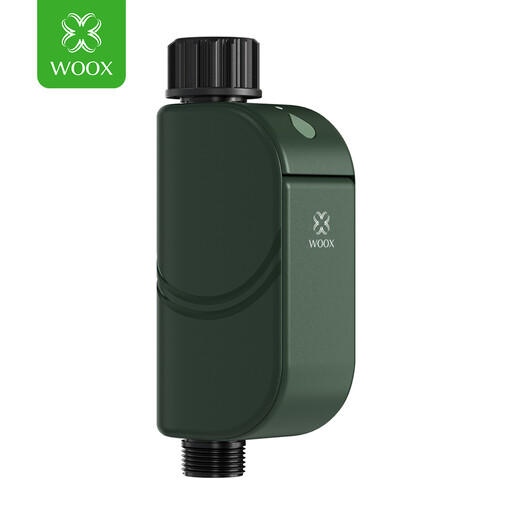
WOOX Smart Watering Timer R2603 Green
Why This Fits Their Persona: Ideal for users seeking seamless integration into their existing smart home. Control via Alexa or Google Assistant, along with the detailed WOOX app featuring up to 20 watering schedules, allows for precise and convenient automation of garden care.
This model bypasses the hub trap with a direct 2.4 GHz Wi-Fi 6 connection. There are no hidden costs for additional hardware, and the installation is straightforward.
Hub-free installation and comprehensive app control with weather integration and a rain delay function. The housing is protected against water jets with an IP65 rating.
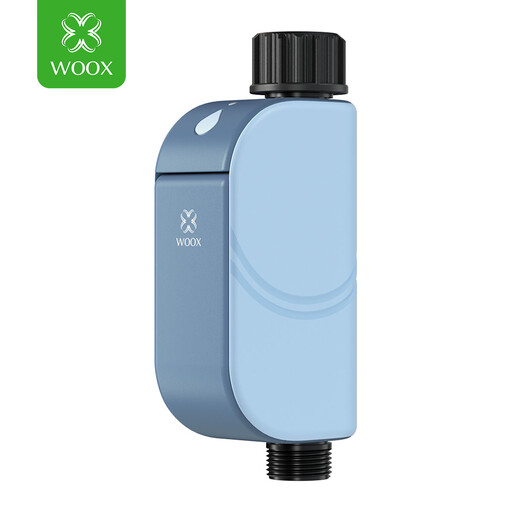
WOOX Smart Watering Timer R2604 Blue
Why This Fits Their Persona: For travelers who need an absolutely reliable solution for garden watering during their absence. The combination of long battery life, remote app access, and offline functionality provides maximum peace of mind.
It tackles the problem of unreliability. According to the manufacturer, its energy-efficient technology allows for a battery life of up to 2 years. Additionally, schedules are stored locally, so watering continues even if the Wi-Fi fails.
High operational reliability thanks to long battery life and offline schedule memory. The app also provides timely reminders for battery replacement.
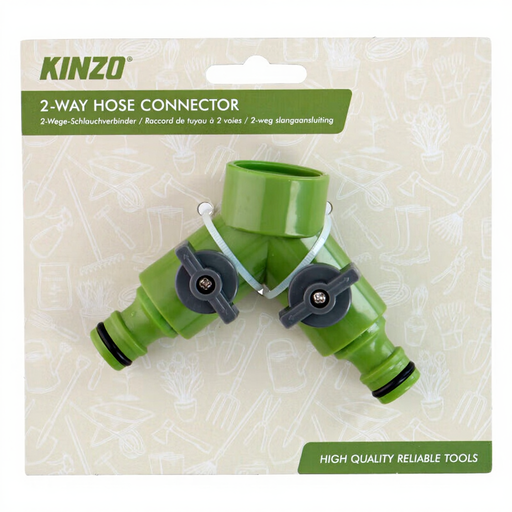
Kinzo 2-Way Hose Connector
Why This Fits Their Persona: A pragmatic add-on for anyone wanting to supply two separate garden areas with a single water timer, such as a lawn sprinkler and a drip hose for the vegetable patch.
This is a cost-effective mechanical solution to avoid purchasing a second, expensive smart valve when you simply need to split the water flow. It maximizes the utility of a single water timer.
Allows for the simultaneous supply of two hoses or watering systems. The valves are individually adjustable, permitting flexible control of water pressure for each zone.
Looking for more options?
We have compiled a complete, up-to-date list of products that fully meet these strict selection criteria and rigorous safety standards.
Frequently Asked Questions (FAQ)
Do Wi-Fi water timers work without an internet connection?
Yes, models with an offline function save the created watering schedules directly on the device. If the Wi-Fi or internet connection fails, the timer will continue to run its programmed cycles autonomously. However, remote control or schedule changes via the app will not be possible during this time.
How long do the batteries last in a smart water timer?
Battery life varies greatly depending on the model, frequency of use, and battery quality. Basic models may need new batteries every few months. Efficient devices that use a latching solenoid valve and low-power wireless technology can, according to manufacturers, run for up to two years on a single set of alkaline batteries.
Do I need a professional for installation?
No, most Wi-Fi water timers are designed for DIY installation. They typically screw directly onto a standard outdoor tap (G3/4-inch thread). Adapters for other thread sizes (e.g., G1/2-inch) are often included. The app setup and Wi-Fi connection process are also designed to be easily handled by the user.