
WiFi 7 Router Buyer’s Guide: How to Avoid Costly Mistakes
The introduction of WiFi 7 marks a significant leap forward in wireless networking technology. For users who rely on fast, stable connections for data-intensive tasks like 4K/8K streaming, online gaming, or working from home, the new standard promises substantial improvements. However, the market for WiFi 7 routers is filled with marketing promises that often create more confusion than clarity. Before you invest in new hardware, it's crucial to understand the common pitfalls to make an informed decision.
This guide will help you cut through the noise. We focus on the objective criteria that truly matter and show you which technical features are essential for future-proof performance.
The 2 Most Common Traps When Buying a Router
Manufacturers often advertise impressive numbers, but not all promoted features lead to a better network experience in practice. Here are two common marketing traps that can lead to costly mistakes:
- The Myth of Aggregated Peak Speed: Many routers are advertised with enormous speed ratings like "BE19000". However, this number is the sum of the theoretical maximum speeds of all frequency bands (2.4 GHz, 5 GHz, and 6 GHz). No single client device can use this combined speed. What's crucial is the actual data rate a single device can achieve and the stability of the connection.
- The WAN Port Bottleneck: A high-performance WiFi 7 router is only as fast as its slowest connection. Many models, even in the premium price range, only have a 1-Gigabit WAN port. With the increasing availability of fibre optic connections exceeding 1 Gbit/s, this port becomes the bottleneck that throttles your entire network's performance. A router with a 2.5G port is therefore indispensable for forward-thinking users.
What Really Matters: The Key Parameters
To objectively evaluate a router's performance, you should focus on a few critical technical specifications. These determine the actual speed, stability, and future-readiness of your home network.
1. Understanding Core WiFi 7 (802.11be) Technologies
The 802.11be standard, known as WiFi 7, introduces several key technologies that go beyond pure speed. For users, two are particularly relevant:
- Multi-Link Operation (MLO): This is one of the most important innovations. MLO allows a client device to simultaneously send and receive data across multiple frequency bands (e.g., 2.4 GHz and 5 GHz). The result is significantly lower latency and higher connection reliability. If one link drops momentarily, the other takes over seamlessly. This is a crucial advantage, especially for a WiFi 7 gaming router and for video conferencing.
- 4096-QAM (Quadrature Amplitude Modulation): Compared to 1024-QAM in WiFi 6, this technology can pack more data into the same amount of radio spectrum. Simply put, this increases the potential peak speed per data stream by up to 20%.
2. The Importance of the Processor, Memory, and Mesh Capability
A router's internal components are just as important as its Wi-Fi standard.
- Processor and RAM: A powerful multi-core processor and sufficient RAM (e.g., 1 GB) are crucial for managing many simultaneously connected devices, VPN connections, and data prioritisation (QoS) without performance degradation.
- Scalability with AiMesh: For larger apartments or houses, a stable mesh solution is essential. An AiMesh router allows you to connect multiple compatible ASUS routers into a single, seamless network. Unlike simple repeaters, your devices automatically switch to the strongest signal point without dropping the connection.
Picks for Every User Profile
Instead of making a blanket recommendation, we have selected models tailored to specific user profiles and their needs.
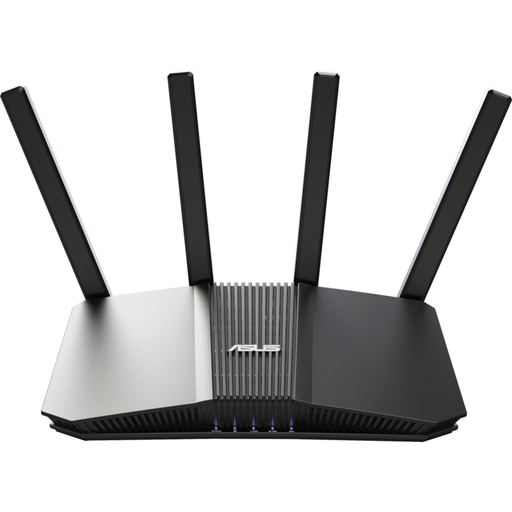
ASUS RT-BE58U WiFi 7 AiMesh Extendable Router
Why This Fits Their Persona: Ideal for users who want to prepare their home network for multi-gigabit internet and demanding applications like cloud gaming and 8K streaming. The hardware is designed for maximum performance and low latency.
It bypasses the bottleneck with a flexible 2.5G port that can be configured as either a WAN or LAN port. The advertised WiFi 7 benefits, like Multi-Link Operation, are practically implemented here, not just theoretical.
Powerful performance thanks to a quad-core processor and 1 GB of RAM. Future-proof with WiFi 7 and 2.5G connectivity. Seamlessly expandable as an AiMesh router.
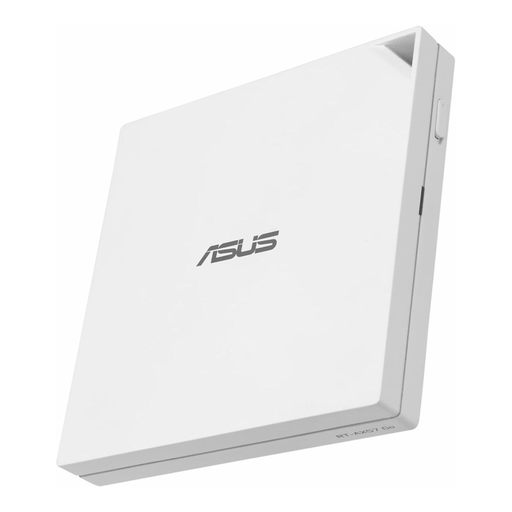
ASUS RT-AX57 GO Wireless Router WiFi 6
Why This Fits Their Persona: Perfect for people who need a secure, private internet connection on the go, whether in a hotel, at the airport, or at a client's site. Its compact design and flexible connection modes are built for mobility.
This device avoids reliance on insecure public Wi-Fi networks. Its Public Wi-Fi mode (WISP) creates a private, secure hotspot from a public connection, thereby protecting your own devices.
Tri-mode connectivity for maximum flexibility (4G/5G tethering, Public Wi-Fi, Router mode). Includes comprehensive VPN functions and free security features from AiProtection.
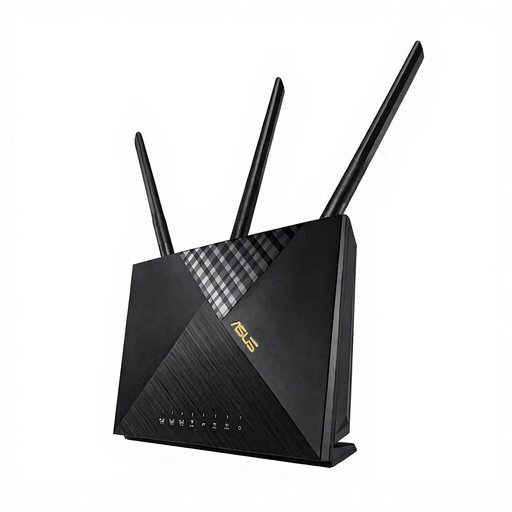
ASUS 4G-AX56 Wireless WiFi 6 Modem Router
Why This Fits Their Persona: An all-in-one solution for locations where fast DSL or fibre is unavailable, but good 4G LTE coverage exists. Ideal for rural areas, holiday homes, or as a fail-safe backup solution.
This device makes you independent of a slow fixed-line connection. Instead of connecting a high-end router to a weak internet source, it uses available mobile technology as its primary, high-speed link.
Integrated 4G LTE Cat. 6 modem for speeds up to 300 Mbps. It combines this with modern WiFi 6 for efficient signal distribution throughout the home. Simple setup with a Nano-SIM card.
Looking for more options?
We have compiled a complete, up-to-date list of products that fully meet these strict selection criteria and safety regulations.
Frequently Asked Questions (FAQ)
Is a WiFi 7 router already worth it in 2026? For tech-savvy users and those with high demands on their network, the investment is worthwhile. Even if not all of your client devices support WiFi 7 yet, you will benefit from the more powerful hardware of the new router generation. Features like a router with a 2.5G port, stronger processors, and more RAM improve the stability and speed of the entire network, making it future-proof for faster internet connections and upcoming devices.
Do I need new devices to benefit from a WiFi 7 router? To take full advantage of WiFi 7 features like Multi-Link Operation (MLO), compatible client devices (e.g., newer smartphones or laptops) are required. However, all WiFi 7 routers are fully backward compatible. Your existing devices with WiFi 6, 5, or 4 will connect without issue and can often achieve a more stable connection and better range thanks to the router's superior hardware.
What is the difference between an AiMesh router and a regular repeater? A conventional Wi-Fi repeater typically creates its own separate network. As you move through your home, your device must disconnect from the router and establish a new connection to the repeater, which can cause interruptions. An AiMesh router system, on the other hand, creates a single, seamless network with one unified name (SSID). Your client devices are intelligently handed off to the strongest signal point without any noticeable interruption, ensuring consistently stable coverage.