
Choosing the Right 11kW Home EV Charger
Acquiring your own charging station is a decisive step for any electric car owner. An 11kW wallbox is often considered the most sensible solution for home charging. However, the market is crowded and filled with technical jargon that can easily lead to costly missteps. Before you invest, it's crucial to understand the common pitfalls that can diminish the value of your new charging station or unexpectedly inflate the total cost.
As a Joybuy Product Recommendation Officer, I see it as my duty to provide you with objective, practical information. We will highlight the three most common mistakes when buying a home EV charging station and show you what really matters.
- The "Permit Required" Cost Trap: Many buyers are tempted to consider a 22kW wallbox to be future-proof. What's often overlooked is that while an 11kW wallbox only needs to be registered with the grid operator (a notification duty), a 22kW wallbox is subject to approval. The grid operator can refuse the connection if the local grid capacity is insufficient. Furthermore, most EVs can only charge at a maximum of 11 kW on the AC side anyway, meaning the premium price for a 22kW station offers no added value.
- Hidden Installation Costs from Missing Safety Features: The electrical installation is a significant cost factor. A wallbox must be protected against DC fault currents. If this protective function is not integrated into the wallbox, an expensive Type B RCD (costing around €300 or more) must be installed externally. In contrast, models with integrated DC fault current detection allow for the use of a much cheaper Type A RCD.
- Superfluous "Smart" Features: A wallbox with app control sounds modern, but not every app offers real value. Simple Bluetooth connections only work in close proximity, and poorly programmed apps lead to more frustration than convenience. Truly useful are Wi-Fi-enabled models with features like charge scheduling (for cheap off-peak electricity tariffs) or integration with a photovoltaic system.
Crucial Parameters for Your Selection
To make an informed decision, you should examine three core technical aspects. These determine not only the functionality but also the long-term cost-effectiveness of your charging station.
1. Charging Power and Connection Type
The standard solution for private use is the 11kW wallbox. It is connected to a three-phase power supply (400V, 16A) and provides enough power to fully charge an EV overnight. This is the ideal compromise between charging speed and a straightforward notification process with the grid operator. For flexibility, there are mobile chargers, also known as a mobile 11kW wallbox. These connect via a CEE 16A industrial plug and can be used on trips or at a friend's house, provided the appropriate socket is available.
2. Integrated Safety Components
Look for the note "integrated DC fault current detection" (often specified as DC 6mA). This feature is crucial for saving on installation costs. It makes the external Type B RCD obsolete and allows the use of a standard Type A RCD. All modern and safety-compliant charging stations should have protective mechanisms against overvoltage, overheating, and overload. A high IP protection rating (e.g., IP54 or IP65) also ensures safe outdoor operation.
3. Connectivity and Smart Charging
App control is useful when it offers genuine benefits. These include:
- Charge Scheduling: Automatically start the charging process during off-peak hours to reduce electricity costs.
- Power Adjustment: Manually reduce the charging power when other large appliances are active in the household.
- Dynamic Load Management: This advanced feature is relevant for households with multiple EVs or a photovoltaic system. A wallbox with load management measures the total power consumption of the house and dynamically adjusts the car's charging power. This prevents the main connection from ever being overloaded and makes optimal use of surplus solar power.
- Access Control: Using an app or RFID card, you can ensure that only authorized individuals can use the wallbox.
Why we chose these
Based on these objective criteria, we have identified several models suitable for different user groups.
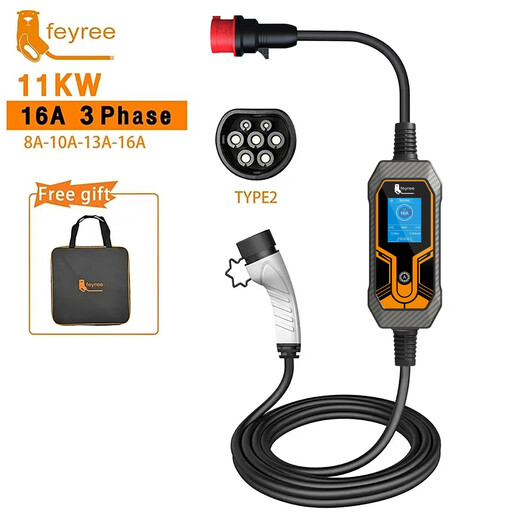
feyree 11KW 16A EV Portable Charger Type2 EVSE Charging Box
Why This Fits Their Persona: Ideal for users seeking a straightforward and portable charging solution. This portable CEE 16A charging cable requires no fixed installation and can be used at home with a three-phase socket or on the go. It focuses on the core function of safe charging.
Avoids investment in complex smart home integrations that aren't needed. The focus is on portability and a robust charging function with all necessary safety mechanisms.
High flexibility due to portable design; LCD display for monitoring charging data; comprehensive protection features (incl. overcurrent, overvoltage, overheat protection).
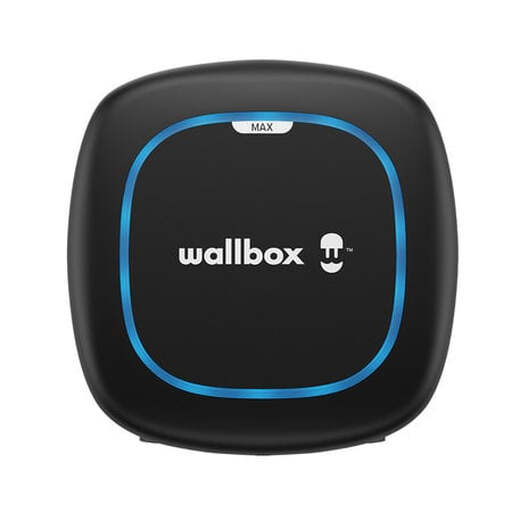
Wallbox Pulsar Max 11kW Type 2 EV Charger
Why This Fits Their Persona: Perfect for tech-savvy homeowners who want to optimise their charging sessions and integrate them into their smart home. The ability to connect to a PV system (Eco-Smart) and control it remotely via an app offers maximum convenience and cost-efficiency.
Offers a mature and functional smart system that delivers real value, rather than just a basic app connection. The integrated DC fault current detection (6mA) also reduces installation costs.
Eco-Smart function for solar surplus charging; Power Sharing Smart for load management with multiple charging stations; control via Wi-Fi and Bluetooth through the myWallbox app.
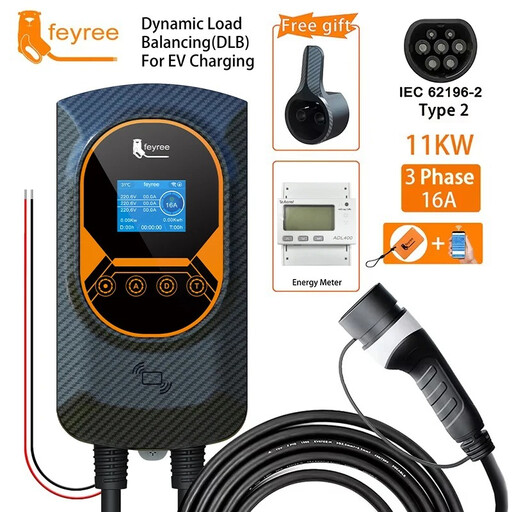
feyree EV Charger Type2 Cable 16A 11KW Dynamic Load Blancing EVSE Wallbox
Why This Fits Their Persona: The solution for homes where the main electrical connection is already heavily loaded. Dynamic Load Balancing (DLB) ensures the EV is only charged with the available residual power, without tripping the main fuse.
Proactively solves the problem of potential grid overload. Instead of a costly upgrade to the home's main connection, its intelligent control ensures safe and efficient operation within existing limits.
Dynamic Load Balancing (DLB) to prevent grid overload; control and monitoring via app; IP66 protection rating for high weather resistance.
Looking for more options?
We have compiled a complete, up-to-date list of products that fully meet these strict selection criteria and German safety regulations.
Frequently Asked Questions (FAQ)
Does an 11kW wallbox need to be registered in Germany?
Yes, according to § 19 of the German Low-Voltage Connection Ordinance (NAV), any charging equipment for electric vehicles with a power rating of more than 3.6 kVA (which applies to 11kW wallboxes) must be registered with the responsible grid operator before commissioning. This is usually a simple, informal process, often handled by the certified electrician performing the installation. Unlike 22kW stations, a permit is not required.
Which RCD is needed for an 11kW wallbox?
For personal protection, a Residual Current Device (RCD) is mandatory. The crucial question is whether the wallbox has integrated DC fault current detection.
- With integrated DC fault current detection (≥ 6 mA): In this case, a cost-effective Type A RCD is sufficient.
- Without integrated DC fault current detection: Here, an expensive Type B RCD, which reacts to both AC and DC fault currents, must be installed. Most modern wallboxes feature integrated detection, which significantly reduces installation costs.
Can I charge any EV with an 11kW wallbox?
As long as the electric vehicle has a Type 2 charging cable connection, which is standard for almost all models sold in Europe, it is compatible with an 11kW wallbox. However, the actual charging speed depends on the vehicle's on-board charger. A vehicle that can only charge single-phase at 7.4 kW will also only charge at a maximum of 7.4 kW (or often just 3.7 kW, as only one of the three phases is used) on an 11kW wallbox. A vehicle with an 11kW or 22kW on-board charger, on the other hand, can utilize the full power of the wallbox.