
Wall Mirror Buying Guide: Selecting Without Common Pitfalls
A well-chosen wall mirror can make a room feel brighter, larger, and more stylish. But the selection is vast, and not every model lives up to its product photos. Before you make a decision, it's helpful to know the most common pitfalls that can lead to disappointment and unnecessary expense.
As a Joybuy Product Recommendation Officer, I filter through the noise to provide you with the objective information you need to make an informed decision. This guide focuses on key criteria to help you separate the quality options from the rest.
Common Problems When Choosing a Wall Mirror:
- Distorted Reflections: A common issue with budget-friendly models is insufficient glass thickness. Glass that is too thin (under 3 mm) tends to bend easily, resulting in a wavy and distorted reflection. The effect is more like a funhouse mirror than a functional home accessory.
- Material Damage in Humid Environments: A stylish mirror with an MDF (Medium-Density Fibreboard) or untreated wood frame might look great in the living room. In the bathroom, however, high humidity will quickly lead to swollen, mouldy, or deteriorating frames. A classic purchasing mistake for any bathroom mirror.
- Unsafe or Unsuitable Mounting: A large wall mirror can be quite heavy. Many products come with inadequate mounting hardware or fittings that are unsuitable for certain wall types (e.g., drywall). This poses a safety risk and can lead to damage to both the wall and the mirror.
What Really Matters: The Key Parameters
To avoid these problems, you should check a few technical specifications before buying. These objective criteria are more crucial than any marketing promise.
1. Glass Quality and Mirror Thickness
The quality of the reflection depends directly on the glass. Look for a glass thickness of at least 4 mm. This provides greater stability and minimises the risk of distortion. High-quality crystal glass also offers a clearer, more colour-neutral reflection. A frameless mirror particularly benefits from thicker glass, as the frame provides no stabilising function. The edges should be cleanly ground and polished (a bevelled edge) to minimise the risk of injury and create an elegant look.
2. Frame Material and Style
The frame determines not only the look but also the mirror's durability.
- Metal Frames: A black wall mirror with a powder-coated steel or aluminium frame is an excellent match for industrial or modern interior styles. A gold wall mirror made of metal adds glamorous accents. Metal is robust and, with the right coating, is also suitable for humid environments.
- Wood and Bamboo Frames: These materials lend a warm, natural atmosphere to a room and pair well with Scandinavian or Boho styles. For bathroom use, the wood should be specially sealed or treated to protect it from moisture. Bamboo is naturally more resistant to humidity than many other types of wood.
- Frameless Mirrors: A modern mirror with a minimalist aesthetic. It blends seamlessly into any setting and makes small rooms appear larger. Here, the quality of the edge finishing is crucial.
3. Functional Features: Lighting and Other Extras
A mirror with lighting is more than just a decorative mirror. It offers practical utility, especially in the bathroom or at a vanity table.
- LED Mirrors: These models provide energy-efficient and even illumination. Pay attention to the colour temperature (Kelvin). Warm white light (approx. 3000 K) creates a cosy atmosphere, while neutral white or daylight white light (4000–6500 K) is ideal for applying makeup.
- Additional Functions: A modern bathroom mirror can feature an anti-fog function (a heating pad on the back), an integrated magnifying mirror, a digital clock, or even Bluetooth speakers. A dedicated vanity mirror with light often offers exceptionally high light quality and dimmability.
Selections for Various Requirements
Here are some recommendations tailored to different user profiles and requirements.
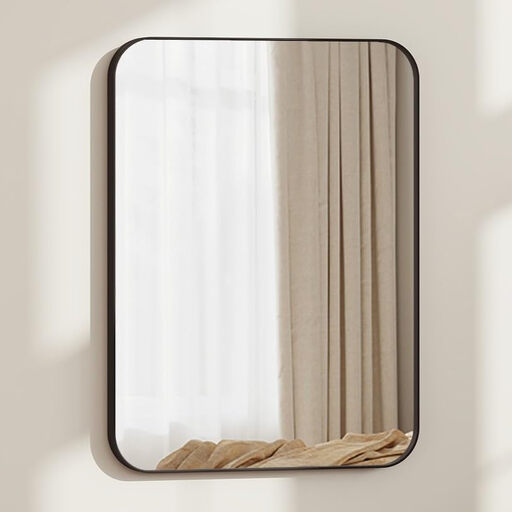
Woltu Wall Mirror with Metal Frame & Rounded Corners
Why This Fits Their Persona: Ideal for those seeking a simple yet high-quality design for the hallway, bedroom, or guest bathroom. The timeless rectangular shape with its black metal frame blends unobtrusively into existing decor and serves its purpose without any superfluous details.
According to the manufacturer, it uses 4 mm thick mirror glass, which minimises the risk of distortion. The metal frame is more resistant to moisture than unsealed MDF frames.
Flexible mounting options (horizontal and vertical). The rounded corners and slim frame create a modern and elegant look.
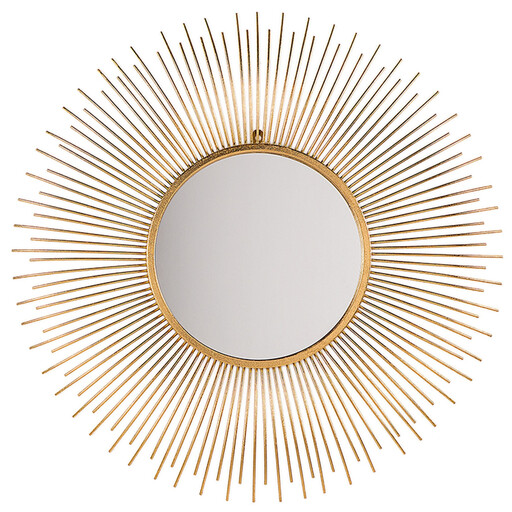
Beliani Metal Wall Mirror ? 80 cm Gold CILLY
Why This Fits Their Persona: For anyone who sees a mirror not just as a utility item, but as a central piece of art. With its large diameter and striking sunburst design, this decorative mirror becomes a focal point in the living room, dining area, or as a statement hallway mirror.
The frame is made of sturdy iron, which ensures stability. The product information specifies a weight of 4 kg, allowing for deliberate planning of the wall installation and addressing the safety risk.
The extravagant design makes the mirror a statement piece. The golden hue reflects light, giving the room a warm, luxurious feel.
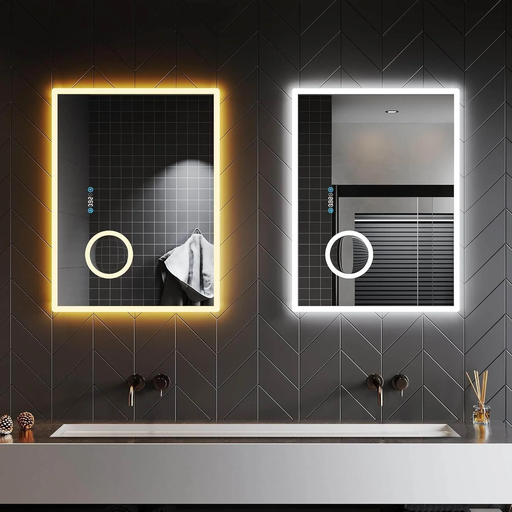
SONNI Bathroom Mirror with Lighting & Anti-Fog
Why This Fits Their Persona: Perfect for users who value comfort and modern technology in the bathroom. This mirror combines lighting, an anti-fog function, a clock, and magnification in one device, solving several everyday problems at once.
This model is explicitly designed as a bathroom mirror. The aluminium profile frame is moisture-resistant. The anti-fog function is a direct technical solution to a typical bathroom problem.
Multifunctionality: Adjustable light colour (cool, neutral, and warm white), touch switch, integrated clock, temperature display, and a 3x magnification area.
Looking for More Options?
We have compiled a comprehensive, up-to-date list of products that fully meet these strict selection criteria and safety standards.
Frequently Asked Questions (FAQ)
1. How high should a wall mirror be hung? As a general rule, the centre of the mirror should be at eye level for the average person in the household, which is about 1.60 m to 1.70 m (5'3" to 5'7") from the floor. If the mirror hangs above a piece of furniture like a dresser or sofa, there should be a gap of 15 to 20 cm (6 to 8 inches) between the top of the furniture and the bottom of the mirror. A hallway mirror should be positioned to show at least the entire upper body.
2. What is the most suitable material for a bathroom mirror? For bathroom use, materials that are impervious to moisture are essential. These include aluminium, stainless steel, plastic, and specially sealed or lacquered wood. A frameless mirror is also a great choice, as there is no frame material that can swell. Untreated wood or basic MDF boards are unsuitable for humid environments.
3. Does an LED mirror require a special power connection? Yes, most models with integrated lighting, anti-fog functions, or other electrical components require a direct connection to the mains electricity (e.g., 230V in Europe, 120V in North America). For a safe installation, especially in a bathroom, it is recommended to have the connection done by a qualified electrician to comply with all applicable regulations for wet areas (e.g., IP ratings and zones).