
Vanity Unit Buying Guide: How to Avoid Costly Mistakes
A vanity unit is a functional addition to any bathroom. It not only creates valuable storage space in the bathroom for towels, cleaning supplies, and cosmetics but also conceals unsightly water pipes and the P-trap. However, the selection can be overwhelming, and not every model delivers on its promise. Before you make a decision, it's important to know the most common pitfalls to find a durable and suitable solution.
The 3 Most Common Mistakes When Buying a Vanity Unit
Many buyers focus solely on design, overlooking crucial technical details. This often leads to disappointment when the new cabinet doesn't fit, quickly swells up, or is unstable.
- Ignoring Dimensions and an Improper P-Trap Cutout: The most common mistake is buying a cabinet whose P-trap cutout doesn't match the existing plumbing. A standard cutout is not universal. If it's too small, too large, or in the wrong place, the cabinet cannot be pushed flush against the wall and under the sink.
- Wrong Choice of Material for Humid Environments: The bathroom is the most humid room in the house. A bathroom cabinet made of inadequately sealed material, like basic particle board, can swell within a few months due to water vapour and splashes. The edges are particularly vulnerable here.
- Unstable Construction: Inexpensively produced models often skimp on material thickness, especially the back panel. A thin, flimsy back panel doesn't provide sufficient stability, causing the cabinet to wobble and the doors to misalign after a short time.
What to Look For Before You Buy: The Key Parameters
To avoid these problems, you should check three essential aspects. These will help you identify a functional and durable vanity unit.
1. Dimensions and P-Trap Cutout Compatibility
Precise measurement is essential. Note down the following dimensions before you start your search:
- Available width: The distance between the wall, toilet, or other sanitary fixtures.
- Available height: The distance from the floor to the bottom edge of the sink.
- Available depth: The distance from the wall to the front edge of the sink, minus some clearance.
- Position of the P-trap: Measure the distance from the wall to the centre of the drain pipe, as well as the pipe's diameter.
Compare these measurements exactly with the product data for the cabinet. A good bathroom unit with a P-trap cutout either offers a sufficiently large recess or states that it can be adjusted if necessary.
2. Material and Surface Sealing
The choice of material directly affects the cabinet's durability and maintenance.
- MDF (Medium-Density Fibreboard): A popular and cost-effective choice. The quality of the surface coating is crucial here. A lacquer or melamine resin coating must be seamless and cleanly applied to all edges to prevent moisture from seeping in. A classic white bathroom cabinet is often made of lacquered MDF.
- Bamboo: This material is naturally more resistant to moisture than many other types of wood. A bamboo vanity unit or an under-sink wooden cabinet made of bamboo brings a warm, natural look to the bathroom and is a durable option. Ensure the surface is additionally sealed to maximise protection.
- Particle Board: The most budget-friendly option. Here, a high-quality and complete seal with melamine resin is an absolute must. Check the edge finishing with particular care.
3. Storage Design and Stability
Consider what you want to store. Models with doors effectively hide clutter, while open shelves provide quick access to daily-use items. Drawers are ideal for smaller utensils. Look for a sturdy back panel and check the specified maximum load capacity of the shelves, especially if you plan to store heavy bottles of cleaning supplies.
Recommended Picks for Every Need
Here are some models tailored to different needs and bathroom situations.
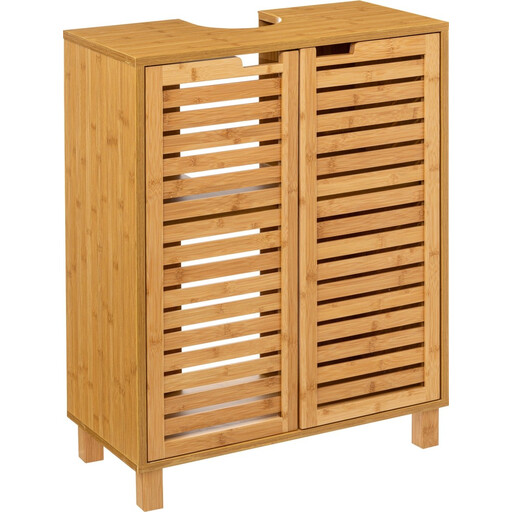
5five Sicela Bamboo Vanity Unit - Laminated Bamboo, MDF
Why This Fits Their Persona: Ideal for those who want to create a modern and warm atmosphere in their bathroom. The combination of bamboo doors and a sturdy frame perfectly complements a nature-inspired interior design style.
Bamboo is naturally suited for humid environments and is more resistant to swelling than unprotected particle board. The product description confirms its suitability for damp conditions.
The combination of laminated bamboo and MDF provides an attractive look and a stable construction. The P-trap cutout is designed for standard drains.
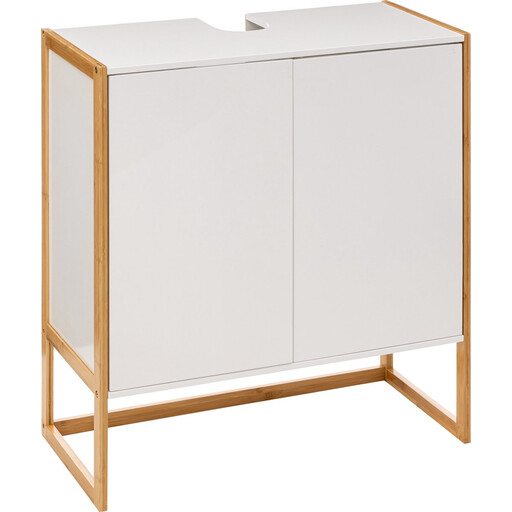
5five MDF Vanity Unit - White
Why This Fits Their Persona: Perfect for users looking for a functional, straightforward, and budget-friendly solution. The simple white design blends seamlessly into most existing bathroom decors.
The durable MDF construction is designed for daily use in the bathroom. The strategically placed cutout is designed for easy installation under common sinks.
Offers ample closed storage behind two doors to keep things tidy. The clean, white look with a wood-effect frame gives the cabinet a timeless touch.
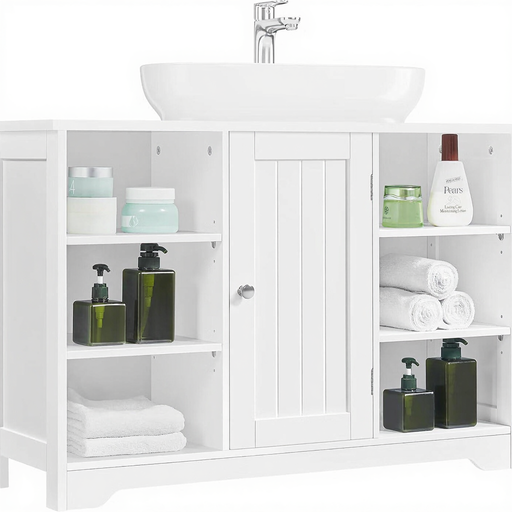
Yaheetech Bathroom Cabinet Vanity Unit with Open Shelves & Adjustable Shelves
Why This Fits Their Persona: With a width of 90 cm, this model is ideal for larger bathrooms and families who need maximum storage space. The combination of open and closed compartments helps to keep everything organised.
The water-repellent coated surface of the FSC-certified MDF boards protects against moisture. Adjustable shelves allow for flexible adaptation to different sinks and drains.
The generous 90 cm width and clever adjustable shelves offer exceptionally large and flexible storage space. The open shelves are practical for quick access.
Looking for more options?
We have compiled a complete, up-to-date list of products that meet these strict selection criteria and quality standards.
Frequently Asked Questions (FAQ)
1. How do I measure correctly for a vanity unit?
Measure the maximum width, height (from the floor to the bottom edge of the ceramic basin), and depth of the available space. Additionally, measure the distance from the wall to the centre of the P-trap pipe and its diameter. Compare these measurements with the product's diagram or technical specifications, especially the dimensions of the P-trap cutout.
2. Can I use a vanity unit with a wall-mounted sink?
Yes, this is usually possible. A standard vanity unit is designed for pedestal sinks but will also fit under most wall-mounted sinks. It is important that the height of the cabinet is lower than the mounting height of the sink and that the P-trap cutout matches the position of the drain pipe.
3. How do I properly care for an MDF or wood bathroom cabinet?
Always wipe away water spots and splashes immediately with a soft, dry cloth to prevent moisture from penetrating joints or edges. Use mild, non-abrasive cleaners for cleaning. Ventilate the bathroom regularly to reduce overall humidity and extend the life of your bathroom furniture.