
A Guide to Buying Vacuum Sealers
A vacuum sealer promises to keep food fresh longer, intensify flavours, and effectively prevent freezer burn. However, when it comes to buying one, many shoppers face a confusing array of choices and marketing promises that often don't hold up in practice. Before you buy a vacuum sealer, it's important to know the common pitfalls that can lead to a bad purchase.
Many devices entice with high performance claims but disappoint when it comes to crucial reliability. The most common problems include:
- Inadequate Seals: A seal that is too thin or uneven is the most frequent cause of leaks. If air gets into the bag, the entire purpose of vacuum sealing is defeated—food spoils faster and freezer burn still occurs.
- Misleading Performance Specs: A high suction rate in litres per minute sounds impressive, but it's useless if the resulting vacuum pressure (in bar) is too low. A weak vacuum doesn't remove enough oxygen, which only marginally extends shelf life.
- Lock-in to Expensive Speciality Bags: Some manufacturers design their devices to work only with their own branded, often overpriced, sealer bags. This leads to high running costs and severely limits your flexibility.
What Really Matters: The Decisive Features of a Vacuum Sealer
To make an informed decision, you should focus on the technical parameters that determine the functionality and longevity of a vacuum sealer.
Suction Power vs. Vacuum Pressure: What Counts More?
Suction power, specified in litres per minute (l/min), only describes the speed at which air is removed from the bag. Far more crucial for preservation is the maximum vacuum pressure, measured in bar. A good value for home use is around -0.8 bar. This level ensures that about 90% of the air is removed, which significantly slows the growth of microorganisms. For delicate foods like berries or pastries, an adjustable vacuum strength (often called a "Pulse" function or available in levels) is an important feature to prevent them from being crushed.
The Seal: The Critical Factor Against Freezer Burn
The quality of the seal is the be-all and end-all. A good vacuum sealer should create an extra-wide and durable seal. Some models even offer a double seal for added security. This is especially important if you are vacuum sealing foods with residual moisture or plan to use the bags for sous vide cooking. A stable seam prevents liquid from entering or escaping during the cooking process in a water bath.
The Choice of Bags: A Cost Trap or Freedom of Choice?
Ensure that the device is compatible with standard, textured vacuum sealer rolls and bags. These bags have a ribbed or embossed inner structure that allows the machine to completely suck out the air. Devices that can only process smooth bags (so-called chamber vacuum sealers) are mostly found in the professional sector and are significantly more expensive. The freedom to use bags from various manufacturers up to a certain width (e.g., 30 cm) considerably lowers operating costs. A vacuum sealer kit that already includes a selection of bags is a practical bonus to get you started.
The Right Vacuum Sealer for Different Needs
The choice of the right device depends heavily on your individual use case. We have selected a model that offers a good balance for the average household and describe what specific user groups should look out for.
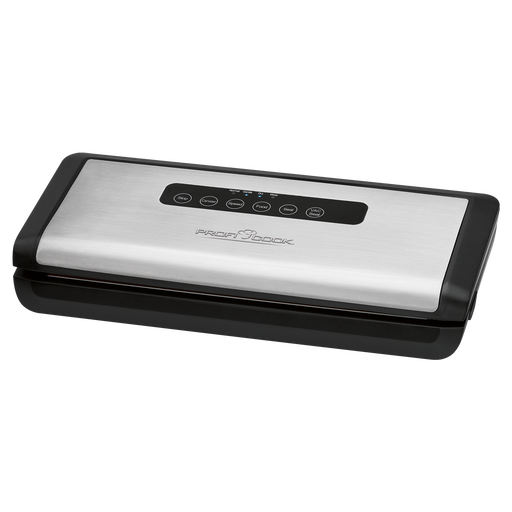
ProfiCook Vacuum Sealer incl. 18 bags, Sous Vide and Vacuum Cooking, PC-VK 1146
Why This Fits Their Persona: This device is ideal for households looking to reduce food waste, portion bulk purchases, and get started with sous vide. It offers solid performance for everyday use.
With an extra-wide seal and a vacuum of approx. -0.8 bar, this ProfiCook vacuum sealer addresses the main problems of weak seals and insufficient air removal. It is also compatible with standard bags up to 30 cm wide, avoiding the cost trap of proprietary bags.
The 4-stage electronic vacuum regulation allows for processing delicate foods. The suction power of 12 l/min ensures a quick workflow. A starter set with 18 bags is included.
For Sous Vide Enthusiasts
Anyone who regularly uses the sous vide method needs absolute process reliability. A sous vide vacuum sealer for this purpose should have a manual pulse function to precisely control the vacuum level for marinated meat or fish and to prevent liquid from being sucked into the device. A double seal is almost mandatory here to guarantee the bags remain airtight even during long cooking times in the water bath.
For Bulk Users and Self-Sufficient Gardeners
Hunters, anglers, or owners of large gardens who process seasonal harvests or large quantities of meat have different requirements. Here, a professional-grade vacuum sealer with a robust housing, a powerful motor, and a high duty cycle is needed. Such devices can perform many sealing operations in a row without overheating. A double seal and an integrated cutter for bag rolls are also very useful features here to speed up the workflow.
A vacuum sealer doesn't just help with savoury items. Even delicate baked goods, like a fresh cake, can stay moist longer with careful vacuuming (without full pressure). If you're looking for the perfect cake for your next coffee get-together, we have a selection for that too.
Looking for More Options?
We have compiled a complete, real-time list of products that fully satisfy these strict selection criteria and UK safety regulations.
Frequently Asked Questions (FAQ)
1. How much longer does food really last with vacuum sealing? By removing oxygen, the shelf life is significantly extended. In the refrigerator, the freshness of meat or cheese can be extended from a few days to several weeks. In the freezer, shelf life is extended from months to years, and most importantly: vacuum sealing effectively prevents freezer burn, which preserves quality and taste. The exact duration depends on the specific food item.
2. Can you vacuum seal liquids like soups or sauces? With conventional external vacuum sealers, directly sealing pure liquids is difficult because the liquid can be sucked into the vacuum pump. A trick is to pre-freeze the liquid in a bag or container and then vacuum seal it in its solid state. Some devices have a special function for moist foods or a removable drip tray that collects small amounts of liquid.
3. Which bags are suitable for my vacuum sealer? For most standard vacuum sealers (external sealers), you need special vacuum sealer bags with a textured or ribbed inner side. This structure creates channels through which the air can escape. Smooth bags do not work with these devices. Pay attention to the maximum bag width your machine can handle—widths up to 30 cm are common.