
USB-C to USB-C Cable 100W: 2026 Buyer's Guide and Recommendations
The introduction of the USB-C standard has unified connectivity for electronic devices. However, not all USB-C cables are created equal. Choosing the right cable is especially crucial for powering high-performance devices like laptops, tablets, or high-end smartphones. A 100W USB-C to USB-C cable is designed for these use cases, unlocking the full potential of Power Delivery technology. This guide breaks down the technical parameters to consider when selecting such a cable.
Buyer's Guide: What to Look For in a 100W USB-C Cable
The performance of a USB-C cable is determined by several technical specifications. An informed decision is based on an analysis of charging power, data transfer rate, material quality, and cable length.
1. Charging Power and Power Delivery (PD)
The "100W" rating refers to the maximum charging power the cable can transfer. This is made possible by the USB Power Delivery (PD) standard, which specifies a voltage of 20 volts at a current of 5 amps (20V/5A). For a cable to handle this power safely, it must be equipped with an E-Marker (Electronic Marker) chip. This chip communicates with the charger and the device to negotiate the correct voltage and current, preventing overload. A cable without an E-Marker chip is typically limited to 60W (20V/3A).
2. Data Transfer Speed
A USB-C data cable can support various speeds. The specifications are key here:
- USB 2.0: Offers a data rate of up to 480 Mbps. This is sufficient for charging and basic data syncing, but slow for large files.
- USB 3.2 Gen 2: Enables speeds of up to 10 Gbps. Suitable for fast transfers of large files and driving 4K displays at 30 Hz.
- USB 3.2 Gen 2x2 / USB4: Reaches up to 20 Gbps or 40 Gbps. These cables are designed for professional users who regularly transfer very large files (e.g., 4K video footage) or run high-resolution monitors at high refresh rates.
3. Material and Durability
The physical construction of the cable affects its lifespan. A braided USB-C cable, typically made of nylon, offers superior abrasion resistance and resilience against kinks compared to standard cables with TPE or PVC jackets. Reinforced connector housings and robust strain relief at the connector-to-cable transition points are further indicators of a durable design.
4. Cable Length
The length of the cable is a practical factor. Shorter cables (approx. 1 m) are portable and create less cable clutter. Longer cables, like a 2m USB-C cable, offer more flexibility when the power outlet is far from your device. With certified 100W cables, a length of up to 2 metres has no noticeable impact on charging performance in practice.
Our Top Picks for 2026
Based on an analysis of technical specifications, we present three models that cater to different user profiles.
Baseus Fast Charging Cable Crystal Shine USB-C to USB-C 100W, 1.5 m
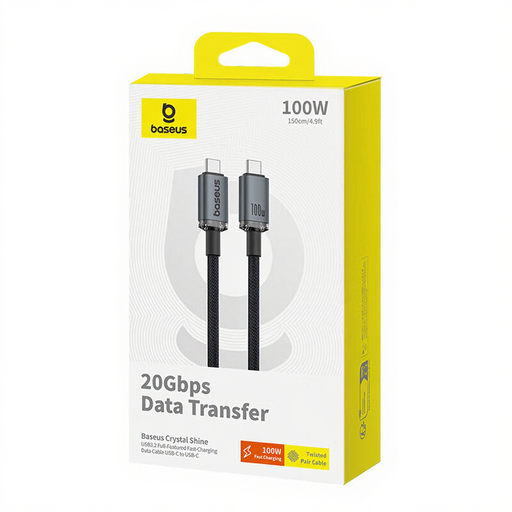
Why We Recommend This Product The Baseus Crystal Shine cable combines high 100W charging power with an exceptional data transfer rate of 20 Gbps (USB 3.2 Gen2x2). It also supports 4K video signal transmission at 60 Hz. The nylon fabric jacket and reinforced connectors contribute to its long-term durability.
Pros
- Charging Power: 100W Power Delivery
- Data Rate: 20 Gbps
- Video Output: Supports 4K at 60 Hz
- Material: Braided nylon jacket
Who It's For This cable is designed for power users and creative professionals who need a single cable for fast charging, ultra-fast data transfers, and connecting to high-resolution monitors. It's an excellent choice as a USB-C cable for MacBook Pro or other laptops used for video editing.
ACEFAST 100W USB-C to USB-C Charging Cable - 2M
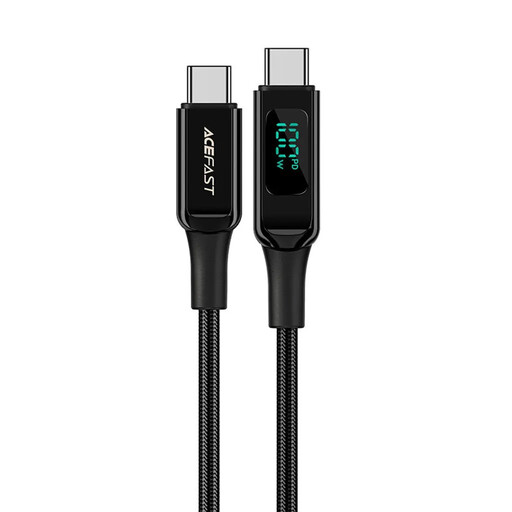
Why We Recommend This Product The ACEFAST cable focuses on the core function of a high-performance charging cable. At 2 metres long, it offers maximum flexibility at the office or at home. A standout feature is the display integrated into the connector, which shows the current charging power in watts. Data transfer is limited to USB 2.0 (480 Mbps), which is sufficient for its primary purpose as a USB-C fast-charging cable.
Pros
- Charging Power: 100W Power Delivery
- Special Feature: Integrated power-wattage display
- Length: 2 metres for high flexibility
- Material: Durable nylon braid
Who It's For Users looking for a long and durable USB-C laptop charging cable who want to technically monitor the charging process. Its long reach makes it ideal for permanent desk setups.
Samsung EP-DX510 USB Type-C to USB Type-C Data and Charging Cable 1.8m
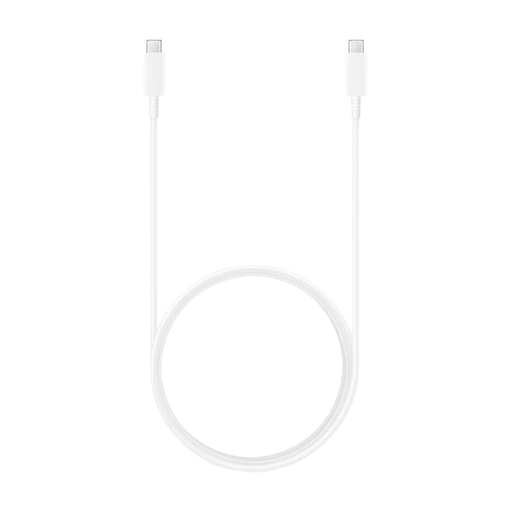
Why We Recommend This Product The Samsung EP-DX510 is a cable designed for reliability and compatibility. It supports a charging power of up to 100W (20V/5A) and, at 1.8 metres, is long enough for most use cases. As a product from a major manufacturer, it offers a high degree of confidence in its compliance with specifications. Data transfer is handled via USB 2.0.
Pros
- Charging Power: Up to 100W (5A)
- Length: Practical 1.8 metres
- Compatibility: High reliability with a wide range of devices
- Build: Flexible and robust design
Who It's For Users who need a reliable 100W USB-C charging cable for daily use and value compatibility with devices from various brands like Samsung, Apple, or Google. It is a solid choice for charging laptops, tablets, and smartphones.
More Options and Alternatives
If these recommendations don't include the perfect model for your specific needs, you can find a wider selection of cables with different lengths, materials, and specifications in our main USB-to-USB Cables category.
Frequently Asked Questions (FAQ)
1. Can I use any 100W USB-C cable for my MacBook? Yes, provided your MacBook model and the power adapter you are using support charging up to 100W via USB-C Power Delivery. The cable acts as the link and must be able to transfer the power safely, which is the case with certified 100W cables.
2. What is the technical difference between a 100W cable and a standard USB-C cable? The main difference is internal. A 100W cable contains an E-Marker chip that communicates with the charger and the end device to unlock the high 5-amp power level. Additionally, the power-carrying wires inside the cable are thicker to handle the higher current without overheating. Standard cables without an E-Marker are limited to 60W (3 amps).