
USB-C Headphones Buyer's Guide and Recommendations
As your Joybuy Product Recommendation Officer, I'm here to help you separate fact from marketing fiction. The search for the right USB-C headphones can be a complex task, as the market is saturated with models that don't always deliver on their promises. Many users of modern smartphones and laptops without a traditional 3.5mm jack face the challenge of finding a reliable audio solution. This guide will show you what to look for to avoid making a bad purchase.
The 3 Most Common Pitfalls When Buying USB-C Headphones
Before you make a decision, you should be aware of the typical problems that arise with low-quality or incompatible models.
- False Compatibility Claims: Not all USB-C ports are created equal. Some ports on devices are designed exclusively for charging or data transfer and do not support audio output. Headphones advertised as universally compatible may not work with your specific device, leading to frustration and an unnecessary return.
- Poor-Quality Integrated DAC: Every pair of headphones with a USB-C connector requires its own Digital-to-Analogue Converter (DAC), as the audio signal is transmitted digitally through the port. Budget models often skimp on this component, resulting in flat, tinny sound or an audible background hiss. The sound quality lives and dies by the quality of this integrated chip.
- Missing Basic Features: Many buyers assume that a modern USB-C headset comes standard with a microphone and an in-line remote. However, especially with budget-friendly models, these features are often missing. The result is a pair of headphones that can play music but isn't suitable for phone calls or quick playback control.
What Really Matters: Key Parameters for Your Selection
To avoid the problems mentioned above, focus on the following technical specifications. These objective criteria will help you identify a durable and functional product.
1. Audio Specifications: DAC and Drivers
A high-quality Digital-to-Analogue Converter (DAC) is crucial for clear, detailed sound. Look for details like Hi-Res Audio certification or specifications such as 24-bit/96-kHz playback. These indicate a powerful DAC. The driver size, measured in millimetres (mm), also influences the sound profile. Larger drivers (e.g., 33mm in on-ear models) can often produce a richer bass, while with USB-C in-ear headphones, even smaller, precisely tuned drivers can deliver excellent sound.
2. Functionality: Microphone and Remote
If you plan to use your headphones for more than just listening to music, USB-C headphones with a microphone are essential. Check the product description carefully for the presence of an integrated microphone and an in-line remote. A 3-button remote typically allows you to control volume, playback (play/pause, next/previous track), and calls (answer/end).
3. Build and Materials
The choice between in-ear, on-ear, or over-ear models depends on your personal comfort and use case. Wired USB-C headphones should also feature a durable, tangle-free cable, often designed as a flat cable. This significantly increases longevity and everyday convenience. For commuters, a foldable design for easy storage can also be an important criterion.
Tailored Recommendations for Your Needs
Here are some models tailored to specific needs that meet the quality criteria mentioned.
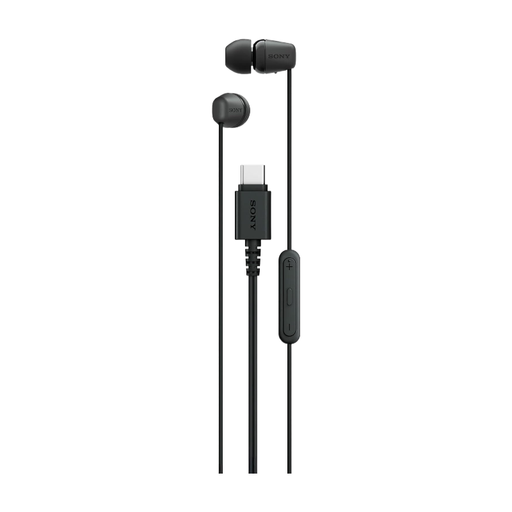
Sony IER-EX15C USB-C Wired Earbuds (Black)
Why This Fits Their Persona: Ideal for the daily commute to work or university. These in-ear headphones are lightweight, discreet, and offer good passive noise isolation on public transport thanks to various ear tip sizes. The plug-and-play functionality makes them extremely user-friendly.
This model features an in-line remote and microphone, thus avoiding the pitfall of missing basic features. The tangle-free cable also addresses a common annoyance with wired models.
Advantage: Reliable, battery-free plug-and-play solution. Pros: In-line remote with microphone for calls and music control; multiple ear tips for a custom fit.
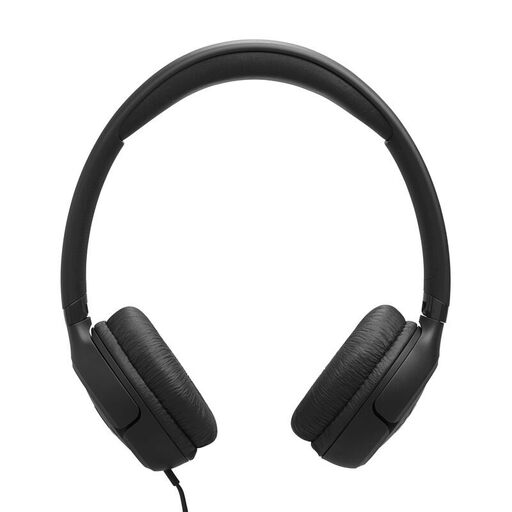
JBL Tune 530C USB-C, On-ear Wired Headphones, Black
Why This Fits Their Persona: For users who prioritise high-quality sound. The on-ear design is comfortable even during extended listening sessions, and the Hi-Res Audio certification promises a detailed audio experience that is a cut above the standard.
This model bypasses the poor-quality DAC pitfall with its Hi-Res Audio certification (up to 24-bit/96-kHz). This ensures the digital audio signal is converted at high fidelity, resulting in clear and precise sound.
Advantage: Superior sound quality for wired USB-C headphones. Pros: Three selectable EQ modes (Standard, Bass, Vocal) to customise the sound; foldable design and flat cable for easy transport.
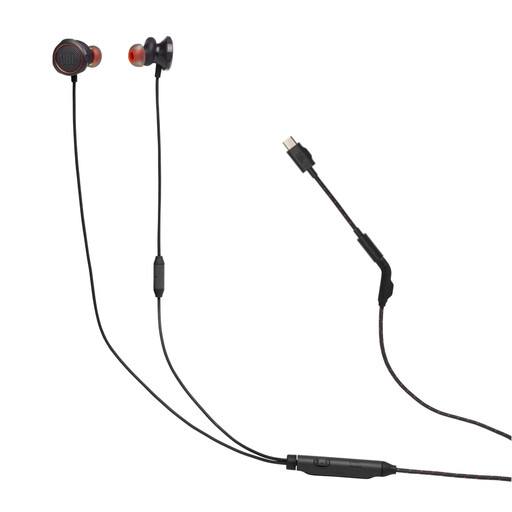
JBL QUANTUM 50, Wired In-Ear Gaming Earphones with USB-C Dongle
Why This Fits Their Persona: Designed for gamers who need clear communication and immersive sound. The microphone is optimised for voice capture and is separate from the other controls, improving in-game clarity.
This model addresses the compatibility issue with its cross-platform functionality (PC, consoles, mobile devices with USB-C). Furthermore, the microphone is specifically designed for clear voice transmission, not just an afterthought.
Advantage: Optimised for gaming communication. Pros: Ergonomic TwistLock technology for a secure fit during long sessions; voice-focused in-line microphone; JBL QuantumSOUND Signature for immersive game audio.
Looking for More Options?
We've compiled a complete, real-time updated list of products that fully meet these strict selection criteria and quality standards.
Frequently Asked Questions (FAQ)
1. Will any USB-C headphones work with any device that has a USB-C port?
No, not necessarily. Compatibility depends on whether the source device's USB-C port (e.g., smartphone, laptop) supports "Audio Accessory Mode" or USB Audio. While this is the case for most modern devices, there are exceptions. It's advisable to check your device's specifications or choose headphones from established brands that ensure broad compatibility.
2. Do wired USB-C headphones need a battery?
No. One of the main advantages of wired USB-C headphones is that they draw their power directly from the connected device. This means they don't need to be charged and are always ready to use, as long as your smartphone or laptop has battery power.
3. Is the sound quality of Type-C headphones better than that of a 3.5mm jack?
The potential for sound quality is higher. Because the audio signal is sent digitally to the headphones, the quality of the DAC built into the headphones is what matters, not the one in the smartphone. Therefore, high-quality Type-C headphones can offer better audio performance than the standard headphone jack on many older devices, as they allow you to bypass a potentially inferior internal DAC.