
Choosing the Right USB-C Charger: A Buyer's Guide
The search for the right USB-C charger can quickly become overwhelming. Manufacturers advertise high wattages and numerous ports, but not every power adapter delivers on its promise. Many users invest in a supposed fast charger, only to find their smartphone or MacBook still charges slowly. As your Joybuy Product Recommendation Officer, I'm here to help you identify the common pitfalls and make an informed decision.
The 3 Most Common Pitfalls When Buying a USB-C Power Adapter
Before you spend any money, you should be aware of the most common marketing traps that often lead to disappointment.
- The "Total Output" Trick: Many multi-port USB chargers advertise a high total output, such as 65 watts. This gives the impression that you can charge a laptop at 65W. In practice, however, this power is split among all connected devices. If you plug in a smartphone at the same time, the charging power for the laptop often drops drastically to 45W or less. The actual power distribution per port is what matters, not the advertised total output.
- Lack of Protocol Compatibility: A 45W Power Delivery adapter is not automatically compatible with every device that requires 45 watts. Modern devices, especially from Samsung, often require specific protocols like PPS (Programmable Power Supply) for optimal charging speeds. If this protocol is missing, the device will only charge at a reduced speed, even though the charger theoretically has enough power.
- Poor Safety and Overheating: Particularly cheap, uncertified charging adapters can be a safety hazard. They are prone to overheating and often lack necessary protection mechanisms against overvoltage or short circuits. A CE mark is the absolute minimum to ensure compliance with European safety standards.
What Really Matters: The Core Parameters Explained
To avoid these pitfalls, focus on three objective criteria that determine the quality and suitability of a USB-C charger.
1. Power (Watts) and Power Delivery (PD)
The required wattage depends directly on your device. A simple rule of thumb:
- Smartphones (e.g., iPhone, Samsung Galaxy): A 20W charger or 30W charger with Power Delivery (PD) is generally sufficient for fast charging.
- Tablets and small laptops (e.g., iPad, MacBook Air): A 45W power adapter or a 65W charger is a good choice here.
- High-performance laptops (e.g., MacBook Pro): These often require 65 watts or more. Check your device's manufacturer specifications.
Power Delivery (PD) is the universal fast-charging standard for the USB-C port. Ensure the charger explicitly supports this standard to achieve maximum charging speed for most modern devices.
2. GaN Technology for Compactness and Efficiency
A GaN charger uses gallium nitride instead of traditional silicon. The advantages are practical and measurable:
- Smaller Form Factor: For the same power output, GaN chargers are significantly more compact and lightweight. This makes them an ideal travel charger.
- Higher Efficiency: They convert energy more efficiently, resulting in less heat generation. A cooler charger is not only safer but also gentler on the connected device's battery.
3. Number of Ports and Power Distribution
If you want to charge multiple devices simultaneously, a multi-port USB charger is the right choice. Pay attention not only to the number of USB-C and USB-A ports but, more importantly, to the power distribution specified by the manufacturer. Reputable brands list exactly how many watts each port delivers when multiple ports are used at the same time. A charger that can deliver, for example, 45W on one port and 18W on another simultaneously is far more useful than one that vaguely splits its 65W total output.
Products for Different Needs
Based on these objective criteria, we have selected a few models for typical use cases.
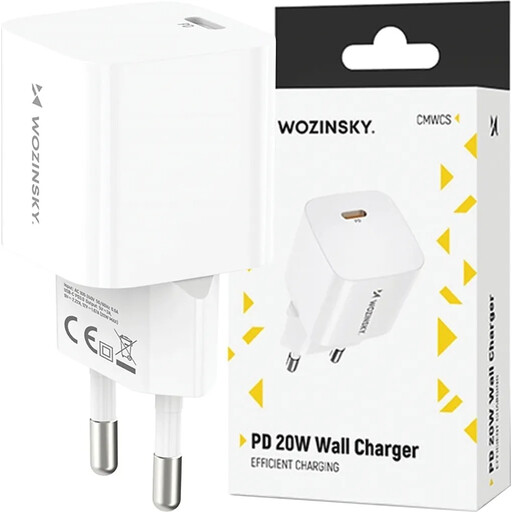
Wozinsky CMWCS 20W USB-C PD Wall Charger - White
Why This Fits Their Persona: Ideal for users who primarily want to charge their smartphone (e.g., an iPhone or Google Pixel) quickly and reliably without paying for unused features. Compact and straightforward for daily use.
This charger focuses on one job: delivering 20 watts via Power Delivery. There's no confusing power distribution because it only has one port. The specifications are clear and honest.
Supports Power Delivery (PD) for fast charging modern smartphones. Very compact and lightweight design, perfect for a nightstand or office drawer.
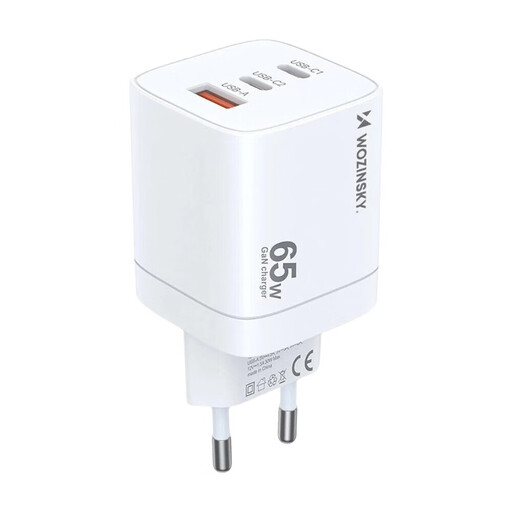
Wozinsky CGWCW 65W USB-A / 2 x USB-C GaN Wall Charger – White
Why This Fits Their Persona: Perfect for frequent travelers, commuters, and students who want to charge their laptop, smartphone, and headphones with a single power adapter. The GaN technology ensures a compact form factor that fits into any bag.
The product description clearly states the power distribution (e.g., 45W + 18W), so the user knows exactly what power to expect when using multiple ports. The GaN technology minimises the risk of overheating.
65W GaN technology for high performance in a compact size. Three ports (2x USB-C, 1x USB-A) for maximum flexibility. Suitable as a MacBook power adapter and for charging other devices.
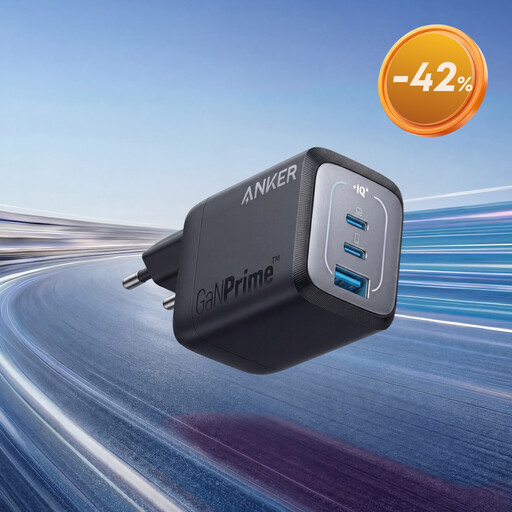
Anker 735 PRIME Wall Charger 67W, 1A/2C, Black EU Plug
Why This Fits Their Persona: For users who value brand reputation, high performance, and advanced safety features. This charger is a future-proof investment for the home office or as a central charging hub for the whole family.
Anker transparently communicates the power distribution ("67W for 1 device," "65W for 2 devices"). Its ActiveShield 2.0 safety system actively addresses overheating concerns and provides a verifiable protection mechanism.
High charging output of 67W, sufficient even for demanding laptops. Flexible port combination (2x USB-C, 1x USB-A) and an advanced safety system from an established brand.
Looking for More Options?
We have compiled a complete, continuously updated list of products that fully meet these strict selection criteria and relevant safety regulations.
Frequently Asked Questions (FAQ)
How many watts does my USB-C charger need?
The required wattage depends on your device. For most modern smartphones, a 20W or 30W charger with Power Delivery is ideal. For tablets or compact laptops like a MacBook Air, a 45W power adapter or 65W charger is recommended. For more powerful laptops, you should check the manufacturer's specifications, as they often require 65W to 100W.
What is the difference between Power Delivery (PD) and Quick Charge (QC)?
Power Delivery (PD) is the universal charging standard for the USB-C port, used by manufacturers like Apple, Google, and most laptop producers. It enables high power outputs and intelligent communication between the charger and the end device. Quick Charge (QC) is a proprietary protocol from Qualcomm used in many Android smartphones with Snapdragon processors. Many modern charging adapters support both standards to ensure broad compatibility.
Are GaN chargers safe?
Yes, GaN chargers from reputable manufacturers that have CE certification are safe. Gallium nitride (GaN) technology results in less heat generation and higher efficiency compared to traditional silicon chargers. When buying, always look for recognised certification marks to ensure the product meets the applicable safety standards in your region.